
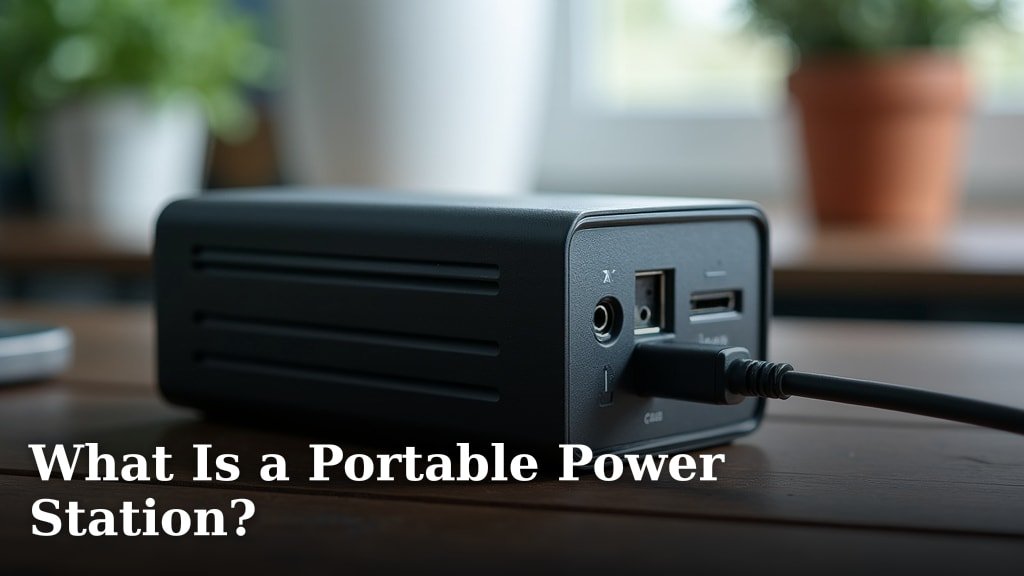
A portable power station is a rechargeable battery generator that provides power on-the-go. It stores electricity from various sources like solar panels or wall outlets. These devices let you power your electronic devices anywhere.
You can think of it as a large, powerful power bank for more than just your phone. We found they are incredibly useful for camping trips, outdoor events, or emergency backup at home during a power outage. They offer a clean, quiet alternative to gas generators.
- Power devices anywhere.
- Rechargeable battery generator.
- Solar or wall charging.
- Great for camping or emergencies.
So, how exactly does one of these handy gadgets work? Let’s break down everything you need to know about what a portable power station is and how it powers your world.
Exploring Portable Power Stations
You might be asking, “What exactly is inside one of these handy devices?” At its core, a portable power station is a sophisticated battery system. We found it’s designed to provide AC (alternating current) and DC (direct current) electricity through various output ports. Think of it as a step up from the small power bank you use for your phone.
Unlike traditional gas generators, these units run quietly and produce no fumes. This makes them safe for indoor use, which is a huge benefit during a power outage. They store energy from an external source and then let you use it to power your everyday devices.
How a Portable Power Station Works
Understanding the inner workings helps you appreciate their convenience. A portable power station takes energy and transforms it into usable power for your gadgets. It’s not just a big battery; it’s a smart energy hub.
First, it needs to get charged up. You can plug it into a standard wall outlet at home, just like your laptop. When you’re out and about, many models also let you connect solar panels, turning sunlight into electricity. Some even charge from your car’s 12V outlet, which we found incredibly useful for road trips.
The Battery Inside
The heart of any power station is its battery. Most modern portable power stations use lithium-ion (Li-ion) batteries. These are the same type of batteries found in your smartphone or electric car, just on a larger scale. We found these batteries offer a great balance of energy density and longevity (National Renewable Energy Laboratory).
Li-ion batteries are known for their ability to hold a lot of power in a relatively small package. They also tend to have a longer lifespan compared to older battery technologies. This means your power station will serve you well for many years to come.
The Inverter: AC to DC Conversion
Many of your household devices run on AC power. However, batteries store energy as DC power. This is where the inverter comes in. We found the inverter is a crucial component that takes the DC power from the battery and converts it into AC power. This allows you to plug in things like blenders, laptops, and even small refrigerators.
Without an inverter, you’d only be able to charge devices that use DC power directly, like USB-powered items. The inverter gives the portable power station its versatility and power to run a wider range of appliances. Look for models with pure sine wave inverters; they provide cleaner, safer power for sensitive electronics.
Input and Output Ports
Think of these as the gates through which electricity flows in and out. Most portable power stations have a variety of connections. On the input side, you’ll typically find a port for an AC wall charger and sometimes a dedicated input for solar panels. Some even have a car charger input.
For outputs, you’ll see several options. These include standard AC wall outlets (the same ones you have at home), multiple USB-A ports, and often USB-C ports for faster charging of modern devices. You might also find a 12V car port. This variety ensures you can power almost anything, from your phone to a portable fan.
Comparing Portable Power Stations with Gas Generators
It’s natural to compare portable power stations to gas generators, especially if you’re looking for backup power. While both provide electricity, we found they serve slightly different purposes and have distinct advantages.
Gas generators are incredibly powerful and run on fuel like gasoline or propane. They can often power an entire home’s critical circuits during an extended outage. However, they are noisy, produce noxious fumes, and require fuel storage. They also need regular maintenance to keep them running smoothly.
Portable power stations, on the other hand, are quiet, emission-free, and virtually maintenance-free. They are perfect for powering smaller essential devices or for outdoor adventures. You simply charge them up and they are ready to go. You don’t have to worry about fuel or oil changes.
Here’s a quick overview of how they stack up:
| Feature | Portable Power Station | Gas Generator |
|---|---|---|
| Fuel Type | Electricity (rechargeable battery) | Gasoline, propane, diesel |
| Noise Level | Virtually silent | Loud (can be 60-85 dB) |
| Emissions | None (zero) | Harmful exhaust fumes |
| Maintenance | Low (charge and store) | High (oil changes, fuel stabilizer) |
| Indoor Use | Yes (safe and clean) | No (deadly carbon monoxide risk) |
| Portability | Easy to move, lighter | Heavy, often wheeled |
Who Can Benefit from a Portable Power Station?
The versatility of these devices means a wide range of people can benefit. We found they are not just for campers anymore! If you value convenience and reliable power, a portable power station might be a great addition to your gear.
Outdoor Enthusiasts
If you love camping, RVing, fishing, or tailgating, a portable power station is a game-changer. You can keep your phones, cameras, drones, and even portable refrigerators charged in the wilderness. It means more time enjoying nature and less worrying about dead batteries. We found it also powers string lights for a cozy evening ambiance at your campsite.
Home Emergency Preparedness
Power outages happen, and often without warning. A portable power station can be a lifesaver during these times. It can keep your essential devices running, like your phone, Wi-Fi router, and a few lights. We found it can even power a small medical device, providing peace of mind during unexpected blackouts (American Red Cross).
Remote Workers and Students
Working or studying from a coffee shop, park, or even your backyard can be liberating. But what happens when your laptop battery dies? A portable power station extends your productivity by giving you a portable charging hub. No more hunting for an open outlet or being tethered to a wall.
DIYers and Professionals On-the-Go
For those who need power tools away from an outlet, these stations are perfect. Whether you’re working on a project in the yard, building furniture in your garage, or need to charge power tool batteries at a remote job site, a portable power station provides instant power access. We found many contractors keep one in their truck to charge various tools throughout the day.
Key Features to Look For
When you’re ready to choose a portable power station, several features are worth considering. We found focusing on these will help you pick the best unit for your needs. It’s all about matching the station’s capabilities to your specific power requirements.
- Capacity (Watt-Hours – Wh): This tells you how much energy the battery can store. A higher Wh rating means it can power devices for longer. Think about what you want to power and for how long.
- Output Power (Watts – W): This indicates how much power the station can deliver at any given moment. Ensure it can meet the wattage requirements of your most power-hungry devices.
- Port Variety: Look for a good mix of AC outlets, USB-A, and USB-C ports to cover all your charging needs.
- Charging Options: Can it charge from a wall outlet, car, and solar panels? Having multiple charging methods offers flexibility.
- Portability: Consider the weight and size if you plan to carry it often. Some models are much lighter and more compact than others.
- Battery Chemistry: While most use Li-ion, some newer models feature LiFePO4 (lithium iron phosphate) which offers even longer cycles and durability, giving you a long-lasting investment.
Safety First: How to Use Your Portable Power Station
Using a portable power station is generally very straightforward and safe. Because they don’t use fuel, you eliminate many of the hazards associated with gas generators. Still, there are a few important things to keep in mind to ensure optimal performance and safety.
Always refer to your specific model’s user manual for detailed instructions. We found that following the manufacturer’s guidelines is the best way to get the most out of your device. This often includes instructions on storage and proper charging, which can extend the life of your battery.
Charging Precautions
When charging your portable power station, it’s best to do so in a well-ventilated area. While they don’t emit fumes, proper airflow helps keep the unit cool. Avoid charging in extreme temperatures, either too hot or too cold, as this can impact battery health. We found that most manufacturers recommend charging at room temperature for the best results.
Also, use only the charger that came with your unit or a compatible replacement recommended by the manufacturer. Using the wrong charger can damage the battery or even pose a fire hazard. Think of it like charging your smartphone; you want to use the correct adapter and cable.
Using Your Power Station Safely
Keep your portable power station dry and away from water. While some models are splash-proof, most are not designed to be submerged. It’s an electronic device, so water and electricity don’t mix! We found placing it on a stable, flat surface away from direct sunlight also helps prevent overheating during use.
Avoid overloading the power station by plugging in too many high-wattage devices. Check the maximum output wattage of your station and the wattage of your appliances. If you try to draw too much power, the unit will likely shut down to protect itself. This is a built-in safety feature, but it’s best to avoid triggering it frequently.
Conclusion
You now have a clear understanding of what a portable power station is and how it functions. We’ve explored everything from its battery, inverter technology, and various ports to its many benefits for different lifestyles. These devices are convenient, quiet, and eco-friendly solutions for on-the-go power.
Whether you’re an outdoor enthusiast, preparing for emergencies, or a remote worker, a portable power station offers reliable electricity. Consider your specific needs, compare features like capacity and output, and always prioritize safety in its use. Your next adventure or unexpected outage can be vastly improved with one of these systems, giving you both power and peace of mind.
Frequently Asked Questions
Are portable power stations safe to use indoors?
Yes, absolutely! Unlike gas generators, portable power stations produce no fumes or noise. This makes them perfectly safe for indoor use during power outages or for powering devices in your home or garage. We found this is a major advantage for emergency preparedness.
How long do portable power stations typically last on a single charge?
The duration depends greatly on the station’s capacity (measured in Watt-hours, Wh) and the power draw of your devices. A higher Wh rating means it can power devices for longer. For example, a small phone might last days, while a mini-fridge could run for several hours.
Can a portable power station power a refrigerator?
Yes, many larger portable power stations can power a standard refrigerator or mini-fridge. You need to check the station’s output wattage and capacity to ensure it can handle the refrigerator’s startup and running power demands. We found it’s essential to match your appliances to the station’s capabilities.
What is the difference between a portable power station and a power bank?
A power bank is typically a small, handheld device designed mainly for charging phones and tablets via USB. A portable power station is much larger, with significantly higher capacity and more diverse output ports, including AC outlets, to power laptops, appliances, and more. Think of a power station as a heavy-duty version of a power bank.
Do portable power stations require maintenance?
Portable power stations require very little maintenance compared to gas generators. You should keep them charged and stored according to the manufacturer’s recommendations. Avoiding extreme temperatures and using the correct charger will help extend the lifespan of the battery and the unit itself.
