
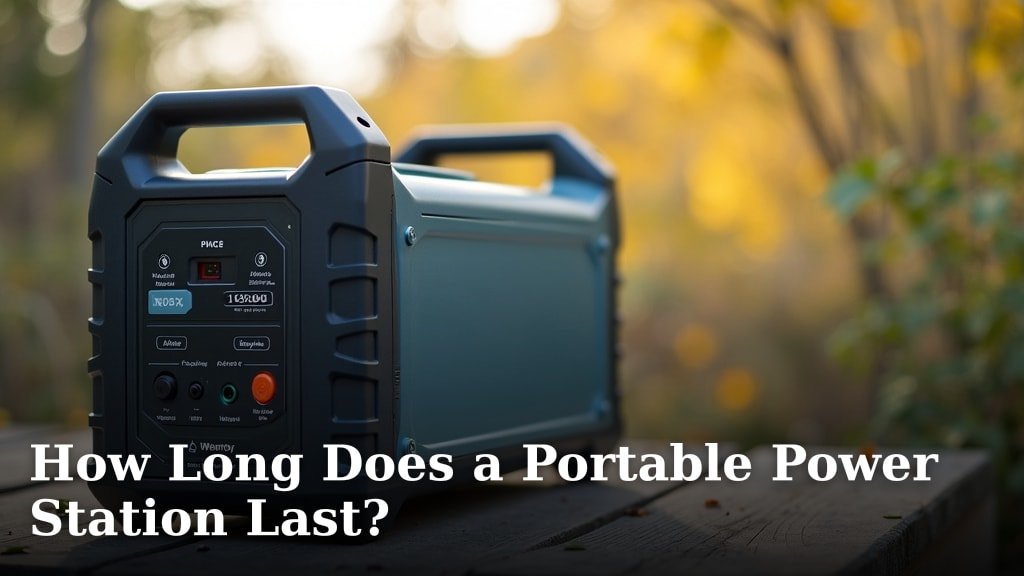
A portable power station can last anywhere from 3 to 10 years on average, depending on its battery type and how well you care for it. The lifespan varies greatly. Expect several hundred to over a thousand charge cycles from your portable power station.
Your power station’s battery technology plays a huge role in its longevity. Lithium-ion batteries are common, while LiFePO4 batteries offer a longer cycle life. Proper maintenance, like mindful charging and storage, also impacts how long your unit serves you.
- Battery type (LiFePO4 lasts longer)
- Number of charge/discharge cycles
- How often you use it
- Proper charging habits
- Storage conditions (temperature matters)
Ready to get the most out of your purchase? Let’s dive into all the factors that influence how long your portable power station will last and how to extend its life.
Understanding Portable Power Station Longevity
Most portable power stations last between 3 to 10 years. We found this often comes down to the type of battery inside. It’s like how different car engines have different lifespans. The battery technology is the heart of your power station.
Thinking about a portable power station? You’re probably wondering how long that investment will pay off. Good question! It’s all about the charge cycles and what kind of attention you give it.
Battery Chemistry: The Core of Lifespan
The biggest factor in how long your portable power station lasts is the battery type. There are two main players you’ll find in most units today. Each has its own strengths and weaknesses, especially when it comes to longevity.
Lithium-ion Batteries (Li-ion)
You’re likely already familiar with lithium-ion batteries. They power your phone, laptop, and many electric vehicles. They offer a good balance of power and portability. This is why they’re so common.
These batteries typically provide a lifespan of 500 to 800 charge cycles. What does that mean? One cycle is a full discharge from 100% down to 0% and then a full recharge back to 100%. If you only use half the battery and recharge, that’s just half a cycle.
After reaching its cycle limit, the battery doesn’t just stop working. It simply starts holding less charge. Think of it like a muscle getting weaker over time; it can still lift, just not as much.
Lithium Iron Phosphate (LiFePO4 or LFP) Batteries
Now, meet the powerhouse of portable power stations: Lithium Iron Phosphate batteries. These are gaining popularity for a very good reason: their incredible durability. We found many manufacturers are now relying on them.
LiFePO4 batteries can handle a whopping 2,500 to 3,500 charge cycles, sometimes even more. That’s a significant jump from standard lithium-ion. This means they can last for many more years, potentially doubling or even tripling the lifespan of other battery types.
While they might be slightly heavier or have a higher initial cost, their longevity often makes them a smart long-term investment. Many studies on battery performance, like those reviewed by the National Renewable Energy Laboratory, highlight the stability of LFP batteries.
| Battery Type | Typical Charge Cycles | Estimated Lifespan (Daily Use) | Key Benefit |
|---|---|---|---|
| Lithium-ion (Li-ion) | 500 – 800 | 1.5 – 2.5 years | Lighter, more compact |
| Lithium Iron Phosphate (LiFePO4) | 2,500 – 3,500+ | 7 – 10+ years | Much longer lasting |
The Role of Charge Cycles
You’ve heard us mention charge cycles a few times now. It’s a pretty important concept to grasp. Imagine your power station’s battery as a rechargeable well. Every time you draw water out and then refill it, that’s a cycle. Eventually, the well might not hold as much water as it once did.
Each time you completely drain and then fully recharge your portable power station, you use up one “charge cycle.” Most batteries have a given number of these cycles before their capacity starts to noticeably drop. Think of it as an invisible countdown timer for its peak performance.
So, the more often you completely cycle your battery, the faster it will reach that end-of-life capacity. This is why managing your charging habits is so important. You wouldn’t want to needlessly drain your phone every day, would you?
Partial Cycles and Depth of Discharge
Here’s a little secret: you don’t always have to fully discharge your power station. In fact, you shouldn’t! It turns out going from 100% to 0% with every use can be harder on the battery than partial discharges. Many battery experts agree on this (University of Michigan Engineering).
If you use 50% of the battery and recharge, that’s only half a cycle. Doing this twice would equal one full cycle. This means if you keep your battery charge between, say, 20% and 80%, you’re being much kinder to it. You’ll get many more years out of it this way.
The “depth of discharge” (DoD) refers to how much of the battery’s capacity you use. A lower DoD per use often translates to a higher total number of cycles over the battery’s lifespan. Try not to run it completely dry unless absolutely necessary.
Your Usage Habits Matter
How you use your portable power station directly impacts its longevity. It’s like having a car; regular oil changes and mindful driving extend its life. The same goes for your power station.
Frequent vs. Occasional Use
If you use your power station every single day, you’ll naturally accumulate charge cycles faster than someone who uses it monthly. This isn’t rocket science, right? It just means the “time” until it reaches its cycle limit will be shorter.
However, occasional use for long periods of time can also be tricky. Leaving a battery fully discharged for weeks or months is a big no-no. It can actually cause permanent damage, reducing its ability to hold a charge in the future.
Powering High-Draw Devices
Are you regularly running a power-hungry appliance like a mini-fridge or a power tool? This type of heavy usage can put more strain on the battery. It causes it to discharge faster and produce more heat.
While power stations are built for this, consistent high-draw usage will contribute to quicker battery degradation. Think of it as running a marathon every day instead of a leisurely walk. The marathoner’s shoes will wear out faster.
Optimal Charging and Storage Practices
Taking care of your portable power station means paying attention to how you charge it and where you keep it. These two factors are huge contributors to getting the maximum life out of your device.
The Sweet Spot for Charging
For most battery types, keeping the charge level between 20% and 80% is ideal for extending its lifespan. We know it’s tempting to always top it off to 100%, but this isn’t always the best strategy for long-term health.
- Avoid constant 100% charge: Leaving it plugged in and fully charged for weeks can stress the battery.
- Don’t let it sit at 0%: Deep discharge can permanently damage the battery cells.
- Use the right charger: Always use the charger supplied with your unit or one with identical specifications.
Many modern power stations have advanced battery management systems (BMS) that help protect against overcharging and over-discharging. But your mindful habits can also make a real difference.
Temperature Extremes Are the Enemy
Batteries are sensitive to temperature. Extremely hot or cold conditions can severely impact their performance and longevity. Think of how quickly your phone battery drains in freezing weather.
- Avoid direct sunlight: Keeping your power station in a hot car can cook the battery.
- Steer clear of freezing temperatures: Don’t store it in an unheated garage during winter months if it gets below freezing.
- Room temperature is best: Aim for storage between 32°F and 95°F (0°C to 35°C) for optimal health.
Research published by the Clean Energy Institute at the University of Washington often points to temperature as a key stressor for battery health. Treating your power station like a comfortable houseplant can go a long way.
Long-Term Storage Tips
If you’re not going to use your portable power station for an extended period, say more than a month, there’s a best practice for storing it. Charge it to about 50-60% capacity before putting it away.
Then, store it in a cool, dry place away from direct sunlight. Periodically, every 3-6 months, take it out, check its charge level, and top it up to that 50-60% mark if needed. This prevents the battery from completely self-discharging, which can be damaging.
Signs Your Power Station is Losing Its Spark
How do you know when your trusty power station is starting to fade? Just like us, batteries show signs of aging. You might notice subtle changes before it completely gives up the ghost.
Decreased Run Time
The most obvious sign is that your devices just don’t run as long as they used to. If your fan used to last 8 hours and now only lasts 4, that’s a pretty clear indicator the battery capacity has dropped. It’s not holding as much energy as it once did.
Longer Charge Times, Faster Discharge
Sometimes, an aging battery might seem to take much longer to charge fully. Or, it might charge up quickly but then discharge much faster than normal when powering devices. Both of these are classic signs of battery wear.
Battery Swelling or Overheating
This is a more serious sign. If you notice any bulging or swelling of the power station’s casing, especially around the battery area, stop using it immediately. This could indicate a dangerous internal issue. While rare in quality products, it’s a critical safety concern (Consumer Product Safety Commission).
Maximizing Your Investment: A Checklist
You’ve invested in portable power, and you want it to last. Here’s a quick checklist to help you get the most life out of your unit:
- Choose LiFePO4 if longevity is your top priority.
- Avoid constantly draining the battery to 0%.
- Recharge when it hits around 20-30%.
- Don’t keep it at 100% charge for weeks on end.
- Store it in a cool, dry place (50-60% charged).
- Use only the recommended charger and cables.
Conclusion
Extending the life of your portable power station is truly in your hands. By understanding battery types, especially the advantage of LiFePO4, and adopting smart charging and storage habits, you can significantly prolong your unit’s performance.
Remember, it’s about consistent care, not just initial specs. Treat your power station well, and it will reliably serve your power needs for many years to come. Choose wisely and maintain diligently!
Frequently Asked Questions
Is it bad to leave a portable power station plugged in all the time?
Leaving your portable power station plugged in constantly might not be ideal for its long-term health. While many have protection features, continuous 100% charge can stress the battery over time. It’s often better to charge it to around 80% and then unplug it.
Can I replace the battery in my portable power station?
In most portable power stations, the internal battery is not designed to be user-replaceable. This is due to the complex electronics and high-voltage components. Attempting to replace it yourself could be dangerous and void your warranty.
How do I know if my portable power station battery is dying?
You’ll notice its total run time decreasing significantly, or that it takes much longer to charge. It might also discharge faster than usual when powering devices. In rare cases, physical signs like swelling indicate a serious issue.
Does extreme cold permanently damage a portable power station?
Yes, extreme cold can permanently damage a battery or reduce its capacity over time if exposed repeatedly. It’s best to operate and store your power station within its recommended temperature range to protect the battery cells.
Are all portable power stations safe?
Reputable brands design their power stations with multiple safety features, including battery management systems (BMS) to prevent overcharging, overheating, and short circuits. Always choose products from trusted manufacturers and follow their usage guidelines for safety.
