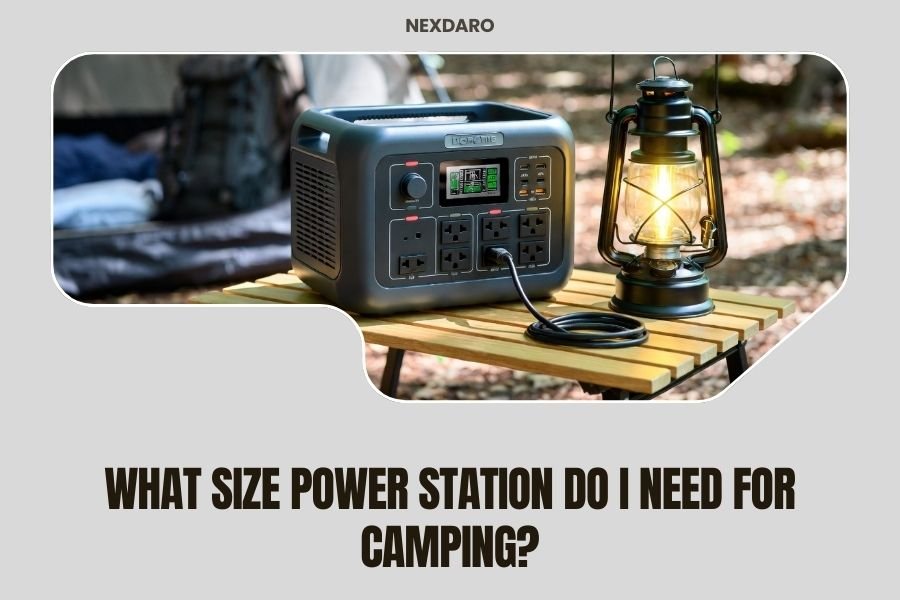
For camping, you need a power station with 500-1000Wh capacity for basic electronics and lights, while heavy users require 1000-2000Wh for fridges and multiple devices.
The right size power station for camping depends on what devices you plan to run and for how long during your trip.
Quick Power Station Size Guide for Campers
Let me cut straight to what you need. Your power station size comes down to three simple factors: what you want to power, how long you’ll use it, and how many days you’re camping.
Most weekend campers do fine with 500-1000Wh. Car campers who want fridges and coffee makers need 1000-2000Wh. RV folks often go bigger at 2000Wh and up.
Light Campers: 300-500Wh
You just need phone charging, LED lights, and maybe a small fan. A 300-500Wh unit handles this easily for 2-3 days.
Average Campers: 500-1000Wh
You want phones, tablets, cameras, portable speakers, and camp lights. This range works great for most people.
Heavy Users: 1000-2000Wh
You’re running fridges, coffee makers, laptops, and charging multiple devices. This is your sweet spot.
Calculate Your Power Needs
Don’t guess. Do the math. It’s easier than you think.
Find the wattage of each device you plan to use. Multiply by hours per day. Add everything up. That’s your daily power need in watt-hours.
Common Camping Device Power Draw
| Device | Power Usage | Hours per Day | Daily Need |
|---|---|---|---|
| Smartphone | 15W | 2 hours | 30Wh |
| LED Camp Light | 10W | 4 hours | 40Wh |
| Portable Fridge | 45W | 8 hours | 360Wh |
| Laptop | 65W | 3 hours | 195Wh |
| Coffee Maker | 1000W | 0.2 hours | 200Wh |
Add 20% Buffer
Power stations lose efficiency when converting DC to AC. I found that adding 20% to your calculated needs covers this loss plus gives you wiggle room.
Different Camping Styles Need Different Sizes
Your camping style matters more than you might think. Let me break this down by how you camp.
Backpacking and Minimalist Camping
You’re hiking with everything on your back. Weight matters. A 200-500Wh unit weighs 5-15 pounds.
Focus on essentials: phone charging, headlamp, maybe a small speaker. You don’t need much power when you’re disconnecting from the world.
Best Features for Backpackers
- Light weight under 10 pounds
- Solar charging capability
- Multiple USB ports
- Compact size that fits in pack
Car Camping
You drive to your campsite. Weight isn’t a big deal. You can go bigger and bring more comfort items.
Car campers often want fridges, lights, fans, and device charging. A 1000-1500Wh station handles this well.
Popular Car Camping Setup
- Portable fridge running 8-10 hours daily
- LED string lights for 4-6 hours
- Phone and camera charging
- Small fan for hot nights
- Coffee maker in the morning
RV and Van Life
You’re living in your vehicle. Power needs are higher. You want household-level comfort.
RV folks often need 2000Wh and up. You’re running fridges 24/7, charging laptops, maybe using microwaves.
How Long Will Your Power Station Last?
This question keeps everyone up at night. The answer depends on what you’re running.
Take your power station’s capacity and divide by your hourly power use. That gives you runtime in hours.
Real-World Examples
A 1000Wh power station running a 45W fridge lasts about 22 hours. Running LED lights at 20W? It lasts 50 hours.
But here’s the thing: you’re not running just one device. You’re running multiple things at different times.
Sample Day with 1000Wh Station
- Morning coffee maker: 200Wh used
- Fridge running all day: 360Wh used
- Evening lights for 4 hours: 80Wh used
- Phone charging: 30Wh used
- Total daily use: 670Wh
- Station has 330Wh left for day 2
Solar Charging Changes Everything
Solar panels extend your power station’s life dramatically. I researched this and found that many campers underestimate solar’s impact.
A 100W solar panel generates about 300-400Wh on a sunny day. That’s enough to run lights and charge devices indefinitely.
Solar Panel Sizing
Match your solar panel capacity to your daily power use. If you use 500Wh daily, get at least 150W of solar panels.
Weather affects solar output. Cloudy days produce 20-30% of rated power. Plan accordingly.
Solar Charging Tips
- Position panels toward the sun
- Clean panels regularly
- Start charging early morning
- Angle panels throughout the day
Budget Affects Your Size Choice
Let’s talk money. Bigger power stations cost more. Way more.
A 500Wh unit costs $300-600. A 1500Wh unit runs $1000-2000. A 3000Wh beast costs $2500 and up.
Smart Budget Strategies
Buy based on your most common trips, not your biggest adventure. You can always rent a bigger unit for special occasions.
Consider buying a smaller unit now and adding solar panels later. This spreads the cost over time.
Cost Per Watt-Hour
Bigger units often offer better value per watt-hour. But only if you actually use the extra capacity.
Weight and Portability Matter
Power stations get heavy fast. A 1000Wh unit weighs 20-30 pounds. A 2000Wh unit weighs 40-60 pounds.
Can you lift it? Can you carry it to your campsite? Be honest about your physical limits.
Handling Large Power Stations
Look for units with good handles or wheels. Some have telescoping handles like luggage.
Consider splitting power between two smaller units instead of one giant one. This gives you redundancy too.
Safety and Temperature Considerations
Power stations don’t like extreme temperatures. Most work best between 32-104°F.
Cold weather reduces capacity. Hot weather can shut down the unit. Plan for weather conditions at your campsite.
Cold Weather Tips
Keep your power station insulated. Bring it inside your tent or RV overnight. Cold batteries discharge faster and charge slower.
Hot Weather Precautions
Provide shade for your power station. Don’t leave it in direct sunlight. Overheating protection will shut it down when you need it most.
Future-Proofing Your Purchase
Your camping style will change. Your power needs will grow. Buy slightly bigger than your current needs.
I found that most campers wish they bought bigger power stations. It’s better to have extra capacity than run out of power on day two.
Expandability Options
Some power stations accept expansion batteries. This lets you add capacity later without buying a whole new unit.
Look for units with multiple charging methods: AC, DC, and solar. This gives you options as your setup grows.
Common Sizing Mistakes
Don’t make these errors that I see all the time.
Underestimating Power Draw
People forget about phantom loads. Fridges cycle on and off. Inverters use power even when nothing’s plugged in.
Ignoring Peak Power Needs
Your coffee maker might need 1000W to start but only 800W to run. Make sure your power station can handle peak loads.
Not Planning for Weather
Hot days mean more fan usage. Cold nights mean more heating. Weather changes your power consumption dramatically.
Conclusion
Choosing the right size power station for camping comes down to honest assessment of your needs. Start with 500-1000Wh for most camping scenarios, then adjust based on your specific devices and camping style. Remember to calculate your actual power consumption, add a 20% buffer, and consider solar charging to extend your runtime. Don’t forget that bigger isn’t always better – weight, cost, and portability matter just as much as capacity. Take time to match your power station size to your camping reality, not your camping dreams.
What’s the smallest power station worth buying for camping?
A 300Wh power station is the minimum size worth buying for camping. It can charge phones, run LED lights, and power small fans for 1-2 days, making it perfect for minimalist campers who just need basic electronics.
How many days will a 1000Wh power station last while camping?
A 1000Wh power station typically lasts 2-4 days depending on your power usage. Light users running just phones and lights can stretch it to 4 days, while those running fridges and multiple devices might get 1-2 days before needing to recharge.
Can I run an electric cooler on a 500Wh power station?
Yes, but runtime is limited. A typical 45W electric cooler will run for about 11 hours on a 500Wh power station. For weekend camping, you’ll need solar charging or AC recharging to keep it running continuously.
What size power station do I need to run a CPAP machine while camping?
Most CPAP machines use 30-60W and need to run 8 hours nightly. A 500Wh power station provides 2-3 nights of CPAP use, but a 1000Wh unit gives you a full week with power left over for other devices.
Is it better to buy one large power station or two smaller ones?
Two smaller power stations offer better flexibility and redundancy. If one fails, you still have backup power. They’re also easier to carry and can power different areas of your campsite simultaneously, though one large unit is often more cost-effective.