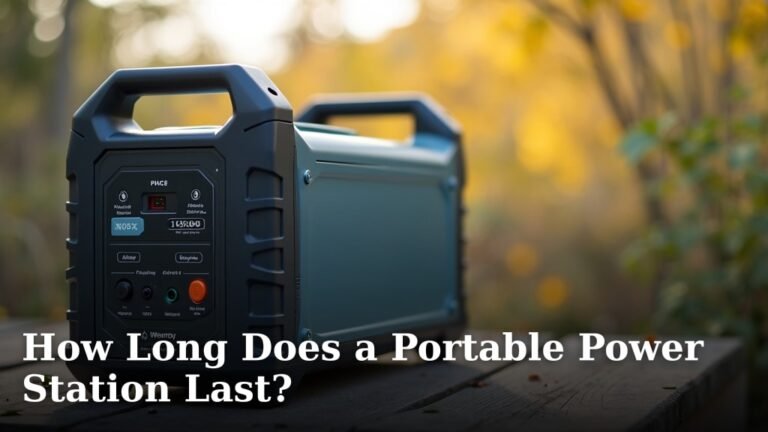
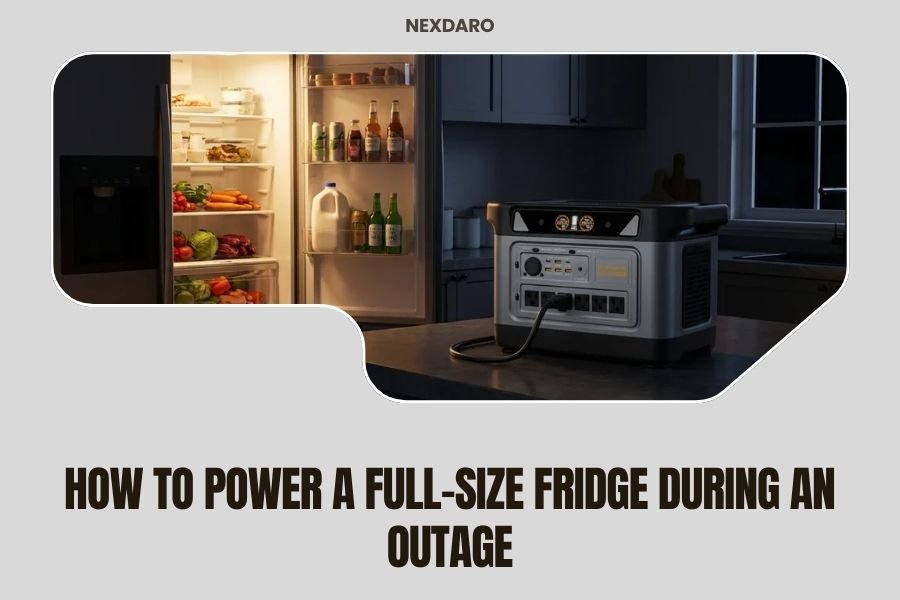
To power a full-size fridge during an outage, you need a portable power station with at least 2000-3000 watt capacity and 2000+ watt-hour battery storage.
Most full-size refrigerators consume 150-400 watts while running, but require 1200-2000 watts during startup surge power.
When the lights go out, your fridge becomes priority number one. Nobody wants to lose hundreds of dollars of food because they couldn’t keep things cold. The good news? You can absolutely keep your full-size fridge running during power outages with the right equipment and setup.
I’ve researched portable power solutions extensively, and I found that many homeowners underestimate what it takes to run a fridge. Let me walk you through exactly what you need to know.
Understanding Your Fridge’s Power Needs
Your refrigerator doesn’t run constantly. It cycles on and off to maintain temperature. This cycling pattern affects how much power you’ll actually need.
Most full-size fridges use between 150-400 watts during normal operation. But here’s the catch: when your fridge starts up, it needs a massive surge of power. This startup surge can be 3-5 times the normal running power.
Startup Surge vs Running Power
Think of your fridge like a car engine. Starting the engine takes more power than keeping it running. The compressor motor needs extra juice to get going.
A typical 20 cubic foot fridge might use 300 watts while running. But when it starts up? It could demand 1500 watts for a few seconds.
Finding Your Fridge’s Energy Label
Look for the yellow Energy Guide sticker on your fridge. It shows estimated yearly energy use in kilowatt-hours (kWh).
You can also find power specs on a metal plate inside the fridge or on the back. Look for “watts” or “amps” listings.
Calculating Power Station Requirements
Here’s where the math gets real. You need two things: enough power output (watts) and enough stored energy (watt-hours).
Power Output Requirements
Your power station must handle the startup surge. If your fridge needs 1500 watts to start, your power station needs at least 2000 watts output. Always add a safety margin.
Battery Capacity Requirements
A typical full-size fridge runs about 8-12 hours per day in cycles. If your fridge uses 300 watts and runs 10 hours daily, that’s 3000 watt-hours (3 kWh).
For a 24-hour outage, you’d need roughly 3000 watt-hours of battery capacity. But real-world efficiency losses mean you should plan for 4000+ watt-hours.
Best Power Station Types for Fridges
Not all power stations are built the same. Some handle fridge startup surges better than others.
Lithium Battery Stations
Lithium-based units offer the best performance for fridges. They provide clean, stable power and handle surge demands well.
I found that lithium stations maintain consistent voltage output, which helps fridges run efficiently.
LiFePO4 vs Standard Lithium
LiFePO4 (Lithium Iron Phosphate) batteries last longer and handle temperature changes better. They’re worth the extra cost if you plan regular use.
Recommended Power Station Specifications
Based on my research, here are the minimum specs you should look for:
| Feature | Minimum Requirement | Recommended |
|---|---|---|
| Power Output | 2000 watts | 3000+ watts |
| Battery Capacity | 2000 watt-hours | 3000+ watt-hours |
| Pure Sine Wave | Yes | Yes |
| Surge Capacity | 4000+ watts | 6000+ watts |
Why Pure Sine Wave Matters
Your fridge’s compressor motor needs clean power. Modified sine wave inverters can cause motors to run hot or make noise.
Pure sine wave output mimics grid power exactly. It keeps your fridge running smoothly and efficiently.
Setup and Connection Process
Getting everything connected properly makes the difference between success and frustration.
Pre-Outage Preparation
Don’t wait for the power to go out. Set up your system when you can see what you’re doing.
Position your power station close to your fridge but away from heat sources. These units can get warm during heavy use.
Testing Before You Need It
Run a test during normal times. Unplug your fridge from the wall and connect it to your power station. Watch how it starts up and runs.
Time how long your power station can run the fridge. This gives you real-world runtime data.
Connection Methods
Most power stations use standard household outlets. Simply unplug your fridge from the wall and plug it into the power station.
Some larger units offer 30-amp RV outlets or hardwire connections. These can be more efficient for high-power appliances.
Maximizing Runtime During Outages
Smart usage can double or triple your fridge runtime on battery power.
Temperature Management
Keep your fridge and freezer as full as possible. Full units maintain temperature longer when the power cycles off.
Avoid opening doors unless necessary. Each door opening lets cold air escape and forces the compressor to work harder.
Strategic Temperature Settings
Raise your fridge temperature slightly during outages. Instead of 37°F, try 40°F. Your food stays safe, but the compressor runs less often.
Load Management
Run only your fridge on the power station during critical times. Other appliances can wait or use battery banks separately.
Unplug unnecessary items like ice makers or water dispensers. These add extra power draw without being essential.
Alternative Power Sources
Power stations aren’t your only option. Other solutions might work better for your situation.
Gas Generators
Gas generators provide unlimited runtime as long as you have fuel. They’re cheaper per watt than battery systems.
The downside? Noise, exhaust fumes, and fuel storage requirements. You can’t run them indoors safely.
Generator Plus Battery Combo
Some people use generators to charge power stations. Run the generator a few hours daily to top off batteries, then use quiet battery power overnight.
Solar Integration
Solar panels can extend your runtime during daylight hours. Even partial charging helps stretch battery life.
Portable solar setups work great with power stations. You’re not dependent on fuel supplies or making noise.
Safety Considerations
Power equipment demands respect. A few safety rules keep you and your family protected.
Indoor Use Guidelines
Power stations are generally safe indoors, unlike gas generators. But they still need proper ventilation during heavy use.
Keep units away from water and moisture. Garages can work well if they’re dry and temperature-controlled.
Heat Management
Large power stations generate heat under load. Don’t block ventilation fans or pack them into tight spaces.
If your unit feels very hot or shuts down unexpectedly, it might be overheating. Give it time to cool down.
Electrical Safety
Don’t overload your power station. Running multiple high-power appliances can damage the inverter.
Use proper extension cords if needed. Undersized cords create voltage drops and can overheat.
Cost Analysis
Let’s talk money. Quality power stations aren’t cheap, but they might save you more than you think.
Initial Investment
A power station capable of running a full-size fridge costs $2000-$5000+. That seems expensive until you consider the alternatives.
Professional backup generator installation often costs $5000-$15,000. Portable gas generators need fuel and maintenance.
Hidden Savings
How much food do you keep in your fridge? Most families have $300-$800 worth of groceries at any time.
One major outage that spoils your food could pay for a significant portion of your power station.
Operating Costs
Battery systems have minimal operating costs. No fuel, no oil changes, no spark plugs to replace.
Electricity to charge the batteries costs pennies compared to running generators.
Maintenance and Longevity
Take care of your power station, and it’ll take care of you for years.
Battery Care
Lithium batteries last longest when kept between 20-80% charge. Don’t let them sit completely empty for months.
Charge your power station every 3-6 months even if you don’t use it. This prevents battery degradation.
Storage Conditions
Store your unit in moderate temperatures when possible. Extreme heat or cold shortens battery life.
Clean dust from ventilation areas periodically. Blocked airflow causes overheating.
Conclusion
Powering your full-size fridge during outages is absolutely doable with the right equipment. You need a robust power station with at least 2000-3000 watts output and 2000+ watt-hours of battery storage. The investment pays for itself by protecting your food and providing peace of mind during emergencies. Start with understanding your fridge’s actual power needs, then choose a quality power station that exceeds those requirements. With proper setup and smart usage, you can keep your food fresh through extended outages while your neighbors are throwing away spoiled groceries.
Can I use a smaller power station if I have an energy-efficient fridge?
Yes, newer Energy Star fridges use less power and may work with 1500-2000 watt power stations. Check your specific model’s startup surge requirements, as even efficient fridges need significant power to start the compressor.
How long can a 3000 watt-hour power station run my fridge?
Typically 12-24 hours, depending on your fridge’s efficiency, how often you open it, and ambient temperature. Warmer weather and frequent door openings reduce runtime significantly.
Is it safe to leave a power station running overnight while I sleep?
Quality power stations with proper safety certifications are designed for unattended operation. Ensure adequate ventilation and keep the unit away from flammable materials. Most units have automatic shutoffs for overheating or overload conditions.
Can I run other appliances along with my fridge on the same power station?
Small appliances like LED lights or phone chargers won’t significantly impact runtime. Avoid running microwaves, coffee makers, or other high-power devices simultaneously, as they’ll drain your battery much faster.
What happens if my power station runs out of juice before grid power returns?
Your fridge will maintain temperature for 4-6 hours without power if you keep doors closed. Consider having backup ice or dry ice ready, or a secondary smaller power station for emergency extension.