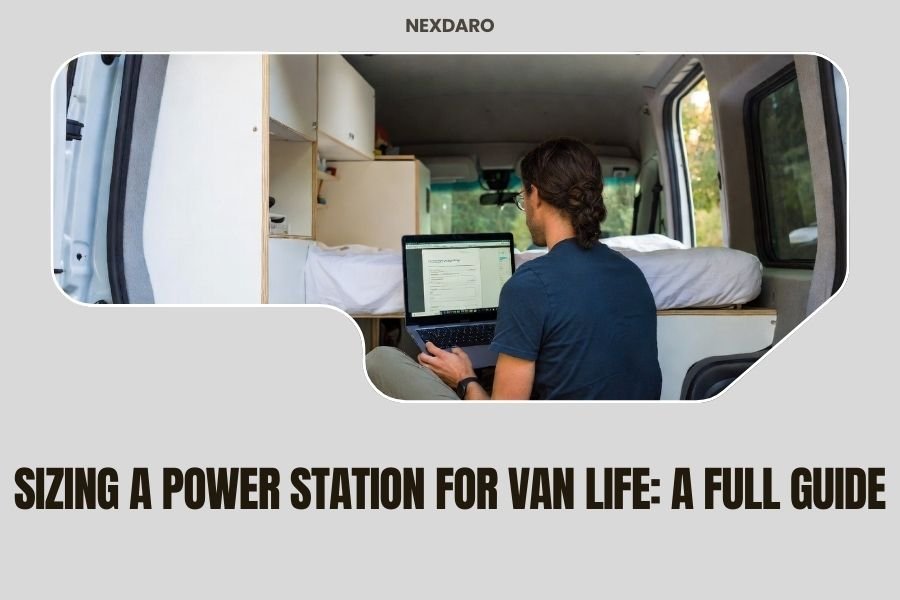
For van life, you need a power station with 500-1000Wh capacity for basic needs or 1500-3000Wh for heavy power users like remote workers.
Sizing a power station correctly means calculating your daily energy use and adding 25-30% buffer for cloudy days and power losses.
Van life opens doors to freedom and adventure. But nothing kills that vibe faster than dead batteries when you need power most.
I’ve researched hundreds of van setups and found that most people either buy too small or waste money on oversized systems. Getting the right size power station makes all the difference between comfortable living and constant energy anxiety.
How Much Power Do You Actually Need?
Start by listing every device you’ll use daily. Don’t guess – write it down.
Your phone charger uses about 20 watts. A laptop pulls 60-100 watts. LED lights need 5-10 watts each. A 12V fridge? That’s your biggest draw at 40-60 watts running constantly.
I found that most van lifers fall into three categories:
- Weekend warriors: 300-500Wh daily needs
- Full-time nomads: 800-1500Wh daily needs
- Remote workers: 1500-3000Wh daily needs
Calculate Your Daily Energy Budget
Take each device and multiply watts by hours used per day. This gives you watt-hours (Wh).
Phone charging: 20W × 2 hours = 40Wh
Laptop work: 80W × 6 hours = 480Wh
LED lights: 30W × 4 hours = 120Wh
12V fridge: 50W × 8 hours actual runtime = 400Wh
Add everything up. This example totals 1,040Wh per day.
Don’t Forget the Hidden Power Drains
Inverters waste 10-15% of power converting DC to AC. Your power station’s own systems use energy too.
Cold weather reduces battery capacity by 20-30%. Hot weather isn’t kind either.
Always add 25-30% to your calculated needs. So that 1,040Wh becomes 1,350-1,400Wh minimum.
Power Station Capacity Sweet Spots
Based on research from van life communities, certain capacity ranges work best for different lifestyles.
500-1000Wh: Weekend Warriors
Perfect if you camp 2-3 days maximum between charges. You can run basic lights, charge devices, and maybe power a small cooler.
These units stay portable. Most weigh under 25 pounds. Easy to carry and recharge at home.
1000-2000Wh: Casual Van Life
This range handles most van life needs comfortably. You get multiple days of power for lights, electronics, and a 12V fridge.
Still manageable for one person to move around. Good balance of capacity and portability.
2000Wh+: Full-Time Living
When your van is your home office and kitchen, bigger makes sense. You can run laptops all day, use induction cooktops, and power larger appliances.
These systems often support expansion batteries. Start smaller and add capacity as needed.
Understanding Power Station Specs
Watt-hour capacity tells you how much energy the battery stores. Think of it as your gas tank size.
Watt output rating shows how much power you can use at once. This is like your engine’s horsepower.
Why Both Numbers Matter
A 1000Wh battery with only 300W output can’t run a 1000W microwave. You’d need at least 1200W output to handle that load safely.
Match the output rating to your highest-power device. Add some headroom for startup surges.
Peak vs Continuous Power
Many devices need extra power for a few seconds when starting. Fridges, fans, and power tools create these surges.
Look for peak power ratings 2x the continuous rating. A 1000W continuous unit should handle 2000W peaks.
Battery Chemistry: LiFePO4 vs Lithium-Ion
Most modern power stations use lithium batteries. But there are two main types with big differences.
LiFePO4: The Van Life Champion
LiFePO4 batteries last 3000-5000 cycles before losing significant capacity. They handle temperature swings better. Much safer chemistry with lower fire risk.
I found that experts consistently recommend LiFePO4 for stationary van installations. The extra cost pays back through longevity.
Standard Lithium-Ion: Lighter but Shorter Life
Regular lithium-ion offers more energy density. These units stay lighter and more compact.
But cycle life drops to 1000-2000 charges. Fine for occasional use, not ideal for daily van life.
Charging Your Power Station on the Road
A power station without reliable charging becomes expensive dead weight fast.
Solar: The Van Life Standard
Solar panels generate free power as long as the sun shines. Silent operation keeps you stealthy in cities.
Plan for 100-200 watts of solar per 1000Wh of battery capacity. More solar means faster charging and better performance on cloudy days.
Alternator Charging: Power While Driving
Your van’s alternator can charge your power station through DC input ports. This works great for road trip charging.
Most power stations accept 12V charging at 8-10 amps. That’s about 100-120 watts of charging power.
Shore Power: Fast Charging at Campgrounds
AC charging stays the fastest option. Plug into campground power or a generator when available.
Good power stations charge at 200-500 watts from AC outlets. A 1000Wh unit needs 2-5 hours for a full charge.
Common Sizing Mistakes to Avoid
I came across several patterns that trip up new van lifers when choosing power stations.
Buying Based on Price Alone
Cheap power stations often use inferior batteries and low-quality inverters. They fail right when you need them most.
Quality units cost more upfront but last years longer. Better to buy once and be happy.
Ignoring Expandability
Your power needs will grow. That guaranteed. Start with a system that accepts additional batteries.
Modular systems let you add capacity without replacing everything. Much smarter than buying twice.
Forgetting About Physical Size
That 3000Wh power station might meet your energy needs. But can it fit in your van? Can you lift it?
Measure your space first. Consider access for maintenance. Heavy units work fine if they never move.
Real Van Life Power Examples
Let me break down actual power station sizing for different van life styles.
The Minimalist Setup
Two phones, LED lighting, small fan, portable fridge. Daily use around 600Wh.
A 1000Wh power station provides comfortable buffer. 200W solar keeps everything charged.
The Remote Worker
Laptop, monitor, Starlink internet, phones, lighting, larger fridge. Daily needs hit 1500-2000Wh.
Start with 2000Wh capacity and 400W solar minimum. Consider expandable systems for busy work periods.
The Comfort Seeker
Everything above plus induction cooking, coffee maker, hair dryer, entertainment system. Daily use exceeds 2500Wh.
You need 3000Wh+ capacity with high output ratings. Plan for 600W+ solar and alternator charging.
Power Station Features That Actually Matter
Marketing specs can mislead you. Focus on features that improve real-world van life.
Multiple Output Types
Look for AC outlets, 12V ports, and USB connections. Different devices need different power types.
USB-C PD ports charge laptops efficiently. 12V outlets run fans and fridges without inverter losses.
App Monitoring
Smartphone apps show real-time power use and battery status. Some units allow remote control.
This helps you track energy consumption and adjust habits. Knowledge prevents dead batteries.
Pass-Through Charging
Good power stations charge while powering devices. This keeps critical loads running during solar charging.
Essential feature for van life. Your fridge shouldn’t stop working while batteries recharge.
Seasonal Considerations
Your power needs change with seasons and weather patterns.
Winter Challenges
Cold weather reduces battery capacity significantly. Shorter days mean less solar generation.
Size your system for worst-case winter scenarios. Summer becomes easy with extra capacity.
Hot Weather Issues
Air conditioning and fans increase power demands. Batteries also perform poorly in extreme heat.
Park in shade when possible. Consider battery cooling if you spend time in desert climates.
Budget Planning for Power Systems
Quality power stations cost real money. Plan your budget around total system needs.
Power Station Costs
Expect $800-1500 per 1000Wh for quality LiFePO4 units. Cheaper options save money upfront but cost more long-term.
Solar and Accessories
Add $300-600 for adequate solar panels. Mounting hardware, wiring, and installation supplies cost extra.
Budget 150-200% of the power station cost for a complete system.
Conclusion
Sizing a power station for van life comes down to honest assessment of your energy needs and usage patterns. Calculate your daily consumption, add buffer capacity, and choose quality components that fit your space and budget.
Start with reliable brands using LiFePO4 chemistry. Plan for adequate solar charging and consider expandable systems that grow with your needs. Remember that it’s better to slightly oversize than run out of power in remote locations.
The right power station transforms van life from energy anxiety into comfortable freedom. Take time to size it correctly, and you’ll enjoy years of reliable off-grid power.
How long do power station batteries last in van life?
LiFePO4 power stations typically last 3000-5000 charge cycles, which equals 8-12 years of daily van life use. Standard lithium-ion units last 1000-2000 cycles or 3-5 years with regular use.
Can I run an air conditioner off a power station?
Small 5000 BTU AC units draw 400-600 watts and can run on large power stations, but only for 2-4 hours per 1000Wh of capacity. Most van lifers use 12V fans and park in shade instead.
What’s the difference between a power station and van batteries?
Power stations are portable, all-in-one units with built-in inverters and multiple outlets. Van battery banks are permanently installed systems with separate components that offer more capacity and customization options.
How fast can solar panels charge a power station?
200 watts of solar panels generate about 800-1200Wh per day in good conditions. This can fully charge a 1000Wh power station in 6-8 hours of direct sunlight, depending on weather and panel efficiency.
Do power stations work in freezing temperatures?
Most power stations operate down to -10°F but lose 20-30% capacity in freezing weather. LiFePO4 batteries handle cold better than standard lithium-ion. Keep units insulated and warm when possible during winter camping.