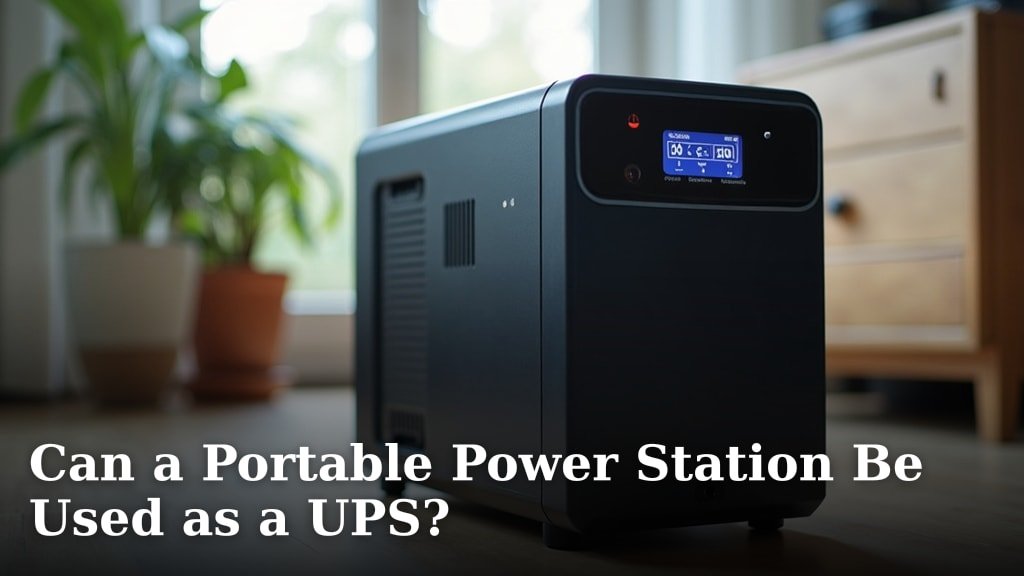
Yes, a portable power station can often be used as a UPS (Uninterruptible Power Supply), but there are some important differences to consider. It acts as a backup power source, keeping your devices running during a power outage.
While both provide backup power, a portable power station typically has a slower transfer time than a dedicated UPS. This means there might be a brief interruption when the power switches over. For sensitive electronics, this brief delay could be a problem.
- Portable power stations can act as a basic UPS.
- They offer backup power during outages.
- Transfer time can be slower than a dedicated UPS.
- Not ideal for highly sensitive electronics.
- Great for general home or office use.
Let’s explore how a portable power station can keep your essentials powered up and what you need to look out for.
Using a Portable Power Station as a UPS: What You Need to Know
Many people wonder if their portable power station can truly step in as a reliable Uninterruptible Power Supply (UPS). The short answer is yes, for many common situations, it absolutely can.
Think of it as a helpful backup buddy for your electronics. It’s not always a perfect, dedicated UPS replacement, but it gets the job done for most home and office needs.
Understanding the Core Difference: UPS vs. Portable Power Station
While both devices offer backup power, their primary design and speed of operation differ. It’s like comparing a sprint runner to a marathon runner; both run, but at different speeds and for different durations.
A traditional UPS is built for speed. Its main job is to prevent even the tiniest flicker in power to sensitive electronics, like computers or medical equipment. It switches over to battery power almost instantly.
Portable power stations, on the other hand, are designed for versatility and capacity. They give you power for longer periods, often for multiple devices, and can be easily moved. Their switchover time is usually a bit slower.
The “Transfer Time” Explained
Transfer time is the brief moment it takes for a device to switch from wall power to battery power when an outage occurs. For a dedicated UPS, this is often measured in milliseconds. It’s so fast you won’t even notice it.
For most portable power stations, this transfer time can be anywhere from 10 to 30 milliseconds, or even higher for some models. While this sounds quick, it’s enough of a delay to potentially cause issues for very sensitive gear.
We found that some older computers or complex server systems might reboot during this short delay. For everyday items like lamps, TVs, or Wi-Fi routers, this delay is usually not a problem.
How Portable Power Stations Function as a UPS
To use your portable power station as a UPS, you essentially plug it into the wall, and then plug your devices into the power station. When the wall power goes out, the power station automatically switches to its internal battery to keep your devices running.
This “pass-through charging” feature is key. The power station acts as an intermediary, constantly charging itself while also powering your connected devices. When the main power fails, it seamlessly takes over.
It’s important to check if your specific portable power station supports pass-through charging. Most modern units do, but always confirm with your model’s manual.
What Devices Can Benefit Most?
Many common household and office items are perfect candidates for a portable power station acting as a UPS. Think about what you absolutely need to keep running during a blackout.
- Your Wi-Fi router and modem, so you can stay connected.
- Laptops and desktop computers (for saving your work).
- LED lights or small lamps for illumination.
- Small medical devices, like a CPAP machine (check power draw).
- Charging phones, tablets, and other essential gadgets.
- Cash registers or point-of-sale systems in a small business.
These devices can generally handle the slightly slower transfer time without a hiccup. It prevents data loss and keeps essential communications open.
When a Portable Power Station Might Not Be the Best Choice
While versatile, a portable power station isn’t always the ideal UPS solution. There are specific scenarios where a dedicated UPS is simply better.
Consider devices that are extremely sensitive to even tiny power interruptions. These include certain types of medical equipment, specialized servers, or high-end audio/video gear that requires absolute constant power.
We found that some professional broadcasting equipment, for example, demands a near-zero transfer time to avoid glitches. In these cases, the millisecond differences matter a lot.
Sensitive Equipment Checklist:
- High-end gaming PCs with specialized components.
- Medical life-support equipment.
- Certain laboratory instruments.
- Uninterruptible network servers that must never drop.
- Professional audio mixing consoles.
For these items, the brief power gap from a portable power station might cause a reboot, data corruption, or even damage. A true online double-conversion UPS would be the safer bet (UL 1778, Standard for Uninterruptible Power Systems).
Choosing the Right Portable Power Station for UPS Functionality
If you’re planning to use a portable power station as a UPS, there are a few features you should look for. Not all models are created equal in this regard.
First, confirm it supports “UPS mode” or “pass-through charging.” This means it can charge itself while simultaneously powering connected devices. This is non-negotiable for UPS functionality.
Next, consider its battery capacity (measured in Watt-hours or Wh). This determines how long your devices will run. Estimate your devices’ power draw and how long you need them to stay on.
Here’s a quick guide:
| Feature | Why It Matters for UPS Use |
|---|---|
| UPS Mode/Pass-Through Charging | Essential for automatic switchover. |
| Output Wattage | Must match or exceed your devices’ total power needs. |
| Battery Capacity (Wh) | Determines how long it can power your devices. |
| Pure Sine Wave Inverter | Provides clean, stable power, safe for all electronics. |
| Fast Recharging | Gets the power station ready again quickly after an outage. |
Look for a portable power station with a pure sine wave inverter. This ensures a clean and stable power output, mimicking household electricity. It’s much safer for sensitive electronics than a modified sine wave output.
Finally, check the transfer time specifications if they are provided. Some manufacturers are starting to offer models with faster transfer times, bridging the gap between portable power stations and traditional UPS units.
Setting Up Your Portable Power Station as a Basic UPS
The setup is quite straightforward. You don’t need any special tools or technical expertise. We found this simplicity is one of the big advantages.
- Plug your portable power station into a wall outlet.
- Plug the devices you want to protect into the output ports of the power station.
- Ensure the power station is turned on and in its “UPS mode” if it has a specific setting for it.
- That’s it! When the power goes out, your devices should stay on.
Remember to occasionally test the setup by unplugging the power station from the wall. This helps you confirm it switches over correctly and that your devices remain powered.
Maintaining Your Portable Power Station for Optimal UPS Performance
Just like any other battery-powered device, your portable power station needs a little care to perform its best as a UPS. Good maintenance ensures it’s always ready when you need it.
Keep it charged. A portable power station sitting at a low charge won’t be much help during an outage. We recommend keeping it plugged in or topping it off regularly (National Electrical Manufacturers Association).
Store it in a cool, dry place. Extreme temperatures can degrade battery life over time. Avoid direct sunlight or very cold garages.
Finally, avoid overloading it. Understand the continuous wattage and surge wattage limits of your unit. Plugging in too many high-power devices can trip its safety features or even damage it.
By following these simple tips, your portable power station will be a reliable backup power source, ready to protect your essential electronics from unexpected power interruptions.
Conclusion
You’ve learned that a portable power station can certainly act as a backup power source, similar to a UPS. While it excels at keeping most home and office devices running during an outage, remember the key difference in transfer time. For your Wi-Fi router, laptop, or lamps, it’s a great solution. However, for extremely sensitive equipment where every millisecond counts, a dedicated UPS remains the superior choice. Choose wisely based on your specific needs and the devices you want to protect.
Frequently Asked Questions
What is the main advantage of using a portable power station over a traditional UPS?
The main advantage is versatility. Portable power stations offer higher capacity and portability, allowing you to power devices for longer periods and in various locations, not just tied to a wall outlet. They can also power a wider range of appliances.
Can a portable power station protect my devices from power surges?
Many modern portable power stations include built-in surge protection, which can help safeguard your connected devices. Always check the specifications of your specific model to confirm this feature and its protection rating.
How long will a portable power station power my devices as a UPS?
The runtime depends on the power station’s battery capacity (Wh) and the total wattage of the devices you have plugged in. To estimate, divide the power station’s Wh by the total watts of your devices. We found that a 500Wh unit can power a 50W Wi-Fi router for about 10 hours.
Is it safe to keep a portable power station plugged in all the time for UPS functionality?
Yes, most portable power stations designed for pass-through charging or “UPS mode” are safe to keep plugged in. They manage their charge cycles to prevent overcharging. However, always refer to your specific model’s user manual for best practices.
Will using a portable power station as a UPS shorten its battery life?
Continuously keeping a battery at 100% or constantly cycling it can slightly affect its long-term lifespan, similar to your phone battery. However, modern power stations have advanced battery management systems to minimize this. The convenience of having instant backup usually outweighs this minor factor.