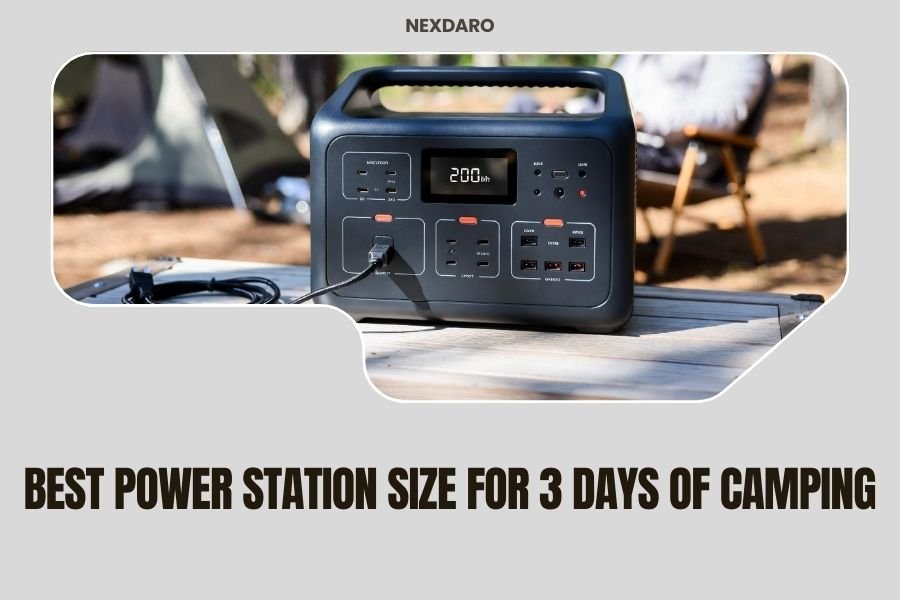
For 3 days of camping, you need a power station with at least 1,000-1,500 watt-hours (Wh) capacity to run essential devices like phones, lights, and a small cooler.
The best power station size depends on your specific power needs, but most campers find that 1,200-2,000 Wh provides comfortable coverage for a 3-day trip without rationing power.
What Size Power Station Do You Actually Need?
Let me be honest with you. Most people guess wrong when picking a power station for camping. They either go way too small and run out of juice on day two, or they buy something massive that weighs 80 pounds.
Here’s what I found after researching dozens of camping setups: your power needs vary wildly based on what you bring. A minimalist camper might get by with 500 Wh. A family with kids and gadgets could easily need 3,000 Wh.
The sweet spot for most 3-day camping trips? Around 1,200-1,500 Wh. This gives you enough power without breaking your back.
Quick Power Station Size Guide
| Camping Style | Recommended Size | What You Can Run |
|---|---|---|
| Minimalist | 500-800 Wh | Phone, lights, small fan |
| Standard | 1,000-1,500 Wh | Phone, lights, cooler, laptop |
| Comfort Camper | 1,500-2,500 Wh | Multiple devices, electric blanket, CPAP |
| Glamping | 2,500+ Wh | Everything plus coffee maker, mini fridge |
Calculate Your Exact Power Needs
Want to know exactly what size you need? Let’s do some simple math together. Don’t worry – this isn’t rocket science.
Step 1: List Your Devices
Write down everything you plan to power during your trip. Check the wattage on each device. If you can’t find watts, look for amps and volts, then multiply them.
Here are common camping devices and their power draw:
- Smartphone: 10-15 watts while charging
- LED lantern: 5-10 watts
- Small cooler: 40-60 watts
- Laptop: 45-65 watts
- Portable fan: 15-30 watts
- CPAP machine: 30-60 watts
Step 2: Estimate Usage Hours
How long will each device run per day? Be realistic. Your phone might charge for 2 hours daily, but your cooler runs 8-12 hours.
Step 3: Do the Math
Multiply watts by hours for each device. Add them up. That’s your daily power consumption in watt-hours.
For 3 days, multiply by 3. Add 20% extra for safety. That’s your minimum power station size.
Example Calculation
Let’s say you have:
- Phone charging: 12 watts × 2 hours = 24 Wh daily
- LED lights: 8 watts × 4 hours = 32 Wh daily
- Small cooler: 50 watts × 10 hours = 500 Wh daily
- Fan: 20 watts × 6 hours = 120 Wh daily
Daily total: 676 Wh. For 3 days: 2,028 Wh. With 20% buffer: 2,434 Wh.
You’d want a 2,500 Wh power station or larger.
Most Popular Power Station Sizes for 3-Day Trips
1,000-1,200 Wh Power Stations
This size works great for couples or solo campers who keep things simple. You can charge phones, run LED lights, and power a small fan without worry.
Weight usually stays under 30 pounds. You can still carry these without throwing out your back.
1,500-2,000 Wh Power Stations
From what I read, this is the most popular range for family camping. You get enough juice for multiple devices without going overboard.
These handle small coolers, multiple phone charges, lights, and even a laptop for a few hours daily. Weight creeps up to 40-50 pounds though.
2,000+ Wh Power Stations
These are for serious comfort campers or families with lots of gear. You can run bigger appliances and never worry about rationing power.
The trade-off? Weight and cost. Some of these beasts weigh 60+ pounds and cost over $2,000.
Factors That Change Your Power Needs
Weather Conditions
Hot weather means more fan usage. Cold weather drains batteries faster and might require electric blankets. Plan for 20-30% more power in extreme weather.
Group Size
More people = more devices. Each extra person typically adds 100-200 Wh daily to your power budget.
Campsite Access
Driving right up to your site? Weight matters less. Hiking in? Every pound counts. You might need to compromise on capacity.
Solar Charging Options
Solar panels can extend your power station’s life. A 100W solar panel adds roughly 400-500 Wh daily in good sun.
Many experts say solar works best as a supplement, not your main power source. Cloudy days and tree cover limit charging.
Common Power Station Mistakes to Avoid
Buying Too Small
I found online that this is the biggest mistake new campers make. They underestimate their power needs and end up miserable on day two.
Better to have too much capacity than too little. You can always use less power.
Ignoring Weight
A 70-pound power station sounds great until you have to move it. Think about your setup process and mobility needs.
Forgetting About Surge Power
Some devices need extra power when starting up. Your power station needs enough surge capacity to handle these startup spikes.
Not Testing Before Your Trip
Never take a new power station camping without testing it first. Charge it fully, run your devices, and see how long it actually lasts.
Power Conservation Tips for 3-Day Camping
Smart Device Management
Turn off devices when not needed. Use airplane mode on phones to save battery. Charge multiple devices during peak solar hours if you have panels.
Choose Efficient Appliances
LED lights use 80% less power than traditional bulbs. DC appliances are often more efficient than AC ones.
Temperature Control Strategies
Pre-cool your cooler at home. Keep it in shade. Limit opening frequency. These simple steps can cut cooler power use by 30-40%.
Backup Power Plans
Always have a backup plan. Bring extra batteries for critical devices. Know where you can charge devices if your power station dies.
Budget Considerations
Cost vs Capacity Trade-offs
Power stations cost roughly $0.50-1.50 per watt-hour of capacity. Premium brands cost more but often last longer and have better warranties.
Long-term Value
A good power station lasts 5-10 years with proper care. Calculate the cost per camping trip – it’s usually less than you think.
When to Splurge vs Save
Splurge on capacity and build quality. Save on fancy features you won’t use. Basic models often work just as well as premium ones.
Seasonal Power Needs
Summer Camping Power Demands
Fans and coolers work harder in heat. Plan for 30-50% more power than spring or fall trips. Portable fans can make camping bearable in hot weather.
Winter Camping Considerations
Cold weather reduces battery efficiency. Batteries might provide 20-30% less power in freezing temperatures. Electric blankets add significant power draw.
Spring and Fall Sweet Spots
Mild weather means lower power needs. This is when smaller power stations really shine. You might get by with 20-30% less capacity.
Conclusion
Choosing the right power station size for 3 days of camping comes down to honest assessment of your needs. Most campers do well with 1,200-2,000 Wh capacity, but your specific situation might call for more or less.
Take time to calculate your actual power consumption. Factor in your camping style, group size, and weather conditions. Remember that it’s better to have extra capacity than to run out of power on your second day.
The perfect power station balances capacity, weight, and cost for your specific needs. Don’t get caught up in features you won’t use. Focus on reliable power that keeps your essential devices running throughout your adventure.
What happens if I underestimate my power needs?
You’ll likely run out of power by day two, leaving you without lights, phone charging, or cooler operation. This can turn a fun camping trip into an uncomfortable situation, especially if you rely on devices for safety or medical needs.
Can I use multiple smaller power stations instead of one large one?
Yes, this approach offers flexibility and redundancy. You can distribute weight better and have backup power if one unit fails. However, multiple units cost more overall and require more management during your trip.
How much does temperature affect power station performance?
Cold weather can reduce capacity by 20-30%, while extreme heat can also impact performance and lifespan. Store your power station in moderate temperatures when possible and expect reduced runtime in harsh weather conditions.
Should I run my power station completely empty before recharging?
No, modern lithium batteries prefer partial discharge cycles. Completely draining your power station can actually reduce its lifespan. Recharge when convenient, ideally before it drops below 20% capacity.
How do I know if my power station can handle high-surge devices?
Check the surge power rating, not just continuous power. Devices like coolers and power tools need 2-3 times their running watts to start up. Your power station’s surge rating should exceed these startup requirements.