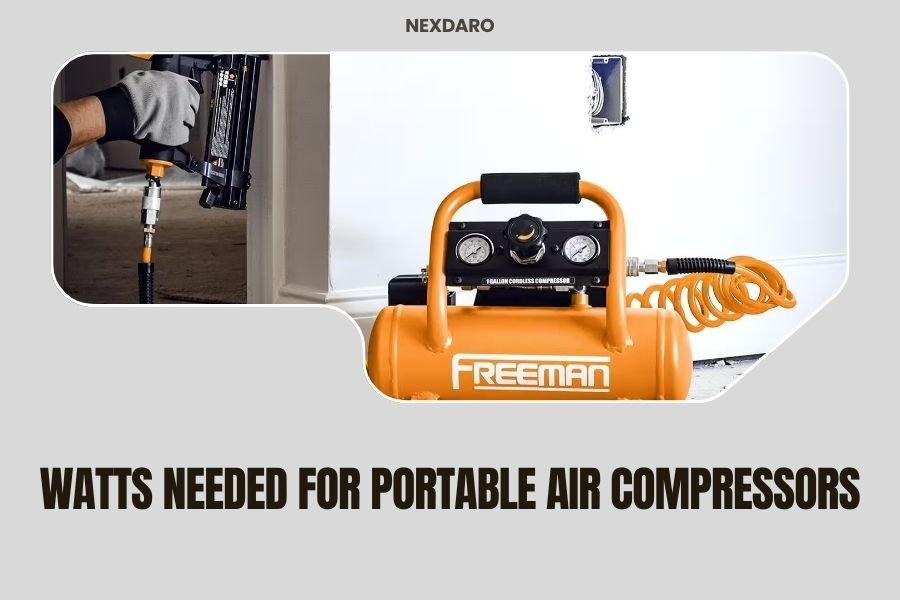
Most portable air compressors need between 120-1800 watts to operate, with small tire inflators requiring around 120-150 watts and heavy-duty compressors needing up to 1800 watts.
Your portable power station must provide at least 20% more watts than your compressor’s rating to handle startup surges and ensure reliable operation.
Understanding Air Compressor Power Requirements
When you’re shopping for a portable power station to run your air compressor, wattage is everything. Think of it like choosing the right size engine for your car – too small and you won’t get where you need to go.
Air compressors come in wildly different sizes. A tiny 12V tire inflator sips power like a laptop. A pancake compressor for nail guns drinks it like a hair dryer. Heavy-duty models gulp electricity like a small refrigerator.
Why Wattage Matters More Than You Think
Your compressor doesn’t just use its rated watts. It actually needs much more power when it first starts up. This surge can be 2-3 times the running watts.
Imagine trying to push a heavy cart from a standstill. You need way more force at first than you do to keep it rolling. Electric motors work the same way.
Different Types of Portable Air Compressors and Their Power Needs
Small Tire Inflators (12V Models)
These little workhorses are perfect for car tires and sports equipment. Most draw between 120-150 watts from your power station.
- Typical runtime: 10-15 minutes per tire
- Best for: Emergency tire inflation, bike tires, sports balls
- Power station requirement: 300-400 watt capacity minimum
What Makes Them So Efficient
Small inflators use simple piston designs. They’re not built for speed, but they get the job done without draining your battery.
Pancake Compressors (1-2 Gallon Tank)
These flat, round compressors are job site favorites. They typically need 800-1200 watts to run properly.
From what I researched, most pancake compressors work great for nail guns and small paint sprayers. They’re the sweet spot between power and portability.
- Tank pressure: Usually 100-150 PSI
- Recovery time: 2-4 minutes
- Power station requirement: 1500+ watt capacity
Why They Need More Power
Bigger tanks mean bigger motors. These compressors also cycle on and off frequently, creating repeated power surges.
Twin Tank and Larger Models
Heavy-duty portable compressors can pull 1500-1800 watts. These are serious tools for serious work.
I found that contractors love these for framing nailers and impact wrenches. But they’ll drain most portable power stations pretty quickly.
Calculating the Right Power Station Size
The 120% Rule
Always buy a power station with at least 20% more capacity than your compressor needs. This buffer handles startup surges and keeps your system stable.
Let’s say you have a 1000-watt compressor. You’d want a power station rated for at least 1200 watts continuous output.
Don’t Forget About Battery Capacity
Watt-hours tell you how long your power will last. A 1000Wh battery running a 500-watt compressor gives you about 2 hours of runtime.
But compressors don’t run constantly. They cycle on and off as pressure drops. Your actual runtime will be much longer.
Understanding Surge vs Running Watts
Every power station lists two numbers: surge watts and continuous watts. Your compressor’s startup surge must be less than the surge rating.
Many experts recommend checking both numbers carefully. A power station might handle the surge but overheat during continuous use.
Real-World Power Consumption Examples
| Compressor Type | Running Watts | Startup Surge | Recommended Power Station |
|---|---|---|---|
| 12V Tire Inflator | 120-150W | 200-250W | 500W+ capacity |
| Small Pancake (1 gal) | 800-1000W | 1800-2200W | 1500W+ capacity |
| Medium Pancake (2 gal) | 1200-1400W | 2500-3000W | 2000W+ capacity |
| Twin Tank (4+ gal) | 1500-1800W | 3000-4000W | 2500W+ capacity |
Why These Numbers Vary
Motor efficiency, tank size, and pressure ratings all affect power draw. Older compressors typically use more electricity than newer models.
Factors That Affect Power Consumption
Ambient Temperature
Cold weather makes compressors work harder. Motors draw more current when they’re cold, and thicker oil creates more resistance.
I came across research showing power consumption can increase 15-20% in freezing temperatures.
Hot Weather Challenges
Heat creates the opposite problem. Compressors may cycle more frequently to maintain pressure as air expands.
Tank Pressure and Duty Cycle
Higher pressure settings mean longer run times. If you’re inflating to 100 PSI instead of 30 PSI, expect much longer cycles.
The duty cycle also matters. A compressor rated for 50% duty cycle should rest as long as it runs to avoid overheating.
Maintenance and Age
Dirty air filters make motors work harder. Old compressors with worn rings lose efficiency over time.
Simple maintenance like changing filters and oil can reduce power consumption by 10-15%.
Choosing the Right Power Station Features
Pure Sine Wave Output
Compressor motors run smoother and more efficiently with pure sine wave power. Modified sine wave can cause extra heat and noise.
From what I read, pure sine wave also extends motor life and reduces the risk of electrical damage.
Why It Matters for Motors
Electric motors are designed for smooth AC power. Choppy waveforms create harmonic distortion that wastes energy as heat.
Multiple Outlet Types
Look for power stations with both AC outlets and 12V ports. Some small compressors run more efficiently on 12V power.
Display and Monitoring
Real-time wattage displays help you understand your compressor’s actual power draw. You’ll quickly learn its cycling patterns.
Tips for Maximizing Runtime
Start Smart
Let your compressor build pressure slowly on first startup. This reduces the initial surge and puts less stress on your power station.
Many contractors I heard from recommend starting with the tank valve slightly open to reduce back pressure.
Use Pressure Wisely
Don’t over-inflate. Running your compressor to maximum tank pressure uses extra energy you might not need.
Temperature Management
Keep both your compressor and power station in shade when possible. Heat reduces efficiency and battery life.
Good airflow around both units prevents overheating and thermal shutdowns.
Plan Your Work
Batch your compressed air tasks together. It’s more efficient than letting the compressor cool down and restart multiple times.
Safety Considerations
Overload Protection
Never bypass overload protection to run a bigger compressor. This can damage both your power station and create fire hazards.
If your compressor won’t start, you need a bigger power station, not a workaround.
Ventilation Requirements
Both compressors and power stations generate heat. Ensure adequate ventilation, especially in enclosed spaces like RVs or sheds.
Ground Fault Protection
When working outdoors or in damp conditions, GFCI protection prevents electrical shocks. Many modern power stations include this feature.
Budget-Friendly Alternatives
12V-Only Options
If you mainly need tire inflation, 12V compressors paired with smaller power stations save money and weight.
These setups work great for camping, RV travel, and emergency tire repairs.
Hybrid Approaches
Consider a small 12V inflator for quick jobs and renting larger compressors for big projects. This avoids buying expensive high-capacity power stations.
Conclusion
Matching your portable air compressor with the right power station comes down to understanding watts, surge requirements, and your specific needs. Small tire inflators work great with modest 500-watt stations, while serious jobsite compressors need 2000+ watts of capacity.
Remember the 120% rule – always size your power station larger than your compressor’s rated watts. Factor in startup surges, ambient temperature, and how long you need to run. With proper planning, you’ll have reliable compressed air wherever your projects take you.
How long will a 1000Wh power station run a small pancake compressor?
A 1000Wh battery will run an 800-watt pancake compressor for about 1.25 hours of continuous operation. Since compressors cycle on and off, you’ll get 3-5 hours of typical use depending on your air consumption rate.
Can I use a modified sine wave power station with my air compressor?
Yes, but pure sine wave is better. Modified sine wave power can cause extra motor noise, heat, and reduced efficiency. If you already own a modified sine wave unit, it will work but may shorten your compressor’s lifespan.
Why won’t my compressor start even though my power station has enough watts?
Check the surge wattage rating, not just continuous watts. Compressors need 2-3 times their running watts for startup. Also ensure your tank is drained – compressors struggle to start against back pressure.
Do oil-free compressors use different amounts of power than oiled models?
Oil-free compressors typically use slightly more power because they rely on tight tolerances instead of oil for sealing. The difference is usually 10-15% higher power consumption, but they require less maintenance.
What’s the most efficient way to inflate car tires with a portable setup?
Use a dedicated 12V tire inflator rather than a large AC compressor. These draw 120-150 watts and inflate tires just as effectively while using much less battery power. Save your big compressor for tools that actually need high-volume airflow.