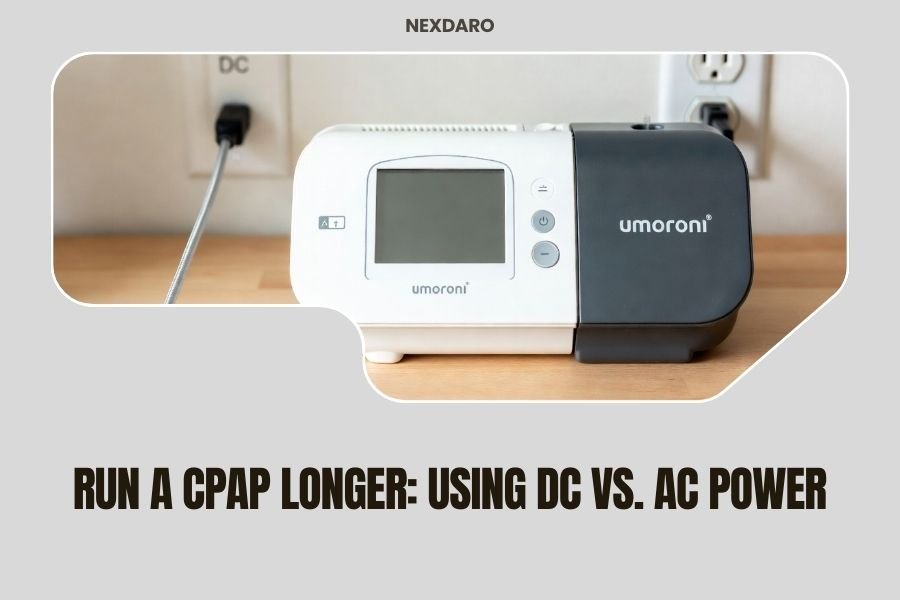
Using DC power instead of AC power can extend your CPAP runtime by 10-20% when connected to a portable power station due to reduced energy conversion losses.
DC power eliminates the need for your power station’s inverter, making the entire system more efficient and helping you sleep longer off-grid.
Why DC vs AC Power Matters for CPAP Users
Your CPAP machine needs steady, clean power to keep you breathing safely all night. When you’re camping or dealing with power outages, every hour of battery life counts.
Most people plug their CPAP into a portable power station using the regular AC wall adapter. That works, but it wastes energy. Your power station converts DC battery power to AC power, then your CPAP adapter converts it back to DC.
Think of it like translating English to Spanish, then back to English. Something gets lost each time.
How Power Conversion Works in Your Setup
The AC Power Path
Here’s what happens when you use AC power:
- Power station battery stores DC power
- Inverter converts DC to AC (loses 10-15% efficiency)
- Your CPAP adapter converts AC back to DC (loses another 10-15%)
- CPAP motor runs on DC power
You’re losing roughly 20-30% of your battery capacity through these conversions.
The DC Power Path
With DC power, the path is simpler:
- Power station battery stores DC power
- DC cable delivers power directly to CPAP
- CPAP motor runs on DC power
You skip the double conversion and keep more energy for actual sleep therapy.
Real-World Runtime Differences
I found research showing typical efficiency gains when switching to DC power. A standard CPAP using 30 watts on AC power might only use 24-27 watts on DC power.
Let’s say you have a 300Wh power station. With AC power at 30 watts, you get about 8-9 hours of runtime. Switch to DC at 25 watts, and you’re looking at 10-11 hours.
That extra 2 hours could be the difference between a full night’s sleep and waking up gasping.
Which CPAP Machines Support DC Power
Travel-Friendly Models
Most modern travel CPAP machines come with DC power options. Popular models like the ResMed AirMini and Philips DreamStation Go include DC adapters or have them available separately.
These machines were designed with portability in mind. Manufacturers know users want maximum battery life.
Full-Size CPAP Machines
Many full-size CPAPs can also run on DC power, but you’ll need to buy the DC adapter separately. Check your manual or call the manufacturer.
ResMed AirSense models, for example, have optional DC converters that plug into the same port as your regular power supply.
Machines Without DC Options
Some older or budget CPAP machines only work with AC power. If you’re stuck with one of these, you can still improve efficiency by choosing a high-quality pure sine wave inverter.
The cheap modified sine wave inverters waste more energy and might damage sensitive electronics over time.
Choosing the Right DC Cable and Adapter
Voltage Requirements
Most CPAP machines need 12V or 24V DC power. Check your machine’s specifications before buying anything.
Using the wrong voltage can damage your expensive CPAP machine. When in doubt, contact the manufacturer.
Amperage and Wattage
Your DC adapter needs to handle your machine’s maximum power draw. This includes the motor, humidifier, and heated tubing if you use them.
A basic CPAP might only need 2-3 amps, but add a heated humidifier and you could need 5-6 amps or more.
Cable Length and Connectors
Make sure your DC cable is long enough to reach from your power station to your bedside. Most people need at least 6 feet of cable.
The connector also needs to match your CPAP’s DC input port perfectly. There are dozens of different connector types, so double-check before ordering.
Power Station Features That Matter
DC Output Ports
Your power station needs the right DC output for your CPAP. Most have 12V car-style outlets, but some CPAPs need different voltages.
Look for power stations with multiple DC output options. This gives you more flexibility for different devices.
Battery Capacity
Bigger isn’t always better, but you need enough capacity for your sleep needs. I found that most CPAP users need at least 300-500Wh for a full night.
If you use a heated humidifier and heated tubing, you might need 700-1000Wh or more.
Pass-Through Charging
This feature lets you charge your power station while using it. Great for long camping trips where you have solar panels or car charging during the day.
| Power Method | Efficiency | Typical Runtime | Heat Generation |
|---|---|---|---|
| AC Power | 70-80% | 8-9 hours | Higher |
| DC Power | 85-95% | 10-12 hours | Lower |
Safety Considerations
Voltage Protection
DC power systems can be less forgiving than AC when something goes wrong. Make sure your power station has built-in voltage protection.
Good power stations shut down automatically if voltage gets too high or too low. This protects both the station and your CPAP.
Fuse Protection
Your DC cable should have inline fuse protection. If there’s a short circuit, the fuse blows instead of damaging your equipment.
Replace blown fuses with the exact same amperage rating. Using a higher-rated fuse defeats the safety feature.
Heat Management
DC systems usually run cooler than AC systems, but heat can still build up in enclosed spaces. Make sure your power station has good ventilation.
Never cover vents or run the system inside a sealed container.
Optimizing Your Setup for Maximum Runtime
Pressure Settings
Higher pressure settings use more power. Work with your doctor to find the lowest effective pressure for your therapy.
Auto-adjusting CPAPs can help by only increasing pressure when needed, rather than running high pressure all night.
Humidifier Management
Heated humidifiers are power hungry. Try reducing the heat setting or using a passive humidifier when battery life is critical.
Some people turn off humidification entirely for camping trips, though this might affect comfort.
Heated Tubing
Heated tubing can double your power consumption. Consider unheated tubing for battery-powered use, especially in warmer weather.
You can always add extra insulation around regular tubing to prevent condensation.
Troubleshooting Common DC Power Issues
Machine Won’t Start
Check all connections first. DC connectors can be finicky, and a loose connection means no power.
Also verify that your power station’s DC output is turned on. Some models require you to activate each output separately.
Unexpected Shutdowns
This often means your power station’s voltage is dropping too low as the battery drains. Your CPAP has protection circuits that shut it down rather than risk damage.
You might need a larger battery or need to recharge more frequently.
Inconsistent Performance
Poor connections can cause voltage fluctuations. Clean all connectors with electrical contact cleaner and ensure tight connections.
Temperature can also affect battery performance. Very cold or hot conditions reduce available capacity.
Cost Analysis: DC vs AC Setup
Initial Investment
DC adapters typically cost $50-150 depending on your CPAP model. That seems expensive, but you’ll save money on battery capacity.
You can often get away with a smaller, cheaper power station when using DC power efficiently.
Long-Term Savings
Better efficiency means less wear on your power station’s battery. Lithium batteries last longer when you don’t drain them as deeply each night.
You’ll also spend less on backup batteries or larger capacity systems.
Alternative Power Sources
Car Power
Your vehicle’s 12V system works great for CPAP machines with DC adapters. Perfect for road trips or car camping.
Just make sure your car battery can handle the overnight drain, or run the engine periodically to recharge.
Solar Integration
DC systems integrate more easily with solar panels. You can charge your power station during the day and run your CPAP at night with minimal conversion losses.
A 100-200 watt solar panel can often keep up with CPAP power needs in good sunlight conditions.
Conclusion
Switching from AC to DC power is one of the easiest ways to extend your CPAP runtime when using a portable power station. The 10-20% efficiency gain translates to real extra hours of sleep therapy when you need it most.
Yes, you’ll need to buy a DC adapter for your specific CPAP model, but the investment pays off quickly in better sleep and peace of mind. Whether you’re camping, dealing with power outages, or just want maximum efficiency from your backup power system, DC power gives you more bang for your buck.
Take time to research the right adapter for your machine and choose a quality power station with good DC outputs. Your future well-rested self will thank you.
Can I damage my CPAP by using DC power?
No, DC power is actually gentler on your CPAP’s internal electronics since it doesn’t require additional conversion. Just make sure you use the correct voltage and a properly rated DC adapter designed for your specific machine model.
How do I know what voltage my CPAP needs for DC power?
Check your CPAP’s user manual or look for specifications on the manufacturer’s website. Most machines use either 12V or 24V DC power. You can also call the manufacturer’s customer service line with your model number for exact requirements.
Will DC power work with my CPAP’s humidifier and heated tubing?
Yes, DC power can run all your CPAP accessories, but heated components will still consume significant power regardless of AC or DC. You may need a higher-capacity power station if you plan to use heated humidification and tubing all night.
Can I use a car’s 12V outlet to power my CPAP while camping?
Absolutely, if your CPAP uses 12V DC power. This works great for car camping or RV trips. Just monitor your car battery level and consider running the engine periodically overnight, or use a deep cycle auxiliary battery to avoid draining your starting battery.
Is it safe to make my own DC cable for my CPAP machine?
While possible for electronics-savvy users, it’s safer to buy a manufacturer-approved DC adapter. Incorrect wiring, wrong gauge wire, or poor connections could damage your expensive CPAP machine or create safety hazards. The cost of a proper adapter is worth the peace of mind.