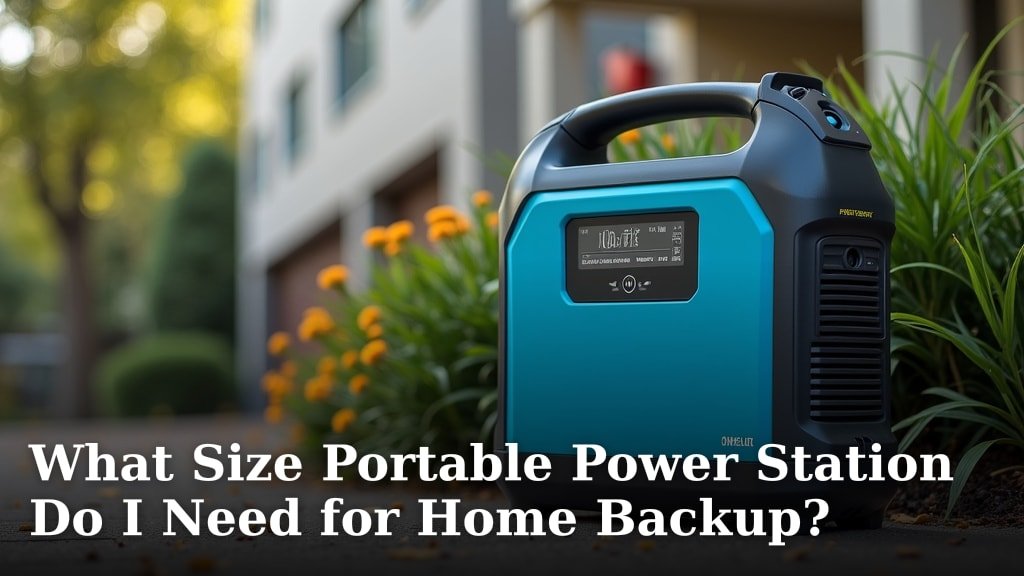
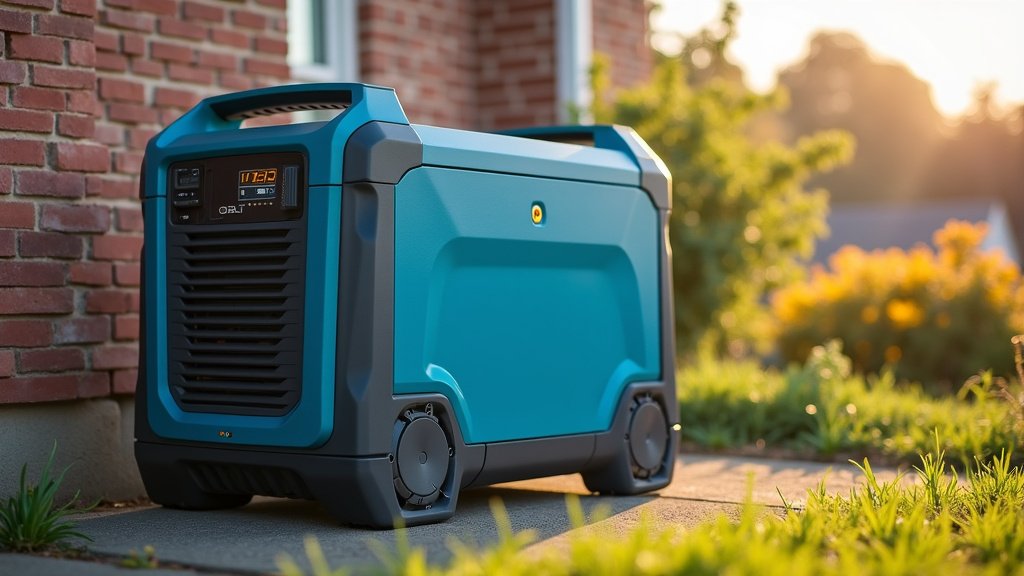
The size of portable power station you need for home backup largely depends on what appliances you want to run and for how long. Most homes will need a unit with at least 1,000 to 2,000 Watts of output and 1,500Wh or more of battery capacity to cover essential items during an outage.
Choosing the right portable power station means looking at both its power output (Watts) and its energy storage (Watt-hours or Wh). We found that matching these numbers to your actual home needs is key for reliable backup. Don’t forget to factor in how long you expect the power to be out.
TL;DR:
- Match Wattage to your highest-power appliance.
- Match Watt-hours to how long you need power.
- Think about essential items first (fridge, lights, charging).
- Consider recharging options (solar, car).
- A 1000W / 1500Wh unit is a good starting point for most.
Let’s walk through exactly how to calculate your home’s power needs and choose the perfect portable power station, ensuring you’re ready for any outage.
Determining the Right Portable Power Station Size for Your Home
You’re wondering which portable power station will truly save the day during a power outage. The best way to figure this out is by understanding your personal power needs. It’s a bit like packing for a trip; you only bring what you’ll actually use.
We’ll walk you through the simple steps to calculate your home’s energy demands. This ensures you buy a unit that’s just right, not too big or too small. You want reliable backup, right?
Understanding Watts (W) and Watt-Hours (Wh)
Before we dive into calculations, let’s quickly clarify two key terms you’ll see everywhere: Watts (W) and Watt-hours (Wh). Think of them as the muscle and the gas tank of your power station.
What is Wattage (W)?
Watts measure the instantaneous power an appliance needs to run. It’s like how fast your car can go. A higher wattage means more power at that exact moment. Your refrigerator might use 150W when running, but briefly spike to 800W when the compressor kicks on. You need a power station that can handle these sudden surges.
What are Watt-Hours (Wh)?
Watt-hours measure the total energy stored in the battery. This is your power station’s “fuel tank.” A higher Wh number means it can power things for longer. If you have a 100Wh battery and you’re powering a 10W light, it could theoretically run for 10 hours (100Wh / 10W = 10 hours).
Your Essential Appliance Power Audit: What Do You Need to Run?
This is the most critical step. Grab a pen and paper, or open a note on your phone. We need to make a list of the items you absolutely cannot live without during an outage. Don’t worry, it’s not as daunting as it sounds!
We found that people often overestimate their needs initially. Focus on truly essential items first. What would make a significant difference to your comfort and safety?
Identifying Your Must-Have Appliances
Consider these categories to get started. Think about both everyday survival and crucial communications.
- Food Preservation: Refrigerator, freezer.
- Lighting: A few LED lamps, not every light in the house.
- Communication: Phone charging, laptop for work/news, Wi-Fi router.
- Comfort: Small fan, electric blanket (low setting), CPAP machine.
- Medical Devices: Any critical medical equipment.
Don’t list your washing machine, electric oven, or central AC. Those typically draw too much power for portable units.
Finding Appliance Wattage
How do you find out how many watts your chosen appliances use? It’s usually quite easy!
- Check the Label: Most appliances have a label or sticker, often on the back or bottom, that lists their power consumption in Watts (W).
- Look in the Manual: If you can’t find a label, the product manual is your next best bet.
- Online Search: A quick search like “how many watts does a [your appliance] use?” will often give you a good average.
Remember to note both the running watts (continuous power) and surge watts (brief spike, usually for motors like in a fridge). Your power station needs to handle the surge.
Calculating Your Total Power Needs
Now, let’s put those numbers to work. We’ll determine both the maximum output you need and the total battery capacity.
Step 1: Determine Peak Wattage (Simultaneous Use)
Add up the running wattage of all the appliances you might want to run at the same time. Then, add the highest single surge wattage from any of those devices. This sum gives you the minimum output wattage your power station needs.
For example, if you want to run a mini-fridge (60W running, 600W surge) and charge a laptop (60W running) and a phone (10W running):
- Total running: 60W (fridge) + 60W (laptop) + 10W (phone) = 130W
- Highest surge: 600W (fridge)
- Peak Wattage Needed: 130W (running) + 600W (highest single surge) = 730W
So, you’d look for a power station with an output of at least 730W. We always suggest rounding up for safety and future flexibility.
Step 2: Estimate Daily Watt-Hour Consumption
This tells you how big your “gas tank” needs to be. For each appliance, multiply its running wattage by how many hours you expect to run it each day.
Let’s use our example:
- Mini-fridge: 60W * 8 hours/day = 480 Wh (Refrigerators cycle on and off, so estimate active run time).
- Laptop: 60W * 3 hours/day = 180 Wh
- Phone: 10W * 2 hours/day = 20 Wh
- Total Daily Wh Needed: 480 + 180 + 20 = 680 Wh
This 680 Wh is your baseline for one day. If you need power for two days, you’d double it to 1360 Wh. Many experts suggest adding a 20-30% buffer to your calculations. This accounts for efficiency losses and gives you wiggle room (CDC).
General Guidelines for Power Station Sizes
Based on our research, here’s a rough guide for common household needs. This can give you a quick idea before you do your detailed calculations.
| Scenario | Recommended Output (Watts) | Recommended Capacity (Watt-Hours) | What It Powers (Examples) |
|---|---|---|---|
| Minimal Essentials (Short Outage) | 300-500W | 250-500Wh | Phone/laptop charging, LED lights, small fan. |
| Essential Comfort (Mid-Range) | 750-1200W | 1000-1500Wh | Mini-fridge, Wi-Fi, CPAP, phone/laptop, a few lights. |
| Extended Backup (Moderate Needs) | 1500-2000W | 2000-3000Wh | Full-size fridge, freezer (cycling), multiple devices, small medical equipment. |
Beyond the Numbers: Other Factors to Consider
It’s not just about Watts and Watt-hours. Other features of a portable power station can make a big difference in how useful it is for your home backup needs.
Recharging Options
How will you recharge your power station once it’s depleted? This is a vital question for extended outages.
- Wall Outlet (AC): Standard and fastest, but only if the grid is up.
- Solar Panels: Excellent for long outages, but dependent on sunshine and takes longer.
- Car Charger (DC): Good for a trickle charge or smaller units, but generally slow.
We’ve found that having at least two recharging options provides the most flexibility. Many people combine solar with AC charging for preparedness.
Battery Chemistry: LiFePO4 vs. NMC
This might sound technical, but it impacts the lifespan and safety of your unit.
- Lithium-ion (NMC): More common, lighter, and often cheaper upfront. But, they have fewer charge cycles (typically 500-800 cycles to 80% capacity).
- LiFePO4 (Lithium Iron Phosphate): More durable, safer, and offer significantly more charge cycles (typically 2,500-3,500+ cycles to 80% capacity). They are heavier and sometimes more expensive.
For home backup, where reliability and longevity are key, we often recommend LiFePO4 batteries. They pay for themselves over time.
Portability and Weight
While called “portable,” some larger units can be quite heavy. Will you need to move it around your house or take it camping?
A 2000Wh unit could weigh 40-60 pounds. Consider if you need wheels or strong handles. Many experts agree that portability can often dictate how frequently you’ll actually use the device (National Institute of Standards and Technology).
Your Portable Power Station Checklist
Before you make a purchase, run through this quick checklist:
- Have you calculated your essential appliances’ total running wattage?
- Do you know the highest surge wattage among those items?
- Did you estimate your total daily Wh for the expected outage duration?
- Is the power station’s output (Watts) higher than your calculated peak?
- Is the power station’s capacity (Wh) sufficient for your desired backup time?
- Does it offer a reliable recharging option for your scenario (e.g., solar)?
Taking these steps will help you choose wisely. You’re preparing for peace of mind, after all!
Conclusion
Selecting the right portable power station for your home backup needs doesn’t have to be overwhelming. By understanding your essential appliances and doing a simple power audit, you can confidently choose a unit that provides real peace of mind. We’ve shown you how to calculate your Watts and Watt-hours, ensuring you get the capacity you truly need.
Remember, it’s about preparedness, not perfection. A well-chosen power station offers reliable backup when the grid goes down. Take the time to do your calculations today, and you’ll be ready for whatever comes your way.
Frequently Asked Questions
Can a portable power station run my entire house?
No, not typically. Portable power stations are designed for essential appliances, not whole-home power. They can handle a refrigerator, lights, and charging devices, but not large loads like central air conditioning or electric stoves.
How long do portable power stations usually last on a single charge?
This depends entirely on its capacity (Wh) and what you’re powering. A 1000Wh unit powering a few LED lights and charging phones might last a day or more. If you run a refrigerator, it could be less than a day. Your calculations help predict this.
Is it safe to use a portable power station indoors?
Yes, absolutely. Unlike gasoline generators, portable power stations produce no emissions, making them perfectly safe for indoor use. This is a major advantage for home backup during an outage.
Can I connect a portable power station to my home’s electrical panel?
Generally, no. Portable power stations are designed to power individual appliances directly via their outlets. Connecting one to your home’s electrical panel requires professional installation of a transfer switch and is usually reserved for larger, more permanent generator solutions.
Do portable power stations lose charge if not used?
Yes, all batteries experience some self-discharge over time, even when not in use. We recommend fully charging your power station every 3-6 months to ensure it’s ready for an emergency. Always check the manufacturer’s specific recommendations for long-term storage.