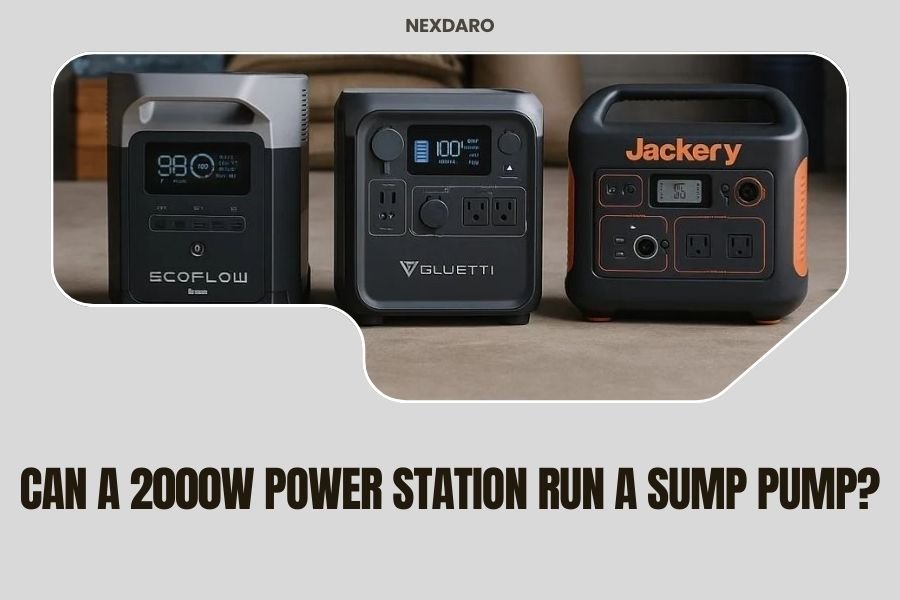
A 2000W power station can run most residential sump pumps, which typically draw between 800-1500 watts during startup and 300-800 watts during normal operation.
Your power station’s surge capacity matters more than continuous output since sump pumps need extra power to start up, but a quality 2000W unit should handle this demand effectively.
Understanding Sump Pump Power Requirements
Before you plug your sump pump into any portable power station, you need to know what you’re dealing with. Sump pumps don’t use steady power like a light bulb would.
They have two power requirements that matter: starting watts and running watts. Think of it like your car needing more energy to start the engine than to keep it idling.
Starting Watts vs Running Watts
When your sump pump kicks on, it needs a surge of power to get the motor spinning. This startup surge can be 2-3 times higher than the normal running power.
Most home sump pumps need 800-1500 watts to start up. Once they’re running smoothly, they drop down to 300-800 watts for continuous operation.
Typical Sump Pump Power Draw
I researched common sump pump specifications and found these typical power ranges:
- 1/3 HP pumps: 600-900 starting watts, 250-400 running watts
- 1/2 HP pumps: 900-1200 starting watts, 400-600 running watts
- 3/4 HP pumps: 1200-1500 starting watts, 600-800 running watts
- 1 HP pumps: 1500-2000 starting watts, 800-1000 running watts
Can Your 2000W Power Station Handle It?
Here’s the straight answer: Yes, a 2000W power station should run most residential sump pumps without breaking a sweat.
But there’s a catch. Not all 2000W power stations are created equal. You need to check two key specs on your unit.
Continuous vs Surge Power Rating
Your power station has two power ratings. The continuous rating is what it can provide all day long. The surge rating is the extra boost it can give for a few seconds.
A quality 2000W power station typically offers 4000W of surge power for 2-3 seconds. This surge capacity is what gets your sump pump started.
Pure Sine Wave Output
Your sump pump motor needs clean power to run properly. Make sure your power station produces pure sine wave output, not modified sine wave.
Modified sine wave can cause motors to run hot, make noise, or fail early. It’s like feeding your pump junk food instead of a balanced meal.
Calculating Runtime on Battery Power
Knowing your pump will start is only half the battle. How long will your power station keep it running during an outage?
The math is pretty straightforward once you know your pump’s power draw and your battery capacity.
Battery Capacity Basics
Power stations list battery capacity in watt-hours (Wh). A 2000Wh battery can theoretically provide 1000 watts for 2 hours, or 500 watts for 4 hours.
But real-world performance is different. You’ll lose about 10-15% to conversion inefficiency.
Runtime Calculation Example
Let’s say you have a 1/2 HP sump pump drawing 500 watts while running. Your power station has a 2000Wh battery capacity.
Theoretical runtime: 2000Wh ÷ 500W = 4 hours
Real-world runtime: 4 hours × 0.85 (efficiency) = 3.4 hours of continuous pumping
Factors That Affect Performance
Your actual results might vary based on several factors you should consider.
Temperature Impact
Cold weather reduces battery capacity. I found that lithium batteries can lose 20-30% capacity when temperatures drop below freezing.
If your basement gets cold during winter storms, plan for shorter runtime than your calculations suggest.
Battery Age and Health
Older batteries don’t hold charge as well as new ones. After 2-3 years, expect your power station to provide 80-90% of its original capacity.
Keep this in mind when planning for emergency backup power. What works today might not work as well next year.
Pump Cycling Frequency
Your pump doesn’t run constantly. It cycles on and off based on water level. During light rain, it might run 10 minutes per hour. During heavy flooding, it could run 40-50 minutes per hour.
Best Practices for Sump Pump Backup Power
Want to get the most out of your power station setup? Follow these tips I gathered from backup power experts.
Position Your Power Station Properly
Keep your power station away from moisture but close enough for your extension cord to reach. Most units aren’t waterproof, so don’t put them directly on basement floors that might flood.
Elevate the unit on a shelf or sturdy table. Good ventilation helps prevent overheating during extended use.
Use Appropriate Cables
Don’t use a lightweight extension cord for your sump pump. The high startup current can cause voltage drop, which might prevent your pump from starting.
Use a heavy-duty 12-gauge extension cord, and keep it as short as possible. Longer cords mean more voltage loss.
Monitor Battery Levels
Most power stations have battery level displays. Check them regularly during outages. You don’t want your pump to stop working when you need it most.
Consider setting phone alarms to remind yourself to check every few hours.
When 2000W Might Not Be Enough
Some situations might push your 2000W power station to its limits or beyond.
Large Horsepower Pumps
If you have a 1 HP or larger sump pump, the startup surge might exceed your power station’s capacity. These pumps can need 2000W or more just to start.
Check your pump’s nameplate or manual for exact specifications before assuming compatibility.
Multiple Pumps
Some homes have backup sump pumps or multiple pumps in different areas. Running two pumps simultaneously will double your power requirements.
A 2000W power station probably can’t handle two pumps starting at the same time.
Additional Basement Equipment
During power outages, you might want to run other equipment too. Basement dehumidifiers, lights, or fans will reduce the power available for your sump pump.
Alternative Solutions to Consider
Power stations aren’t the only way to backup your sump pump. Let me share some other options experts recommend.
Gas-Powered Generators
Portable gas generators can run indefinitely as long as you have fuel. They’re often cheaper per watt than battery power stations.
The downside? They produce carbon monoxide and can’t run indoors safely. You’ll need proper outdoor setup and ventilation.
Water-Powered Backup Pumps
These clever devices use your home’s water pressure to power a backup pump. No electricity needed at all.
They work great as long as your water service stays on during the outage. Municipal water systems often have backup power for their pumps.
Battery Backup Sump Pump Systems
Purpose-built battery backup systems are designed specifically for sump pumps. They often include sealed lead-acid batteries and automatic switching.
These systems cost more upfront but integrate seamlessly with your existing pump setup.
Maintenance Tips for Reliable Operation
Your backup power system needs regular attention to work when emergencies strike.
Power Station Maintenance
Charge your power station every 3-4 months, even when not in use. Lithium batteries lose charge slowly and can be damaged by deep discharge.
Clean the vents and fans regularly. Dust buildup reduces cooling efficiency and can cause overheating.
Connection Testing
Test your complete setup at least twice per year. Connect everything, start the pump, and verify it works properly.
Spring and fall are good times for testing, before storm season begins.
Cost Comparison Analysis
Let’s look at the financial side of different backup power options.
| Solution Type | Initial Cost | Operating Cost | Maintenance |
|---|---|---|---|
| 2000W Power Station | $1200-2000 | Electricity for charging | Low |
| Gas Generator | $400-800 | Fuel costs | Medium |
| Battery Backup System | $800-1500 | Battery replacement | Medium |
| Water-Powered Backup | $300-600 | None | Low |
Safety Considerations
Working with water and electricity requires extra caution. Don’t take shortcuts when safety is involved.
Electrical Safety
Use GFCI protection whenever possible. Many power stations have built-in GFCI outlets, but if yours doesn’t, add a portable GFCI adapter.
Keep all electrical connections above potential flood levels. Water and electricity make a dangerous combination.
Ventilation Requirements
Even though power stations don’t produce exhaust like generators, they can get warm during heavy use. Ensure adequate air circulation around the unit.
Never cover vents or cooling fans while the power station is operating.
Conclusion
A 2000W power station can definitely run most residential sump pumps, making it a solid choice for backup power during outages. The key is matching your pump’s startup requirements with your power station’s surge capacity and ensuring you have enough battery capacity for your expected runtime needs.
Remember to check your pump’s specifications, test your setup regularly, and maintain your equipment properly. With the right preparation, you’ll have reliable backup power when storms knock out the grid and your basement needs protection.
Can I run a 1 HP sump pump on a 2000W power station?
Most 1 HP sump pumps require 1500-2000 watts to start, which pushes the limits of a 2000W power station. Check your pump’s exact specifications and your power station’s surge rating to be sure it can handle the startup current.
How long will a 2000Wh battery run my sump pump?
Runtime depends on your pump’s power draw and how often it cycles. A typical 1/2 HP pump drawing 500 watts will run for about 3-4 hours on a 2000Wh battery, assuming it runs continuously.
Do I need pure sine wave output for my sump pump?
Yes, sump pump motors work best with pure sine wave power. Modified sine wave can cause the motor to run inefficiently, overheat, or make excessive noise.
Can I connect my sump pump directly to the power station?
You can use the power station’s AC outlets, but you’ll likely need a heavy-duty extension cord to reach from your pump location to where you can safely position the power station away from potential flooding.
What happens if my power station runs out of battery during pumping?
The pump will stop working immediately when the battery dies. Monitor battery levels closely during outages and have a backup plan, such as a secondary power source or manual water removal methods.