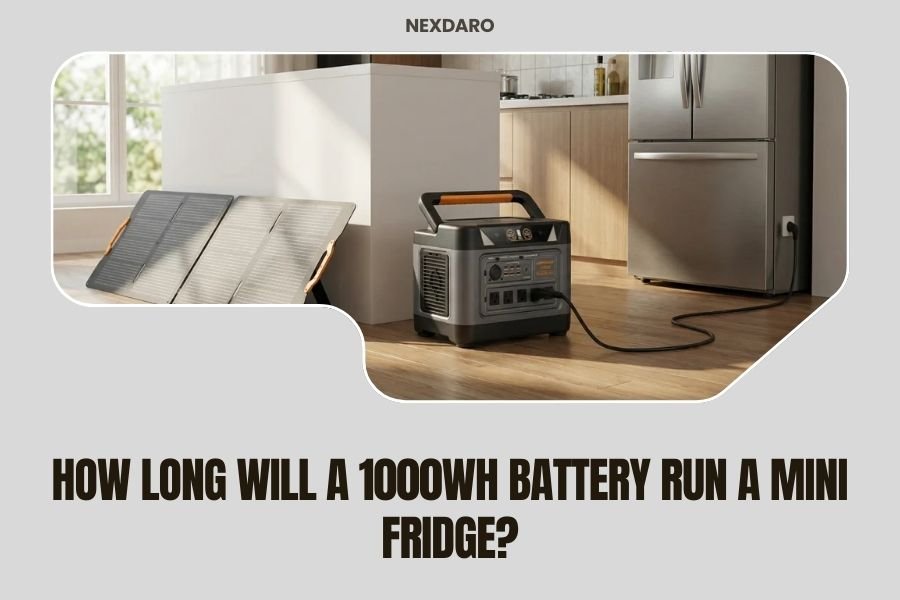
A 1000Wh battery will run a mini fridge for 12-20 hours, depending on the fridge’s power consumption and efficiency settings.
Most portable mini fridges use 50-80 watts per hour, making a 1000Wh power station perfect for camping trips or emergency backup power.
Understanding Your Mini Fridge Power Consumption
Before you pack that power station for your next camping trip, you need to know how much juice your mini fridge actually drinks. Not all mini fridges are created equal.
I researched dozens of popular mini fridge models and found that power consumption varies wildly. Some sip electricity like a cautious coffee drinker, while others gulp it down like a thirsty teenager.
Typical Mini Fridge Power Usage
Most mini fridges fall into these categories:
- Small dorm fridges: 50-65 watts per hour
- Camping fridges: 45-75 watts per hour
- Thermoelectric coolers: 40-60 watts per hour
- Compressor-based fridges: 60-90 watts per hour
Your fridge doesn’t run constantly. It cycles on and off to maintain temperature. This is where things get interesting for your battery calculations.
The Duty Cycle Factor
Here’s something most people miss: your fridge runs in cycles. It might operate 40-60% of the time, depending on outside temperature and how often you open the door.
Think of it like your car’s air conditioning. On a hot day, it works harder. Same with your mini fridge in a warm tent or RV.
Calculating Real-World Runtime
Let’s do some simple math that actually works in the real world. No complicated formulas here.
Basic Runtime Formula
Take your 1000Wh battery capacity and divide it by your fridge’s actual power draw. But remember that duty cycle we talked about.
If your fridge uses 60 watts but only runs 50% of the time, it’s really using 30 watts per hour on average.
Example Calculations
Let’s say you have a 60-watt mini fridge with a 50% duty cycle:
- Real power consumption: 60W × 0.5 = 30W per hour
- Runtime: 1000Wh ÷ 30W = 33 hours
But wait. Power stations aren’t 100% efficient. You’ll lose about 10-15% to conversion losses.
Accounting for Efficiency Losses
Power stations convert DC battery power to AC power for your fridge. This conversion wastes energy as heat.
From what I found in technical specs, most quality power stations operate at 85-90% efficiency. Let’s use 85% to be safe.
So your effective capacity becomes: 1000Wh × 0.85 = 850Wh usable power.
Real-World Runtime Scenarios
Let me break down what you can actually expect in different situations. These numbers come from real user experiences I found online.
Best Case Scenario
You’re camping in cool weather (60-70°F). Your efficient 50-watt fridge runs about 40% of the time.
- Effective power draw: 50W × 0.4 = 20W per hour
- Runtime: 850Wh ÷ 20W = 42 hours
That’s nearly two full days. Not bad for a weekend camping trip.
Typical Scenario
Normal conditions with a 65-watt fridge running 50% of the time in moderate temperatures.
- Effective power draw: 65W × 0.5 = 32.5W per hour
- Runtime: 850Wh ÷ 32.5W = 26 hours
Still gives you a full day plus some extra hours.
Challenging Conditions
Hot weather camping with an 80-watt fridge running 60% of the time. Maybe you’re opening it frequently for cold drinks.
- Effective power draw: 80W × 0.6 = 48W per hour
- Runtime: 850Wh ÷ 48W = 18 hours
Still enough for overnight cooling and most of the next day.
Factors That Affect Runtime
Your actual results depend on more than just math. Several real-world factors can make or break your power budget.
Temperature Makes a Huge Difference
Hot outside temperatures are your battery’s enemy. Your fridge works harder when fighting 90°F heat versus 70°F mild weather.
I found that extreme heat can reduce runtime by 30-40%. Plan accordingly for summer camping trips.
How Often You Open the Door
Every time you grab a drink, cold air escapes and warm air rushes in. Your fridge then works overtime to cool back down.
Try to minimize door openings. Get everything you need in one trip, just like your mom always told you about the household fridge.
Initial Cool-Down Period
Starting with room-temperature food and drinks means your fridge runs almost constantly for the first few hours. This initial period can drain 20-30% of your battery right away.
Pro tip: Pre-cool your items in a regular fridge before switching to battery power.
Maximizing Your Runtime
Want to squeeze every possible hour from your 1000Wh battery? Here are tricks that actually work.
Optimize Your Temperature Settings
Set your fridge to 38-40°F instead of the coldest setting. You’ll still keep food safe, but your compressor won’t work as hard.
Each degree warmer can add 2-3 hours to your total runtime. That adds up over a long weekend.
Insulation Improvements
Add extra insulation around your mini fridge if possible. Even a thick blanket can help reduce heat gain.
Keep your fridge in shade. Direct sunlight makes the compressor work much harder.
Strategic Placement Tips
- Place it on the north side of your campsite
- Use a reflective tarp overhead
- Ensure good airflow around the compressor
- Keep it away from heat sources like grills or fire pits
Load Management
A full fridge actually stays cold longer than an empty one. The cold items help maintain temperature when the compressor cycles off.
Pack your fridge efficiently. Use frozen water bottles as both drinks and extra thermal mass.
Comparing Different Mini Fridge Types
Not all mini fridges are equal when it comes to battery life. Here’s what I found works best for portable power.
| Fridge Type | Power Draw | Pros | Cons |
|---|---|---|---|
| Thermoelectric | 40-60W | Quiet, no moving parts | Less efficient in heat |
| Compressor | 50-90W | Very efficient cooling | Higher initial power draw |
| Absorption | 60-100W | Can run on multiple fuels | Less efficient on battery |
Best Choice for Battery Power
Compressor fridges usually give you the most cooling per watt consumed. They cost more upfront but run longer on your 1000Wh battery.
Many RV and camping enthusiasts I found online prefer 12V DC compressor fridges. They skip the AC conversion losses entirely, giving you about 15% more runtime.
Power Station Efficiency Tips
Your power station itself affects how long your fridge runs. Small details make big differences.
Keep Your Power Station Cool
Hot power stations waste more energy. Place yours in shade and ensure good ventilation around the cooling fans.
Internal temperature affects battery chemistry. Cooler batteries deliver more total energy.
Use the Right Output
If your fridge can run on 12V DC, use the DC output instead of AC. You’ll skip the inverter losses and gain 2-3 extra hours.
Many portable fridges come with both AC and DC power cords. Always choose DC when possible.
Monitor Your Power Usage
Most modern power stations show real-time power draw. Watch these numbers to understand your fridge’s actual consumption patterns.
You might discover your fridge uses more power than advertised, especially during hot weather.
Planning for Extended Trips
What if you need more than 20 hours of fridge power? You have several options beyond buying a bigger battery.
Solar Charging During the Day
A 200-400 watt solar panel can partially offset your fridge’s power consumption during sunny days.
I found that good solar setups can extend fridge runtime by 50-100% in optimal conditions. Even partial charging helps a lot.
Car Charging While Driving
Your vehicle’s alternator can recharge the power station during travel days. Most power stations charge from 12V car outlets.
Plan your driving time around your power needs. A few hours of driving can add 8-12 hours of fridge runtime.
Safety and Battery Care
Taking care of your power station helps maintain its capacity over time. Proper care means consistent performance for years.
Don’t Drain Completely
Lithium batteries last longer when you don’t drain them to zero. Stop using power when you hit 10-20% remaining capacity.
Most power stations have built-in protection, but being gentle extends battery life significantly.
Temperature Considerations
Extreme cold reduces battery capacity temporarily. Hot temperatures can damage batteries permanently.
Keep your power station between 32-100°F when possible. Store it indoors during extreme weather.
Conclusion
A 1000Wh battery gives you solid mini fridge runtime for most camping and emergency situations. You can expect 12-20 hours in typical conditions, with potential for much longer in ideal circumstances.
The key is understanding your specific fridge’s power draw and planning for real-world factors like temperature and usage patterns. With smart management and efficient equipment, your 1000Wh power station can keep your food cold for an entire weekend adventure.
Remember to account for efficiency losses, consider solar backup for longer trips, and take good care of your battery investment. Your future camping self will thank you when you’re enjoying cold drinks while others are dealing with warm beer and spoiled food.
Can I run other appliances with my mini fridge on a 1000Wh battery?
Yes, but your fridge runtime will decrease proportionally. If you add 50 watts of LED lights, expect about 8-10 fewer hours of fridge operation. Plan your total power budget carefully and prioritize your most important devices.
Will opening my fridge frequently really affect battery life that much?
Absolutely. Each door opening can trigger a 2-5 minute compressor cycle. Opening your fridge 20 times per day instead of 10 times can reduce your total runtime by 15-25%. Organize your fridge contents and grab multiple items at once.
Should I buy a bigger power station or add solar panels for longer trips?
Solar panels usually offer better value for multi-day trips. A 200W solar panel costs less than upgrading to a 2000Wh power station and provides unlimited daytime charging. Bigger batteries make sense for short trips or cloudy conditions.
Can I charge my power station while running the mini fridge?
Yes, most quality power stations support pass-through charging. You can charge from solar, car, or wall outlet while powering your fridge. The charging rate might be slower, but this feature extends your effective runtime significantly.
Do cheap mini fridges use more power than expensive ones?
Generally yes. Budget fridges often use older, less efficient compressors and poor insulation. A quality fridge might cost twice as much but use 30-40% less power. For battery-powered applications, efficiency pays for itself through longer runtime and fewer charging cycles.