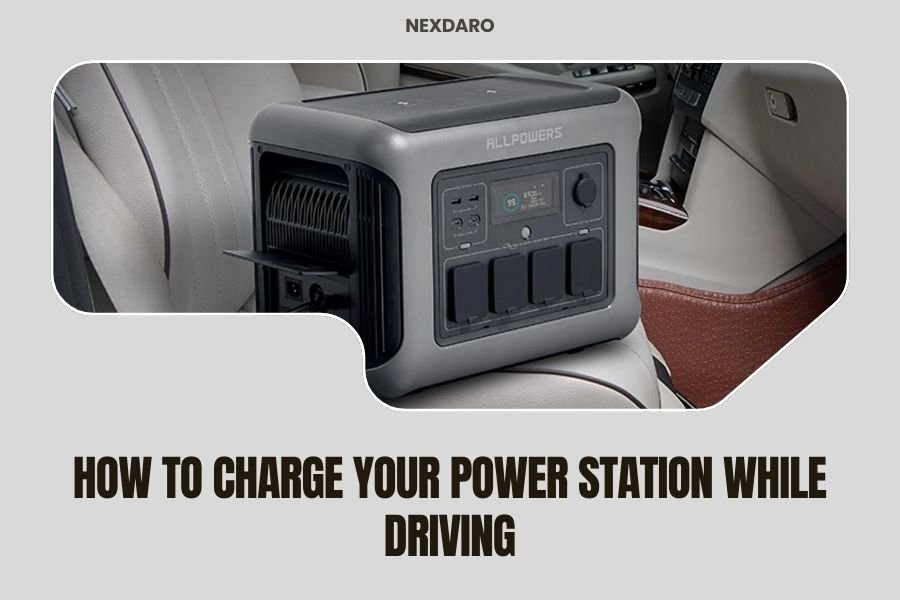
You can charge your power station while driving by connecting it to your vehicle’s 12V outlet using a DC-to-DC car charger cable specifically designed for your power station model.
This method keeps your power station charged during road trips, camping adventures, and emergency situations when you need continuous power on the go.
Why Charge Your Power Station While Driving?
Picture this: you’re halfway through a weekend camping trip and your power station is running low. Your phone needs juice, your camp lights are dimming, and you forgot to bring extra batteries. Sound familiar?
Charging while driving solves this problem before it starts. Your car becomes a mobile charging station that keeps your gear powered up without stopping your adventure.
Road trippers love this setup because it means unlimited power for devices, cameras, and camping equipment. You never have to worry about finding electrical outlets in remote locations.
What You Need to Get Started
Getting set up is simpler than you might think. You need just a few basic items that most drivers can install themselves.
Essential Equipment
- DC car charger cable (compatible with your power station)
- 12V outlet or cigarette lighter adapter in your vehicle
- Fuse protection (often built into the cable)
- Secure mounting or storage area for the power station
Most power stations come with car charging cables included. If yours didn’t, you can buy one from the manufacturer or find universal options online.
Checking Your Vehicle’s Power Output
Not all car outlets are created equal. Standard cigarette lighters usually provide 10-15 amps at 12V. That’s about 120-180 watts of charging power.
Some newer vehicles have dedicated 12V outlets that can handle higher amperage. Check your owner’s manual to see what your car can safely provide.
Step-by-Step Charging Process
Ready to start charging? Here’s how to do it safely and effectively.
Step 1: Prepare Your Power Station
Turn off your power station before connecting the charging cable. This prevents any electrical spikes when you plug it in.
Place the unit in a secure location where it won’t slide around while driving. Many people use the floor behind the front seats or in a cargo area.
Step 2: Connect the Car Charger
Plug the DC charging cable into your power station’s input port. Most units have a clearly marked DC input that looks different from the regular outlets.
Connect the other end to your vehicle’s 12V outlet. You should see a charging indicator light up on your power station within a few seconds.
Step 3: Monitor the Charging Process
Start your engine before beginning the charging process. This ensures your car’s alternator can handle the extra electrical load without draining your vehicle’s battery.
Keep an eye on the power station’s display to track charging progress. Most units show input wattage and estimated time to full charge.
Charging Speed and Time Expectations
How long will it take to charge your power station? That depends on several factors working together.
Factors That Affect Charging Speed
Your car’s electrical system limits how fast you can charge. Most vehicles provide 10-15 amps through standard outlets, which translates to slower charging compared to wall outlets.
Power station capacity matters too. A 300Wh unit charges much faster than a 1000Wh model when using the same car charger.
Realistic Time Estimates
Here’s what you can expect for different power station sizes:
| Power Station Size | Charging Time (0-100%) | Charging Time (50-100%) |
|---|---|---|
| 300Wh | 3-4 hours | 1.5-2 hours |
| 500Wh | 5-6 hours | 2.5-3 hours |
| 1000Wh | 8-10 hours | 4-5 hours |
Remember, you don’t always need a full charge. Topping off from 50% to 80% during a 2-hour drive gives you plenty of extra power for most needs.
Safety Considerations You Can’t Ignore
Safety first, adventure second. Here are the key safety points to keep in mind.
Electrical Safety
Never exceed your vehicle’s amperage limits. Research I found suggests that overloading car electrical systems can damage fuses, wiring, or even your alternator.
Always use fused charging cables. The fuse protects both your power station and your car if something goes wrong.
Heat Management
Power stations generate heat while charging. Don’t cover the unit or stuff it in tight spaces without airflow.
If your power station feels hot to the touch, give it a break. Park in shade when possible and crack windows for ventilation.
Secure Mounting
A 20-pound power station becomes a dangerous projectile in a crash. Always secure your unit with straps, bungee cords, or by wedging it between seats.
Some people build custom mounting brackets for regular travelers. This keeps the unit stable and easily accessible.
Maximizing Charging Efficiency
Want to get the most out of your car charging setup? These tips help you charge faster and more reliably.
Engine Running vs. Engine Off
Always keep your engine running while charging larger power stations. Your alternator provides much more power than your car battery alone.
If you must charge with the engine off, only do it for short periods with smaller units. You don’t want to drain your car battery and get stranded.
Temperature Considerations
Cold weather slows down charging speeds. In winter, keep your power station inside the heated cabin rather than in a cold trunk.
Hot summer days can also reduce efficiency. Park in shade when stopped and use window shades to keep interior temperatures down.
Common Problems and Solutions
Even the best setups can run into issues. Here’s how to handle the most common problems.
Power Station Won’t Charge
Check all connections first. Loose plugs are the most common cause of charging problems.
Try a different 12V outlet if your car has multiple ones. Sometimes individual outlets can fail while others work fine.
Slow Charging Speeds
Your car might be limiting power to protect the electrical system. This is normal behavior, not a defect.
Try charging when fewer other electrical accessories are running. Turn off heated seats, phone chargers, and other devices temporarily.
Blown Fuses
If charging stops suddenly, check the fuse in your charging cable first. Many cables have replaceable inline fuses that can blow if there’s a power surge.
Also check your vehicle’s fuse box. The 12V outlet usually has its own fuse that might need replacement.
Alternative Charging Methods While Traveling
Car charging isn’t your only option on the road. Here are other ways to keep power flowing during travel.
Solar Panels
Portable solar panels work great when you’re parked for extended periods. Many power stations accept solar input while simultaneously charging from your car.
Solar charging is slower but completely silent. It’s perfect for camping when you don’t want to run your engine.
Dual Charging Setup
Some advanced users combine car charging with solar panels. This setup provides maximum charging speed when both sources are available.
You can charge from your car while driving, then switch to solar when parked. This gives you nearly continuous power replenishment.
Choosing the Right Car Charger
Not all car chargers work the same way. Here’s what to look for when buying one.
Compatibility
Always buy chargers designed for your specific power station model. Generic chargers might fit physically but could damage your unit with incorrect voltage or amperage.
Check the connector type and charging specifications before ordering. When in doubt, buy directly from your power station manufacturer.
Cable Length and Quality
Longer cables give you more flexibility in placing your power station. Look for cables at least 6 feet long for most vehicles.
Heavy-duty cables with thick wires handle high amperage better than thin, cheap options. The extra cost is worth it for reliability.
Maintenance Tips for Long-Term Use
Taking care of your charging setup keeps it working reliably for years.
Cable Care
Avoid sharp bends and kinks in charging cables. Coil them loosely when storing to prevent wire damage.
Keep connectors clean and dry. Corrosion on metal contacts can cause poor connections and charging problems.
Power Station Care
Don’t let your power station completely drain before charging. Lithium batteries last longer when kept between 20% and 80% charge levels.
Clean cooling vents regularly to prevent dust buildup. Blocked vents cause overheating and reduced performance.
Cost Analysis and Power Consumption
How much does car charging actually cost you? The numbers might surprise you.
Fuel Consumption Impact
Charging a power station increases your engine’s electrical load, which slightly increases fuel consumption. Research I found indicates this adds about 1-2% to your fuel usage for typical charging sessions.
For a 500Wh power station, you’re looking at roughly $0.50-$1.00 in extra gas costs per full charge, depending on fuel prices and your vehicle’s efficiency.
Alternator Wear
Your alternator works harder when charging power stations, but modern alternators are designed to handle electrical loads. Normal car charging shouldn’t cause premature wear if done properly.
Avoid charging multiple high-power devices simultaneously to reduce strain on your electrical system.
Conclusion
Charging your power station while driving opens up a world of possibilities for extended adventures and emergency preparedness. With the right equipment and proper safety precautions, you can keep your devices powered no matter how far off the grid you travel.
Start with a quality car charger designed for your power station model. Practice the setup at home before your first big trip. Remember to prioritize safety by securing your equipment and monitoring charging progress.
The freedom to generate power on demand transforms how you think about travel and outdoor activities. Whether you’re documenting a cross-country road trip or powering essential medical devices, car charging gives you the independence to go anywhere with confidence.
Can I charge my power station while using it to power other devices?
Yes, most power stations support pass-through charging, which means they can charge and discharge simultaneously. Your charging rate will be slower since some power goes directly to connected devices instead of the battery.
Will charging my power station drain my car battery when the engine is off?
Yes, charging with the engine off will drain your car battery. Only charge small power stations briefly without the engine running, and always keep jumper cables handy as backup.
What happens if I use the wrong amperage car charger?
Using a charger with too low amperage simply results in slower charging. Too high amperage can damage your power station’s internal charging circuit. Always match the specifications recommended by your manufacturer.
Can I charge my power station through my vehicle’s USB ports?
No, USB ports don’t provide enough power to charge power stations effectively. You need to use the 12V DC outlets that provide much higher wattage for meaningful charging speeds.
Is it safe to leave my power station charging in the car overnight?
It’s not recommended to leave power stations charging unattended for long periods, especially overnight. Temperature changes and potential electrical issues make supervised charging much safer for both your equipment and vehicle.