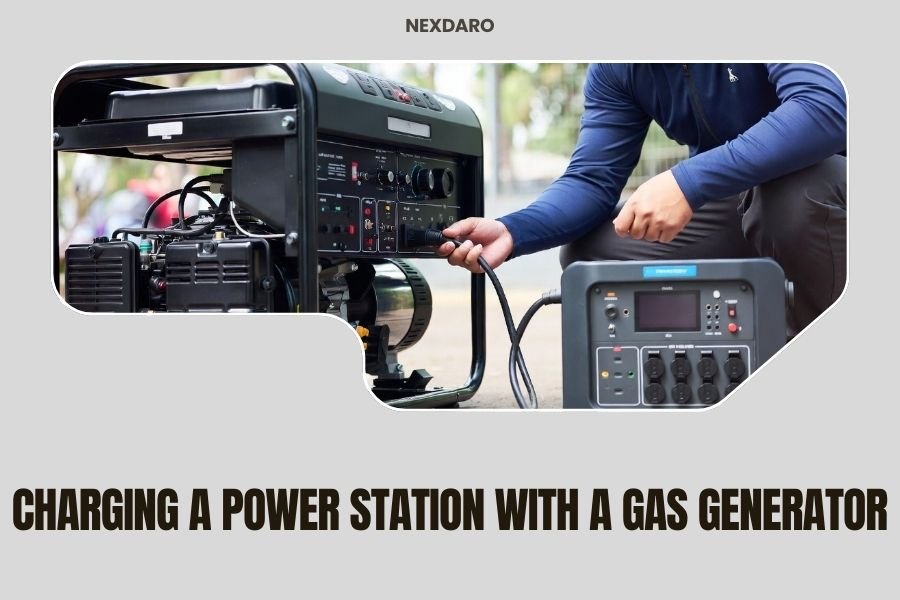
Yes, you can charge a power station with a gas generator by connecting them through the AC input port using the proper cables and ensuring compatible voltage requirements.
This charging method works well for extended off-grid situations where solar panels aren’t practical, though you’ll need to monitor both devices during the process.
Why Charge Your Power Station with a Gas Generator?
Sometimes solar panels just don’t cut it. Maybe you’re camping under thick trees, dealing with cloudy weather for days, or facing an emergency power outage that’s dragging on.
That’s when a gas generator becomes your power station’s best friend. Think of it like this: your power station is a big rechargeable battery, and the gas generator is like a wall outlet that you can take anywhere.
From what I researched, this combination gives you the best of both worlds. You get quiet, clean power from your station most of the time, plus the ability to refuel it quickly when needed.
How Gas Generator Charging Actually Works
The process is pretty straightforward. Your gas generator produces AC power, just like your home outlets. Your power station takes that AC power and converts it to DC power for storage in its batteries.
Most power stations have built-in charge controllers that handle this conversion automatically. You don’t need to worry about the technical stuff – just plug and charge.
The Basic Connection Process
Here’s what happens when you connect them. The generator’s AC outlet feeds power through a standard cable into your power station’s AC input port.
Your station’s internal systems take over from there. They regulate voltage, manage charging speed, and protect the batteries from overcharging.
What You Need Before Starting
You can’t just grab any generator and expect it to work perfectly. Let me walk you through what you need to check first.
Power Requirements and Compatibility
Your power station’s manual will list its AC input requirements. Most accept standard 110V household current, but some larger units might need different voltage.
Check your generator’s output too. A small 1000-watt generator might struggle to charge a big power station efficiently.
Matching Wattage for Best Results
I found that experts recommend a generator with at least 20% more capacity than your power station’s maximum charge rate. If your station charges at 400 watts, aim for a 500-watt generator minimum.
Essential Cables and Adapters
Most power stations come with an AC charging cable. This plugs into any standard outlet, including your generator’s outlets.
Some situations might need adapters. RV-style outlets, for example, use different plug shapes than household outlets.
Step-by-Step Charging Process
Ready to actually do this? Here’s your complete walkthrough.
Setting Up Your Generator Safely
Place your generator at least 15 feet away from your camping area or building. Gas generators produce carbon monoxide, which can be deadly in enclosed spaces.
Make sure it’s on level ground and has proper ventilation. Never run a generator inside a tent, RV, garage, or any partially enclosed space.
Starting and Stabilizing the Generator
Start your generator and let it warm up for 2-3 minutes before connecting anything. This helps the voltage stabilize and reduces the chance of power surges.
Making the Connection
With your generator running smoothly, plug your power station’s AC charging cable into the generator’s outlet.
Connect the other end to your power station’s AC input port. Most stations will beep or show a charging indicator when they detect incoming power.
Monitoring the Charge Process
Keep an eye on both devices during charging. Your power station should display charging status, current battery level, and estimated time to full charge.
Check your generator’s fuel level regularly too. Running out of gas mid-charge won’t hurt anything, but it’s annoying.
How Long Does Charging Take?
Charging times vary a lot based on your specific equipment. A 500Wh power station might take 2-3 hours with a decent generator, while a 2000Wh unit could need 6-8 hours.
Your generator’s wattage matters here. A small 1000W generator charging a large power station is like filling a swimming pool with a garden hose – it works, but takes forever.
Factors That Affect Charging Speed
Temperature plays a big role. Cold weather slows down battery charging, while extremely hot conditions might trigger safety shutdowns.
Your power station’s current battery level also matters. Most lithium batteries charge fastest when they’re around 20-80% capacity.
Safety Considerations You Can’t Ignore
Gas generators and electricity don’t forgive mistakes. Let’s keep you safe out there.
Carbon Monoxide Prevention
I can’t stress this enough – carbon monoxide kills. It’s colorless, odorless, and deadly. Always run your generator outside with plenty of airflow.
Consider investing in a portable carbon monoxide detector if you’re using generators regularly for camping or emergency backup.
Weather Protection
Never run a generator in rain or snow without proper shelter. Water and electricity make a dangerous combination.
You can buy generator covers or build a simple shelter, but make sure it doesn’t block ventilation.
Fuel Handling and Storage
Store gasoline in proper containers, away from heat sources and living areas. Gas vapors are heavier than air and can pool in low areas.
Keep a fire extinguisher nearby when refueling. Turn off the generator and let it cool down before adding fuel.
Comparing Different Generator Types
Not all generators work equally well for charging power stations. Here’s what I found works best.
| Generator Type | Best For | Noise Level | Clean Power |
|---|---|---|---|
| Inverter Generator | Electronics charging | Quiet | Very clean |
| Standard Portable | Basic power needs | Loud | Acceptable |
| Dual Fuel | Extended use | Moderate | Good |
Inverter Generators: The Gold Standard
Inverter generators produce the cleanest power for sensitive electronics. They’re quieter too, which your camping neighbors will appreciate.
The downside? They cost more upfront. But for regular power station charging, they’re worth the investment.
Standard Portable Generators
These workhorses cost less but make more noise and produce rougher power. They’ll charge your power station just fine, but might not be ideal for direct electronics use.
Troubleshooting Common Issues
Things don’t always go smoothly. Here are the problems I hear about most often.
Power Station Won’t Start Charging
Check all connections first. Make sure the generator is producing stable power and your cables are secure.
Some power stations are picky about voltage. If your generator’s voltage is too high or low, the station might refuse to charge as a safety feature.
Voltage and Frequency Problems
Most US power stations expect 120V at 60Hz. Cheap generators sometimes drift from these specs under load.
Try reducing the load on your generator or letting it warm up longer if you’re having charging issues.
Charging Stops Unexpectedly
This usually means your generator ran out of fuel or your power station detected a problem with incoming power.
Check fuel levels first, then look at your power station’s display for error messages.
Maximizing Efficiency and Battery Life
Want to get the most out of this charging method? Here’s what works.
Optimal Charging Practices
Don’t wait until your power station is completely dead. Lithium batteries last longer when you keep them between 20-80% charge most of the time.
Charge at moderate temperatures when possible. Extreme cold or heat stresses batteries and reduces their lifespan.
Managing Generator Runtime
Run your generator efficiently by charging during cooler parts of the day. This reduces fuel consumption and heat stress on both devices.
Consider charging multiple devices at once to maximize your generator’s runtime efficiency.
Cost Analysis: Is It Worth It?
Let’s talk money. Gas isn’t free, and generators need maintenance.
Fuel Costs Per Charge
A typical charge cycle might use 0.5-1 gallon of gas, depending on your power station’s capacity and generator efficiency.
At current gas prices, expect to spend $2-5 per full charge. That’s expensive compared to solar, but cheap compared to being stranded without power.
When Generator Charging Makes Sense
Emergency situations top the list. When the power’s out for days and your solar panels can’t keep up, gas generator charging becomes invaluable.
Extended camping in heavily wooded areas is another great use case. Dense tree cover blocks solar panels but doesn’t stop generators.
Conclusion
Charging your power station with a gas generator gives you reliable backup power when solar and wall charging aren’t options. The process is straightforward – connect through the AC input port and monitor both devices during charging.
Safety comes first with this setup. Always run generators outside with proper ventilation, and never ignore carbon monoxide risks. Choose an inverter generator when possible for cleaner power and quieter operation.
While gas charging costs more than solar, it provides fast, reliable charging in any weather condition. This makes it perfect for emergencies, extended camping, or situations where solar panels can’t get adequate sunlight.
Can I charge my power station while the generator is running other appliances?
Yes, but make sure your generator has enough capacity for everything combined. Add up all the wattages and stay below your generator’s rated output to avoid overloading.
Will using a gas generator damage my power station’s battery?
No, modern power stations have built-in charge controllers that protect the battery from damage. The charging system automatically regulates voltage and current regardless of the power source.
How often should I use generator charging versus solar charging?
Use solar charging whenever possible since it’s free and environmentally friendly. Reserve generator charging for emergencies, cloudy weather periods, or when you need fast charging and solar isn’t practical.
What size generator do I need for my specific power station?
Check your power station’s maximum AC input wattage in the manual, then choose a generator with at least 20% more capacity. For example, if your station charges at 500 watts, get at least a 600-watt generator.
Can I use an extension cord between my generator and power station?
Yes, but use a heavy-duty outdoor extension cord rated for your power requirements. Longer cords can cause voltage drops, so keep them as short as possible while maintaining safe generator distance.