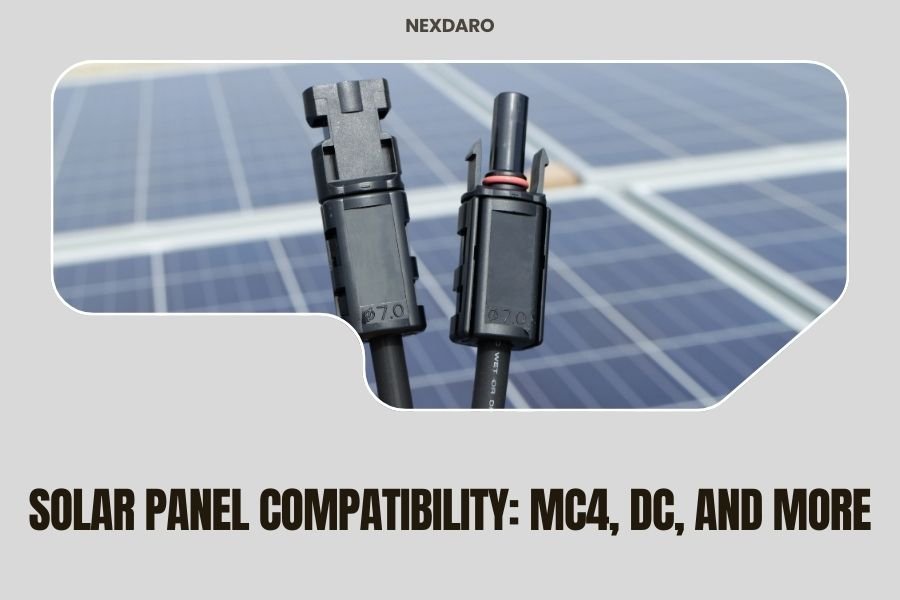
Solar panel compatibility with portable power stations depends on three main connector types: MC4 connectors for most solar panels, DC barrel plugs for power stations, and Anderson Powerpole connectors for high-current applications.
You’ll need the right adapters and cables to match your solar panel’s output connector with your power station’s input port, plus proper voltage and amperage ratings for safe charging.
Understanding Solar Panel Connector Types
When you’re shopping for solar panels to charge your portable power station, you’ll encounter several connector types. Each serves a different purpose and works with different equipment.
Think of connectors like different charging ports on your phone. Just as you can’t plug a USB-C cable into a Lightning port, solar connectors need to match your power station’s input.
MC4 Connectors: The Solar Standard
MC4 connectors are the most common type you’ll find on solar panels. These weatherproof connectors snap together with a satisfying click and lock securely.
They look like small plastic cylinders with metal contacts inside. The male connector has a pin, while the female has a socket. You push them together until they click.
Most rigid solar panels and many portable panels use MC4 connectors. They handle high currents safely and resist water, dust, and UV damage.
MC4 Connector Benefits
MC4 connectors offer several advantages for solar setups:
- Weatherproof design protects against moisture and dirt
- Secure locking mechanism prevents accidental disconnection
- Industry standard means wide compatibility
- Can handle up to 30 amps of current safely
- Easy to connect and disconnect with proper tools
DC Barrel Plugs: Power Station Standard
Most portable power stations use DC barrel plugs for solar input. These round plugs slide into circular ports on your power station.
DC barrel plugs come in different sizes. The most common are 5.5mm x 2.1mm and 5.5mm x 2.5mm. The first number is the outer diameter, the second is the inner diameter.
Some power stations use larger barrel plugs like 7.4mm x 5.0mm or even proprietary sizes. Always check your manual for the exact size.
Common DC Barrel Sizes by Brand
| Power Station Brand | DC Input Size | Voltage Range |
|---|---|---|
| Goal Zero | 8mm barrel | 14-22V |
| Jackery | 7.4mm x 5.0mm | 12-30V |
| Bluetti | 7.9mm x 5.5mm | 12-28V |
| EcoFlow | 5.5mm x 2.5mm | 11-75V |
Anderson Powerpole Connectors
Anderson Powerpole connectors are popular in amateur radio and high-current applications. They’re red and black plastic housings that slide together sideways.
These connectors handle higher currents than barrel plugs and create very reliable connections. Some larger portable power stations use them for solar input.
You’ll also see them on portable solar panels designed for RV and emergency use. They’re tougher than barrel plugs but less common than MC4 connectors.
Voltage and Amperage Compatibility
Matching connectors is just the first step. You also need to match electrical specifications between your solar panel and power station.
Your solar panel’s voltage must fall within your power station’s input range. Too low and it won’t charge. Too high and you might damage your power station.
Understanding Voltage Ratings
Solar panels produce different voltages depending on their design. Common voltages include 12V, 18V, and 24V nominal ratings.
But here’s where it gets tricky: these are nominal voltages. Actual output varies with sunlight conditions. An 18V panel might produce 21V in bright sun or 15V in clouds.
Check your power station’s manual for its solar input voltage range. Most accept anywhere from 12V to 30V, but some are more restrictive.
Voltage Matching Tips
Here’s what I found works best for voltage matching:
- Stay within your power station’s specified input range
- Leave some headroom – don’t max out the voltage limit
- Consider temperature effects – panels produce higher voltage when cold
- Use a multimeter to verify actual panel output
Current Capacity Considerations
Current capacity is equally important. Your power station has a maximum solar input current rating. Exceeding this can damage the charging circuit.
Most portable power stations accept 3-10 amps from solar panels. Larger units might handle 15-20 amps or more.
The good news? If your solar panel produces more current than your power station can handle, it will simply limit the input. No damage occurs, but you won’t get full charging speed.
Adapter Cables and Solutions
Now comes the practical part: connecting mismatched connectors. You’ll likely need adapter cables to bridge the gap between your solar panel and power station.
These adapters are like universal translators for your solar setup. They convert one connector type to another while maintaining electrical connections.
MC4 to DC Barrel Adapters
This is the most common adapter type you’ll need. It converts MC4 connectors on solar panels to DC barrel plugs for power stations.
These adapters usually have MC4 female connectors on one end and a DC barrel plug on the other. Some include inline fuses for extra protection.
Make sure you get the right barrel size for your power station. Double-check the measurements before ordering.
Choosing Quality Adapters
Not all adapters are created equal. Here’s what to look for:
- Proper wire gauge for your current needs (12 AWG for most applications)
- Weatherproof MC4 connections
- Inline fuse protection
- Correct barrel plug size and polarity
- UL listing or equivalent safety certification
Series and Parallel Wiring
Sometimes you’ll want to connect multiple solar panels to one power station. This requires understanding series and parallel wiring.
Series wiring adds voltages together while keeping current the same. Parallel wiring adds currents together while keeping voltage the same.
Most portable power stations work best with parallel connections. This keeps voltage stable while increasing available current.
Series vs Parallel Comparison
Series connection:
- Voltages add up (two 18V panels = 36V)
- Current stays the same
- One shaded panel affects the whole string
- Better for long cable runs
Parallel connection:
- Voltage stays the same
- Currents add up (two 5A panels = 10A)
- Shaded panels don’t affect others as much
- Better for portable power stations
Brand-Specific Compatibility
Different power station manufacturers have their own quirks and preferences. Let me share what I found about major brands.
Goal Zero Compatibility
Goal Zero uses proprietary 8mm barrel connectors on most units. They also make their own solar panels with matching connectors.
You can use third-party panels with Goal Zero stations, but you’ll need the right adapter cable. Goal Zero sells these adapters, but generic versions work too.
Their newer units like the Yeti 1500X accept higher voltages, making them compatible with more panel types.
Jackery Solar Integration
Jackery power stations use 7.4mm x 5.0mm DC inputs. Their SolarSaga panels connect directly without adapters.
Third-party panels work well with Jackery stations. Just make sure your adapter has the correct barrel size and polarity.
I found that Jackery stations are quite forgiving with voltage ranges, accepting anything from 12V to 30V reliably.
Bluetti and EcoFlow Options
Bluetti uses 7.9mm x 5.5mm inputs on most models. They’re compatible with a wide range of solar panels through adapters.
EcoFlow stations often accept higher voltages – up to 75V on some models. This makes them compatible with more panel configurations, including series wiring.
Safety Considerations
Working with solar panels and power stations involves electricity. Following basic safety rules protects your equipment and keeps you safe.
Polarity Matters
Solar panels produce DC power with positive and negative terminals. Connecting them backwards can damage your power station.
Most adapters are designed to prevent reverse polarity, but double-check connections before powering up. Red wires are typically positive, black wires negative.
Some power stations have reverse polarity protection built-in. Others don’t. When in doubt, use a multimeter to verify polarity.
Fuse Protection
Fuses protect against overcurrent conditions that could damage equipment or start fires. Many adapter cables include inline fuses.
The fuse rating should be slightly higher than your panel’s maximum current output. For a 10A panel, use a 15A fuse.
If your adapter doesn’t have a fuse, consider adding an inline fuse holder near the power station connection.
Essential Safety Tips
- Always connect panels in shade or cover them during wiring
- Verify polarity before making final connections
- Use fused connections when possible
- Keep connections clean and tight
- Inspect cables regularly for damage
- Don’t exceed your power station’s input ratings
Troubleshooting Common Issues
Even with proper connectors and ratings, you might encounter charging problems. Here are the most common issues and solutions.
No Charging at All
If your power station isn’t charging from solar, start with these checks:
- Verify the power station’s solar charging mode is enabled
- Check all connections are secure and properly mated
- Test panel output with a multimeter
- Confirm voltage is within the power station’s range
- Look for blown fuses in adapter cables
Slow Charging Speed
Slower than expected charging usually comes from insufficient sunlight or current limiting. Try these solutions:
- Position panels perpendicular to sunlight
- Remove any shading from trees or buildings
- Clean panel surfaces with mild soap and water
- Check if multiple devices are drawing power from the station
- Verify your panel’s current output matches expectations
Intermittent Charging
If charging starts and stops randomly, you likely have connection issues:
- Tighten all connector joints
- Look for corrosion on metal contacts
- Replace worn or damaged cables
- Check for loose barrel plug connections
- Test with a different adapter cable
Conclusion
Solar panel compatibility with portable power stations comes down to three key factors: matching connectors, proper voltage ranges, and adequate current capacity. MC4 to DC barrel adapters solve most connection challenges, while understanding your equipment’s specifications ensures safe operation.
Start by checking your power station’s input requirements, then choose solar panels within those limits. Quality adapter cables bridge the connection gap, and following basic safety practices protects your investment. With the right setup, you’ll have reliable solar charging wherever your adventures take you.
Can I use any solar panel with my portable power station?
Not exactly. Your solar panel’s voltage must fall within your power station’s input range, and you’ll need compatible connectors or adapters. Most combinations work with the right adapter cable, but always check voltage and current specifications first.
What happens if I connect a solar panel with too high voltage?
Connecting a panel with voltage above your power station’s maximum input can damage the charging circuit permanently. Some units have overvoltage protection, but don’t rely on it. Always stay within the specified voltage range.
Do I need special cables for multiple solar panels?
Yes, connecting multiple panels requires MC4 branch connectors for parallel wiring or MC4 inline connectors for series wiring. You’ll also need an adapter to convert the final MC4 connection to your power station’s input type.
Why does my solar charging stop working on cloudy days?
Most power stations need minimum voltage to start charging, typically 12-14V. On cloudy days, panel output can drop below this threshold. The panels still produce power, but not enough voltage to trigger the charging circuit.
Is it safe to connect and disconnect solar panels while they’re producing power?
While MC4 connectors are designed for live connections, it’s safer to cover panels or connect them in shade when possible. This prevents arcing at the connections and reduces wear on the connectors over time.