
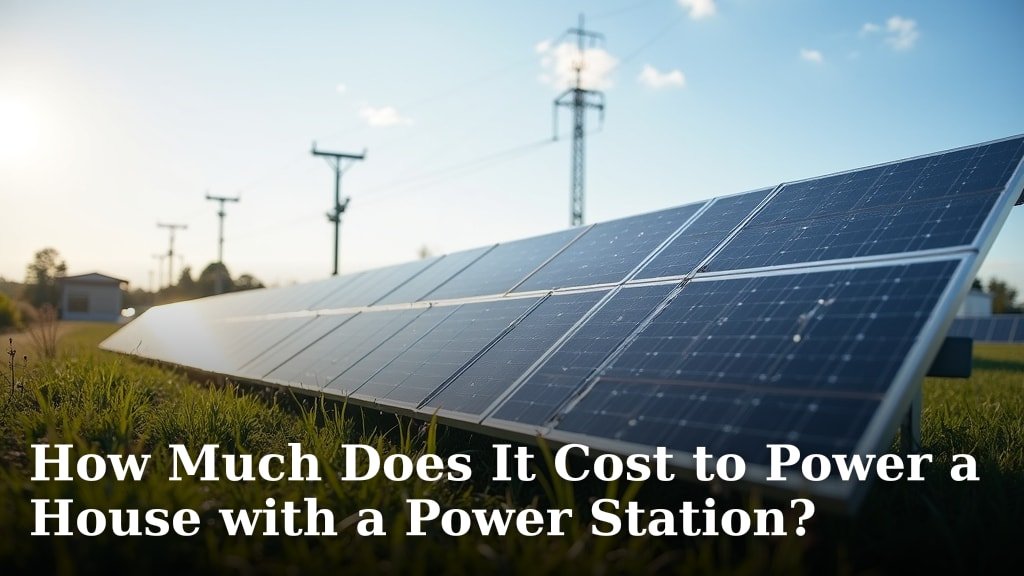
Powering your entire house with a personal power station is incredibly expensive and impractical for most homes. We found that the upfront cost of equipment and installation makes it not a viable primary power source.
While portable power stations offer great backup during outages, they are not designed to fully replace your utility company. You’ll face massive expenses and logistical hurdles trying to supply all your home’s energy needs this way. It’s an interesting idea, but usually not a realistic one.
- Powering a whole house with a power station is very costly.
- It’s not a practical solution for most homes’ daily energy.
- Portable power stations are better for emergencies or specific devices.
- The main issues are high equipment cost and limited capacity.
- Don’t expect to ditch your utility bill with a power station.
Curious why this setup isn’t catching on? Let’s walk through the exact reasons and costs involved.
The Real Cost of Powering Your Home with Portable Power Stations
Trying to power your entire house with portable power stations is financially daunting. You’re looking at a minimum investment of $20,000 to $50,000 or more for equipment alone, and that’s before installation.
We found that this approach is far from a budget-friendly solution for everyday electricity. Instead, it’s typically reserved for niche off-grid scenarios or extreme preparedness budgets.
Understanding Your Home’s Power Appetite
Before even thinking about power stations, you need to know how much electricity your home actually uses. This isn’t just about a few lights; it’s everything from your refrigerator to your water heater.
Your utility bill is your best friend here. It shows your monthly kilowatt-hour (kWh) consumption. The average U.S. home uses about 889 kWh per month (U.S. Energy Information Administration).
To put that in perspective, a common portable power station might offer 1-2 kWh of capacity. You’d need hundreds of those, or a few exceptionally large ones, to cover a month’s usage.
Peak Demand vs. Average Use
It’s not just total consumption; it’s also about when you use power. Your home has “peak demand” moments—when your AC kicks on, the oven is preheating, and the laundry is running all at once.
A power station needs to handle these surges. If it can’t, appliances might trip breakers or simply not work. This is where many portable units fall short for whole-home use.
The Math Behind Power Station Capacity Needs
Let’s do some quick, eye-opening math. If your home uses 889 kWh per month, that breaks down to about 29.6 kWh per day (889 kWh / 30 days).
Most portable power stations offer between 1 kWh and 5 kWh of usable capacity. Some larger models go up to 10-15 kWh, but they are expensive and heavy.
To cover your daily needs, you’d require multiple large units, or one massive one, with enough capacity to last from evening to morning when solar charging isn’t available.
Comparing Power Station Sizes
Think of power stations like fuel tanks. A small one might run your fridge for a day. A larger one might handle basic essentials for a day or two. Powering a whole house means needing a very, very big “tank.”
Here’s a quick look at how typical power stations stack up:
| Power Station Size | Typical Capacity (kWh) | What it Might Power |
|---|---|---|
| Small | 0.3 – 0.6 | Laptop, phone, small fan for hours |
| Medium | 1 – 2 | Fridge for ½ day, TV for several hours |
| Large | 3 – 5 | Fridge for 1-2 days, essential lights, microwave |
| Extra Large (Home Battery) | 10 – 20+ | Some home circuits, potentially partial whole-home backup |
As you can see, even a “large” portable unit barely scratches the surface of daily home needs. “Extra large” units are essentially home battery systems, not truly portable power stations.
The Equipment You’d Need (And Its Price Tag)
To power an entire home, you’d need more than just one or two portable units. You’d likely need a modular system or multiple high-capacity power stations working in tandem. This means a significant upfront investment.
- Multiple High-Capacity Power Stations: You’d need several units, each perhaps 5 kWh or more, to get close to daily demand. Each one can cost $3,000 – $6,000. So, 4-6 of these could easily be $12,000 – $36,000.
- Solar Panels: To recharge these power stations daily, you’d need a substantial solar array. A typical home solar system costs $15,000 – $25,000 before incentives (Solar Energy Industries Association). You’d need enough panels to generate 30+ kWh per day, which is a considerable setup.
- Inverters/Transfer Switches: Connecting these power stations to your home’s electrical panel isn’t plug-and-play. You’d need a transfer switch (manual or automatic) and potentially additional inverters, costing $1,000 – $5,000.
- Wiring and Electrical Work: This isn’t a DIY job. A licensed electrician will be needed to integrate everything safely, adding several thousand dollars to the cost.
The Charging Conundrum: Keeping Batteries Full
Even if you buy enough power stations, you face the daily challenge of recharging them. A wall outlet can take many hours, even days, to fully charge a large unit. Solar is the most practical option for continuous use.
For example, if you deplete 30 kWh from your power stations daily, you need to generate 30 kWh (plus account for efficiency losses) from solar panels each day. This requires a significant number of panels and plenty of sunshine.
What happens on cloudy days? Or during winter with shorter daylight hours? Your power supply would dwindle. This is a major practical hurdle.
The Practical Limitations and Inefficiencies
Beyond the cost, there are many practical reasons why this setup isn’t common for whole-home power.
- Limited Cycles: Batteries have a lifespan, measured in “cycles” (charge and discharge). Using them daily for whole-house power will wear them out much faster than occasional backup use.
- Weight and Portability (Or Lack Thereof): While called “portable,” high-capacity power stations are heavy. Moving multiple 100-pound units around daily for charging or balancing is not practical.
- Power Output Caps: Many portable units have limits on how much power they can deliver at one time (e.g., 2,000W or 3,000W). Running a well pump, an electric dryer, or multiple kitchen appliances simultaneously can easily exceed these limits.
- Heat and Storage: Batteries operate best within certain temperature ranges. Storing many such units might require a climate-controlled space, adding another layer of complexity.
When Portable Power Stations DO Make Sense
So, if not for whole-house power, what are these units good for? They excel in specific situations:
- Emergency Backup: Powering essential items like a refrigerator, a few lights, and charging phones during a short outage.
- Off-Grid Living (Small Scale): For cabins, RVs, or tiny homes with very low power demands.
- Outdoor Activities: Camping, tailgating, or powering tools on a remote job site.
- Specific Appliances: Running a CPAP machine overnight or a portable fan during a blackout.
They are fantastic tools for preparedness and convenience, just not as a primary grid replacement for typical homes.
Checklist: Is This Right for You?
Still thinking about trying to power your whole house? Consider these points:
- Do you have a budget of $20,000+ just for equipment?
- Is your daily electricity usage significantly below average (e.g., <10 kWh/day)?
- Are you prepared for extensive solar panel installation and maintenance?
- Do you have space for multiple large battery units and their charging setup?
- Are you comfortable with potentially limited power output and appliance restrictions?
- Do you have an alternative heating/cooling source for high-demand periods?
Conclusion
While the idea of powering your entire home with portable power stations is intriguing, our research shows it’s not a practical or affordable solution for most households. You’re looking at tens of thousands of dollars in equipment, complex installation, and daily charging challenges. These units shine for emergency backup or small-scale off-grid needs, not as a full utility replacement. If you’re seeking to reduce your grid reliance, consider traditional solar panels with dedicated home battery storage systems for a more efficient and cost-effective approach.
Frequently Asked Questions
Can a single portable power station run a whole house?
No, a single portable power station typically cannot run an entire house. Even the largest portable units only offer enough capacity for essential appliances for a day or two. A whole house requires significantly more continuous power and energy storage than one portable unit can provide.
Is it cheaper to power my house with a generator or multiple power stations?
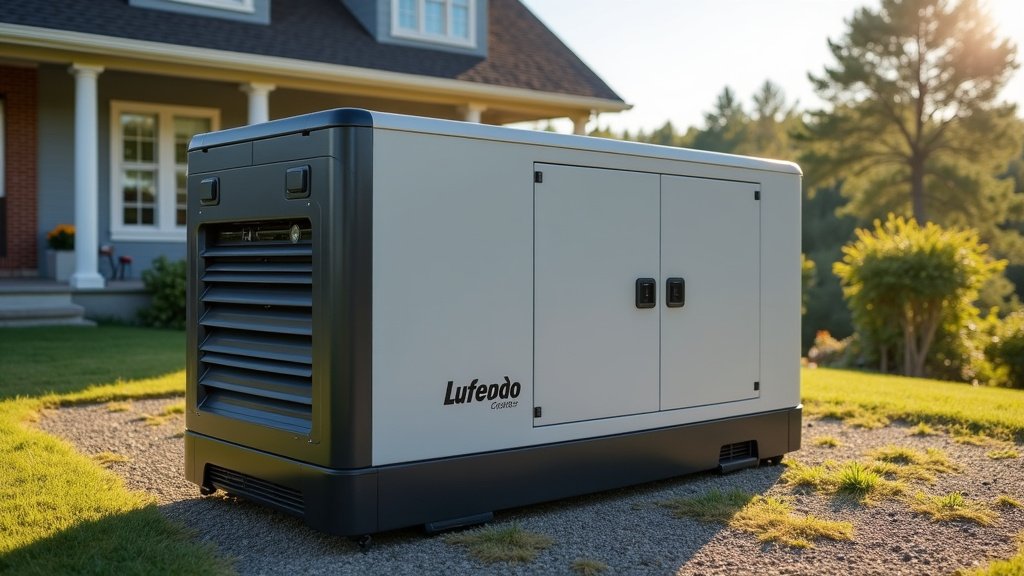
For whole-home backup during an outage, a traditional standby generator is generally more cost-effective and practical than trying to link multiple portable power stations. Generators offer higher sustained power output and longer run times, especially when connected to natural gas lines.
How many solar panels would I need to recharge enough power stations for my house daily?
To recharge enough power stations for an average home’s daily use (around 30 kWh), you would need a substantial solar array, likely 8-12 kilowatts or more, depending on your sunlight conditions. This is comparable to a full residential solar installation, requiring many panels.
Will using power stations daily reduce their lifespan quickly?
Yes, regularly discharging and recharging power stations daily for whole-house use will significantly accelerate battery degradation. Batteries have a limited number of charge cycles, and frequent deep cycling will cause them to lose capacity much faster than if used occasionally for backup.
What is the most cost-effective way to get off the grid for a typical home?
The most cost-effective way for a typical home to go off-grid involves a professionally installed solar panel system paired with a dedicated, stationary home battery storage solution. These systems are designed for continuous power delivery and integrate safely with your home’s electrical panel.
