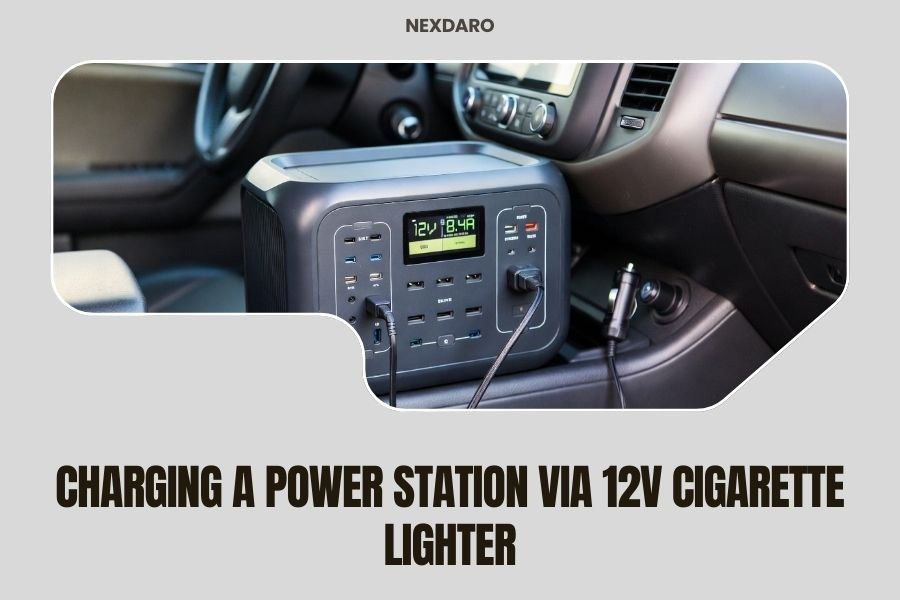
Yes, you can charge a power station through a 12V cigarette lighter socket in your car. This charging method typically takes 6-12 hours depending on your power station’s battery capacity and your vehicle’s alternator output.
Charging via 12V cigarette lighter is one of the most convenient ways to recharge your portable power station while driving or when your car is running. Most modern power stations come with the necessary DC adapter cable for this connection.
How 12V Cigarette Lighter Charging Works
Your car’s cigarette lighter socket provides 12V DC power directly from your vehicle’s electrical system. When you plug in your power station, it converts this 12V input to charge its internal lithium battery.
Think of it like charging your phone in the car. Your power station uses the same socket but draws more power over a longer time.
Power Output from Car Sockets
Most car cigarette lighters provide 12V at 8-15 amps. This gives you roughly 96-180 watts of charging power.
Some newer vehicles have higher-amp sockets that can deliver up to 20 amps. Check your owner’s manual to see what your car supports.
What You Need to Get Started
You’ll need just two things for 12V charging. First, your power station should come with a DC charging cable that fits cigarette lighter sockets.
Second, make sure your car is running during charging. This prevents draining your car’s starter battery.
Check Your Power Station’s DC Input
Look at your power station’s specifications. Most accept 12V DC input, but some larger units need 24V.
If your power station needs 24V, you can’t charge it through a standard car socket. You’d need a special 24V adapter or truck connection.
Common DC Input Specifications
- Small units (100-300Wh): 12V, 5-8A input
- Medium units (300-800Wh): 12V, 8-15A input
- Large units (800Wh+): Often need 24V input
Step-by-Step Charging Process
Start your car’s engine before connecting anything. A running engine ensures your alternator provides steady power without draining your starter battery.
Plug the DC adapter into your power station’s DC input port. Then connect the other end to your car’s cigarette lighter socket.
Monitor the Charging Process
Most power stations show charging status on their display. You’ll see the battery percentage climbing slowly.
Expect to see about 8-15% battery gain per hour, depending on your power station’s size and your car’s output.
What to Watch For
Your power station should feel slightly warm during charging. This is normal.
If it gets very hot or shows error messages, disconnect immediately and check your connections.
Charging Time Expectations
Charging times vary widely based on battery capacity and car output. Here’s what research shows you can expect:
| Battery Size | Car Output | Charging Time (0-100%) |
|---|---|---|
| 300Wh | 120W (10A) | 3-4 hours |
| 500Wh | 120W (10A) | 5-6 hours |
| 1000Wh | 180W (15A) | 8-10 hours |
Why Charging Takes So Long
Car sockets have limited power output compared to wall outlets. While your home outlet provides 1800+ watts, car sockets max out around 180 watts.
It’s like filling a swimming pool with a garden hose instead of a fire hose. Same result, just takes more time.
Maximizing Charging Efficiency
Keep your power station turned off while charging. Running devices during charging slows the process significantly.
Park in shade when possible. High temperatures reduce charging efficiency and can trigger thermal protection.
Don’t Idle Your Engine Unnecessarily
Charge while driving to your destination rather than letting your car idle for hours. This saves fuel and reduces engine wear.
Many people charge during long road trips or while parked at campsites with the engine running periodically.
Fuel Consumption Considerations
Charging a 500Wh power station uses roughly the same energy as running your headlights for 4-5 hours.
This adds minimal fuel consumption compared to idling your engine for hours.
Common Problems and Solutions
Sometimes the connection feels loose or the charging stops unexpectedly. This usually happens because cigarette lighter sockets wear out over time.
Try wiggling the connector gently or pressing it firmly into the socket. Clean any debris from the socket with compressed air.
Fuse Issues
If charging suddenly stops, check your car’s fuse box. High-power devices can blow the cigarette lighter fuse.
Replace blown fuses with the same amperage rating. Don’t use higher-amp fuses as this can damage your car’s wiring.
Overloading Prevention
Don’t charge multiple high-power devices simultaneously through different car outlets. This can overload your electrical system.
Charge one power station at a time for best results.
Alternative 12V Charging Options
Some vehicles have dedicated 12V outlets that provide higher amperage than cigarette lighters. These are often found in truck beds or cargo areas.
RVs and boats typically have multiple 12V outlets with higher capacity for charging larger devices.
Anderson Connector Upgrades
For frequent use, consider installing Anderson PowerPole connectors. These provide more reliable connections than cigarette lighter plugs.
Many overlanders and RV enthusiasts use this setup for better charging reliability.
Safety Considerations
Never leave your power station charging unattended in a hot car. High temperatures can damage lithium batteries.
Ensure good ventilation around your power station during charging. Don’t cover it with blankets or gear.
Fire Safety Precautions
Keep a small fire extinguisher in your vehicle when charging large batteries. While fires are rare, preparation matters.
Disconnect charging if you smell anything unusual or see smoke.
Child and Pet Safety
Keep charging cables away from children and pets. The DC connectors can cause burns if contacted while powered.
Store the charging cable securely when not in use.
Comparing 12V to Other Charging Methods
Wall outlet charging is much faster, typically completing in 2-4 hours. But you need access to AC power.
Solar charging is slower than 12V but works without running your engine. Combine both methods for maximum flexibility.
When 12V Charging Makes Sense
Use 12V charging during road trips, camping without hookups, or emergency situations where wall power isn’t available.
It’s perfect for topping off your battery while driving to your next destination.
Conclusion
Charging your power station via 12V cigarette lighter is a practical solution for road trips and off-grid adventures. While slower than wall charging, it provides reliable power replenishment when you’re away from traditional outlets. Remember to keep your engine running, monitor the charging process, and allow plenty of time for full charges. With proper setup and realistic expectations, 12V charging becomes an valuable tool in your portable power toolkit.
Can I charge my power station with the car turned off?
No, you shouldn’t charge with the engine off as this will drain your car’s starter battery. Always keep the engine running during charging to ensure your alternator provides power.
Will charging a power station damage my car’s electrical system?
No, modern power stations are designed to work safely with car electrical systems. They draw power similar to other automotive accessories and include protection circuits to prevent damage.
How much fuel does it cost to charge a power station in my car?
Charging a 500Wh power station typically costs less than $1 in fuel, similar to running your headlights for several hours. The actual cost depends on your vehicle’s fuel efficiency and local gas prices.
Can I use my power station while it’s charging from 12V?
Yes, most power stations support pass-through charging, but this will significantly slow the charging process. For fastest charging, turn off the unit and disconnect any devices.
What size power station can I charge through a cigarette lighter?
Most car sockets can charge power stations up to 1000Wh capacity, though larger units will take 8-12 hours for full charging. Units larger than 1500Wh often require 24V input and won’t work with standard car outlets.