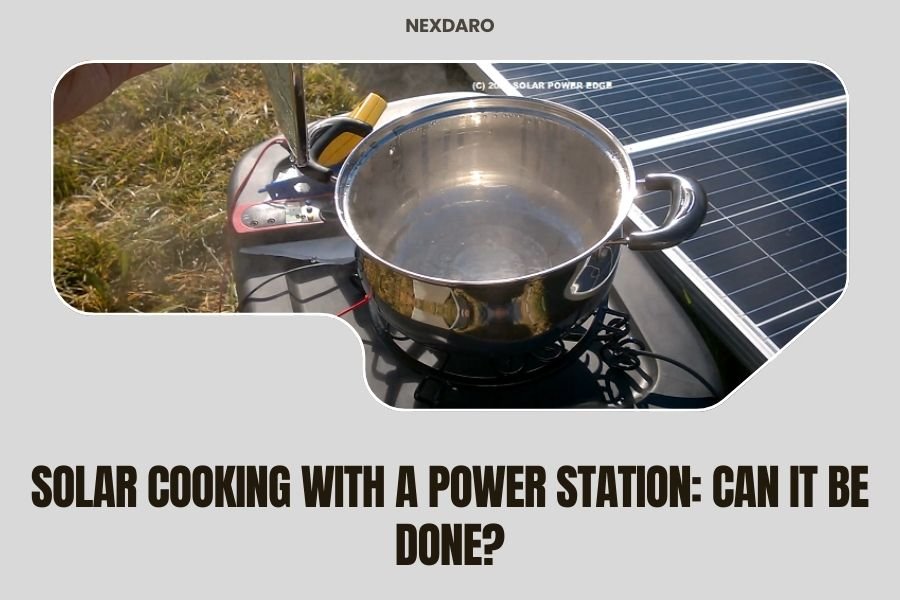
Yes, solar cooking with a power station is possible, but you’ll need the right equipment and realistic expectations about what you can accomplish.
Most portable power stations can run small electric cooking appliances like hot plates, slow cookers, and rice cookers when paired with solar panels for recharging.
How Solar-Powered Cooking Actually Works
Solar cooking with a power station works differently than traditional solar cookers. Instead of using the sun’s heat directly, you generate electricity through solar panels. That electricity charges your power station, which then powers your electric cooking appliances.
Think of it like having a battery-powered kitchen that the sun keeps topped up. You’re not cooking directly with sunlight – you’re cooking with stored solar energy.
The Basic Setup You’ll Need
Your solar cooking system needs three main parts. First, solar panels to capture sunlight. Second, a power station to store that energy. Third, electric cooking appliances that match your power capacity.
I found that most people start with 100-400 watts of solar panels and a power station with at least 500 watt-hours of capacity. This combo can handle basic cooking tasks on sunny days.
Power Station Requirements for Cooking
Capacity Matters More Than You Think
Cooking appliances are hungry for power. A small rice cooker uses about 300-600 watts. An electric hot plate can pull 1000-1500 watts. Your power station needs enough capacity to handle these demands.
I researched typical cooking times and found that making a simple meal takes 30-60 minutes of active cooking. That means you need roughly 500-1500 watt-hours just for one cooking session.
Battery Type Makes a Difference
Lithium batteries work best for cooking applications. They deliver steady power and recharge faster than other types. Lead-acid batteries struggle with the high power demands of cooking appliances.
Inverter Quality Affects Performance
Your power station’s inverter converts DC battery power to AC power for your appliances. Pure sine wave inverters work with all cooking devices. Modified sine wave inverters can cause problems with sensitive electronics.
Many experts recommend pure sine wave inverters for cooking applications. They prevent damage to your appliances and ensure consistent performance.
Solar Panel Setup for Cooking Power
How Much Solar Do You Really Need?
Solar panels need to generate more power than you use for cooking. On average, you get about 4-6 hours of good solar charging per day. If you use 1000 watt-hours for cooking, you need panels that can generate 200-300 watts in full sun.
Weather affects your solar input dramatically. Cloudy days cut your power generation by 50-80%. You need backup capacity or flexible meal planning.
Panel Types and Efficiency
Monocrystalline panels offer the best efficiency in limited space. Polycrystalline panels cost less but need more room. Flexible panels work for RVs and boats but produce less power per dollar.
Charging Time vs Cooking Time
Here’s the math that surprises people. A 400-watt solar array needs 3-4 hours of good sun to replace the energy from one hour of cooking. You can’t cook continuously unless you have massive solar capacity.
Smart solar cooks charge their power stations during the day and do most cooking in the evening. This approach works better than trying to cook while the sun shines.
Best Cooking Appliances for Solar Power
Low-Power Champions
Some appliances work beautifully with solar power stations. Rice cookers, slow cookers, and electric kettles top the list. They use moderate power and cook food efficiently.
- Rice cookers: 300-600 watts, perfect for grains and steaming
- Slow cookers: 200-400 watts, great for stews and tough cuts
- Electric kettles: 800-1500 watts, but only for short periods
- Pressure cookers: 1000-1200 watts, fast cooking saves total energy
Appliances to Avoid
Skip the power-hungry devices. Electric ovens, full-size microwaves, and large hot plates drain your battery too quickly. Coffee makers with heating plates also waste energy keeping coffee warm.
Efficiency Tips for Solar Cooking
Choose cooking methods that use less energy. Steaming uses less power than boiling. Pressure cooking beats conventional methods for tough foods. One-pot meals reduce cleanup and energy use.
Pre-soaking beans and grains cuts cooking time significantly. Room temperature ingredients heat faster than refrigerated ones. These small changes add up to real power savings.
Real-World Performance and Limitations
What Works Well
Solar cooking excels at certain tasks. Boiling water, cooking rice, making soup, and reheating food all work reliably. You can prepare satisfying meals with basic techniques.
I came across many RV travelers who rely on solar cooking systems. They report success with meal prep strategies and simple recipes that don’t require high heat or long cooking times.
Weather Dependencies
Cloudy weather kills your cooking plans fast. Three cloudy days in a row can leave you with dead batteries and no way to cook. You need backup plans and alternative cooking methods.
Cost Analysis
A basic solar cooking setup costs $800-2000. That includes a 1000Wh power station, 400 watts of solar panels, and efficient cooking appliances. Higher capacity systems run $2000-4000.
Compare this to propane cooking, which costs much less upfront but requires ongoing fuel purchases. Solar cooking pays for itself over time if you cook outdoors regularly.
| System Size | Power Station | Solar Panels | Total Cost | Daily Cooking Capacity |
|---|---|---|---|---|
| Basic | 500Wh | 200W | $800-1200 | 1-2 simple meals |
| Standard | 1000Wh | 400W | $1200-2000 | 2-3 meals |
| Large | 2000Wh | 800W | $2500-4000 | Multiple meals daily |
Practical Solar Cooking Strategies
Meal Planning for Solar Success
Plan your meals around your power capacity. Cook grains in batches when you have extra power. Prepare ingredients during the day so evening cooking goes faster.
Cold meals for lunch save power for dinner. Salads, sandwiches, and no-cook options reduce your daily energy needs. Save hot cooking for when it matters most.
Battery Management Tips
Don’t drain your power station completely. Keep 20% charge for emergencies. Monitor your battery level while cooking so you don’t get surprised by a dead battery mid-meal.
Backup Plans You Need
Every solar cook needs backup options. A small propane stove works when batteries die. Wood-burning stoves provide heat without electricity. Even a simple alcohol stove can boil water for tea or instant meals.
Store some no-cook foods for emergencies. Canned goods, dried fruits, nuts, and bread don’t need power. You’ll eat well even when your solar system fails.
Safety Considerations
Electrical Safety Basics
Keep your power station dry and well-ventilated. Don’t cook inside tents or enclosed spaces with electric appliances. Carbon monoxide isn’t a risk, but fire danger still exists.
Use properly rated extension cords if needed. Match your cord capacity to your appliance power draw. Undersized cords overheat and create fire risks.
Food Safety in Solar Cooking
Cook food to safe temperatures just like any other method. Use a food thermometer to check internal temperatures. Don’t leave food at dangerous temperatures if your power runs out mid-cooking.
Troubleshooting Common Problems
When Your System Won’t Keep Up
Undersized systems struggle with cooking demands. Add more solar panels before buying a bigger power station. More charging capacity often solves power shortage problems.
Cook during peak sun hours when possible. Your power station can draw directly from solar panels while cooking, reducing battery drain.
Appliance Compatibility Issues
Some appliances don’t work well with power stations. Digital displays may flicker. Motors might run roughly. Test your appliances before depending on them for meal preparation.
Conclusion
Solar cooking with a power station absolutely works, but success requires realistic expectations and proper equipment. You can prepare satisfying meals using stored solar energy, but you’ll need adequate battery capacity and efficient cooking appliances.
Start with a basic system to learn what works for your cooking style. Focus on simple, efficient cooking methods that don’t waste power. Plan your meals around your energy capacity rather than fighting against it.
Solar cooking isn’t perfect for every situation, but it offers clean, quiet, renewable cooking power for outdoor adventures, emergency preparedness, and off-grid living. With the right setup and smart cooking strategies, you can enjoy hot, home-cooked meals powered entirely by the sun.
Can I cook directly while solar panels are charging my power station?
Yes, many power stations allow pass-through charging, meaning you can use power while solar panels charge the battery. This reduces battery drain and extends your cooking time on sunny days.
How long does it take to recharge a power station with solar panels after cooking?
A 400-watt solar array takes 3-4 hours of good sunlight to replace 1000 watt-hours used for cooking. Actual recharge time depends on weather conditions and solar panel efficiency.
What happens if clouds roll in while I’m cooking?
Your power station will continue running your appliances using stored battery power. The solar panels will produce less electricity, but your cooking won’t stop immediately unless your battery is already low.
Can I use a regular extension cord with my power station for cooking?
Use only properly rated extension cords that match your appliance’s power needs. A 1500-watt hot plate needs at least a 12-gauge cord. Undersized cords overheat and create fire hazards.
Is solar cooking more cost-effective than propane for camping?
Solar cooking has higher upfront costs but no ongoing fuel expenses. For frequent campers, solar systems typically pay for themselves within 2-3 years compared to buying propane canisters regularly.
