
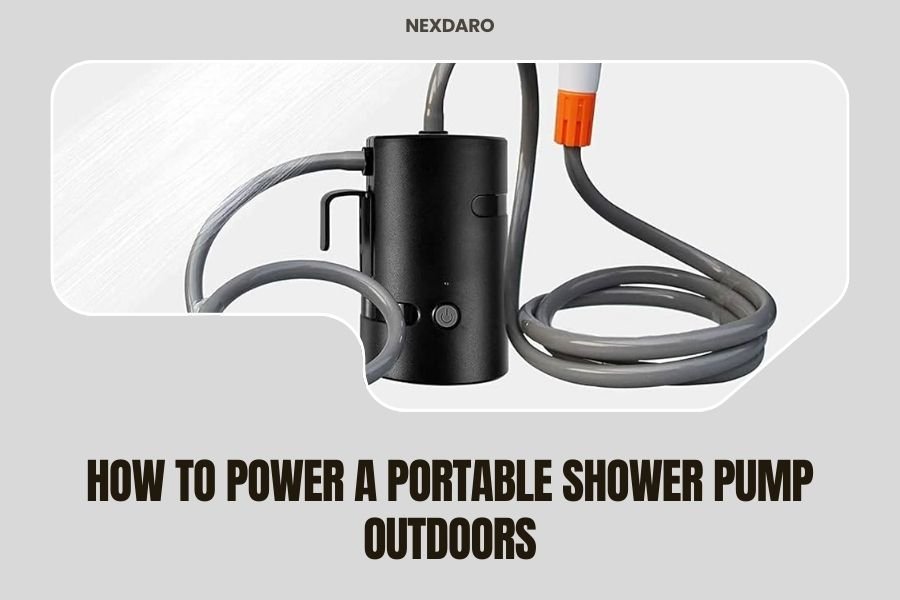
You can power a portable shower pump outdoors using a 12V DC power source like a car battery, portable power station, or solar panel system with battery storage.
Most portable shower pumps require 12V DC power and draw 3-8 amps, making them perfect for camping and outdoor adventures when paired with the right power solution.
Best Power Sources for Outdoor Shower Pumps
Your portable shower pump needs reliable power to work properly outdoors. I found that most outdoor enthusiasts choose from four main power sources.
Each option has different benefits depending on your camping style and power needs.
Portable Power Stations
Portable power stations are your easiest option. They come ready to use with multiple outlet types.
Look for stations with at least 200Wh capacity. This gives you 2-4 hours of shower pump runtime.
Many experts say lithium-ion power stations work better than lead-acid versions. They’re lighter and last longer.
Car Battery Systems
Your vehicle’s 12V system can power most shower pumps directly. You’ll need the right adapter cable.
This works great for car camping. Just remember not to drain your starting battery completely.
Consider adding a dual battery system if you camp frequently. This protects your main battery.
Deep Cycle Marine Batteries
Deep cycle batteries handle repeated charging and discharging better than car batteries. They’re built for this type of use.
A 100Ah deep cycle battery can run your shower pump for 12-25 hours. That’s plenty for extended camping trips.
You’ll need a battery box and charging system to keep them working.
Solar Power Systems
Solar panels offer unlimited power during sunny days. They work best when combined with battery storage.
A 100W solar panel can recharge your battery while you camp. This creates a self-sustaining power system.
Understanding Power Requirements
Before choosing your power source, you need to know how much energy your shower pump uses.
Voltage Requirements
Most portable shower pumps run on 12V DC power. This matches car electrical systems perfectly.
Some pumps offer dual voltage options. They can run on both 12V DC and 110V AC power.
Check your pump’s label for exact voltage requirements. Using the wrong voltage can damage your equipment.
Amp Draw and Runtime Calculations
Shower pumps typically draw 3-8 amps while running. Higher flow rates need more power.
To calculate runtime, divide your battery capacity by pump amp draw. A 100Ah battery running a 5-amp pump lasts about 20 hours.
Remember that cold weather reduces battery capacity by 10-20%.
Sample Runtime Table
| Battery Capacity | 3A Pump | 5A Pump | 8A Pump |
|---|---|---|---|
| 50Ah | 16.7 hours | 10 hours | 6.3 hours |
| 100Ah | 33.3 hours | 20 hours | 12.5 hours |
| 200Ah | 66.7 hours | 40 hours | 25 hours |
Setting Up Your Power System
Getting your power system running correctly takes some basic setup steps. Don’t worry – it’s simpler than you might think.
Safety First
Always connect your positive terminal first, then negative. This prevents sparks and short circuits.
Use proper fuses or circuit breakers. They protect your equipment from power surges.
Keep electrical connections dry and secure. Water and electricity don’t mix well.
Wiring Your System
Use 12 AWG wire for runs under 10 feet. Longer runs need thicker 10 AWG wire to prevent voltage drop.
Install Anderson PowerPole connectors for easy setup and teardown. They’re weatherproof and reliable.
Label all your connections clearly. Future you will thank present you for this organization.
Basic Connection Steps
- Connect your power source (battery or power station)
- Install a 10-15 amp fuse in the positive line
- Run wire to your pump location
- Connect pump according to manufacturer instructions
- Test system before your first camping trip
Choosing the Right Equipment
Not all power equipment works the same outdoors. You need gear that handles camping conditions.
Power Station Features to Look For
Choose stations with multiple outlet types. You want both 12V DC and AC options.
Look for LCD displays showing remaining power. This helps you manage your energy use.
From what I read, units with built-in solar charging inputs offer the most flexibility.
Battery Selection Tips
AGM batteries work better than flooded lead-acid for camping. They don’t need maintenance and won’t spill.
Lithium batteries cost more but weigh 60% less than lead-acid. They also last 3-5 times longer.
Consider your carrying capacity when choosing battery types. Every pound matters when hiking.
Battery Chemistry Comparison
Lead-acid batteries are cheapest but heaviest. They work fine for car camping where weight doesn’t matter.
AGM batteries offer good middle ground. They’re maintenance-free and handle vibration well.
Lithium batteries are premium choice. They charge faster and work better in cold weather.
Solar Integration Options
Adding solar power extends your camping time without limits. The sun provides free energy every day.
Panel Size Requirements
A 100W panel generates about 30 amp-hours per sunny day. This replaces what most shower pumps use daily.
Portable folding panels work great for car camping. They set up quickly and store compactly.
Fixed panels work better for RVs and permanent installations. They’re cheaper per watt.
Charge Controllers
You need a charge controller between your panel and battery. It prevents overcharging damage.
PWM controllers cost less and work fine for basic systems. MPPT controllers are more efficient with larger panels.
Size your controller for 25% more than your panel output. This provides safety margin.
Solar System Sizing
Calculate your daily power use first. Add 20% for cloudy days and system losses.
Size your battery bank for 2-3 days of power. Weather doesn’t always cooperate with camping plans.
Match your panel size to recharge your battery in one sunny day.
Troubleshooting Common Issues
Power systems sometimes act up outdoors. Knowing common problems helps you fix them quickly.
Pump Won’t Start
Check your connections first. Vibration can loosen terminals during travel.
Test your voltage at the pump. You should see 12V or higher when connected.
Low battery voltage is the most common cause. Recharge or replace your power source.
Weak Water Flow
Clogged intake filters reduce pump performance. Clean them regularly.
Low voltage also causes weak flow. Check your battery charge level.
Long wire runs create voltage drop. Use thicker wire for distances over 10 feet.
Quick Voltage Checks
Use a multimeter to check voltage at different points. This identifies problem locations.
Good 12V systems should read 12.6V or higher when not running. Running voltage should stay above 11.5V.
Voltage dropping below 11V means your battery needs charging soon.
Power Conservation Tips
Making your power last longer means more time outdoors. Smart usage habits really help.
Efficient Showering Techniques
Turn off your pump while soaping up. This cuts power use by 50% or more.
Use a spray nozzle with shut-off valve. You control water flow and pump runtime.
Pre-heat your water using solar heating bags. Warm water feels better and rinses faster.
System Management
Check your battery voltage before and after use. This helps you plan recharging needs.
Avoid running batteries completely dead. Deep discharge shortens their life significantly.
Charge batteries as soon as possible after use. Sitting discharged damages them over time.
Winter and Cold Weather Considerations
Cold weather affects both pumps and power systems. Plan ahead for winter camping success.
Battery Performance in Cold
Battery capacity drops 10-20% in freezing weather. Lithium batteries handle cold better than lead-acid.
Keep batteries insulated when possible. Battery boxes with foam insulation help maintain temperature.
Bring batteries inside your shelter overnight. This maintains their temperature and capacity.
Pump Protection
Drain your pump system completely after use. Frozen water can crack pump housings.
Store pumps in heated areas when possible. Cold plastic becomes brittle and cracks easier.
Use antifreeze in systems that can’t be drained completely. RV antifreeze works well for this.
Conclusion
Powering your portable shower pump outdoors is totally doable with the right setup. Whether you choose a simple car battery connection or a full solar power system, you’ll have hot showers wherever you camp.
Start with your power needs and work backward to choose equipment. Most shower pumps need 12V power and draw 3-8 amps, so plan your battery capacity accordingly. Portable power stations offer the easiest plug-and-play solution, while solar systems provide unlimited runtime for extended trips.
Remember to prioritize safety with proper fusing and weatherproof connections. Test your complete system at home before heading outdoors. With good planning and the right equipment, you’ll never have to skip showers while camping again.
How long will a 100Ah battery run my shower pump?
A 100Ah battery will run a typical 5-amp shower pump for about 20 hours of continuous use. In practice, you’ll get several days of normal showering since you only run the pump for a few minutes per shower.
Can I use a regular car battery for my shower pump?
You can use a car battery, but it’s not ideal for repeated deep cycling. Deep cycle marine batteries or AGM batteries are much better choices because they’re designed for this type of discharge pattern without damage.
What size solar panel do I need to keep my system charged?
A 100W solar panel generates about 30 amp-hours per sunny day, which covers typical shower pump usage. For heavy use or cloudy conditions, consider a 200W panel or larger battery bank for backup power.
Why does my pump lose pressure while running?
Pressure loss usually happens from low battery voltage, clogged filters, or air leaks in your water lines. Check your battery charge first, then inspect all connections and clean any intake filters on your pump.
Is it safe to run electrical equipment around water outdoors?
Yes, when done properly with appropriate safety measures. Use GFCI protection, keep electrical connections elevated and dry, and always connect positive terminals first. Marine-grade connectors and proper fusing make outdoor electrical systems very safe.
