
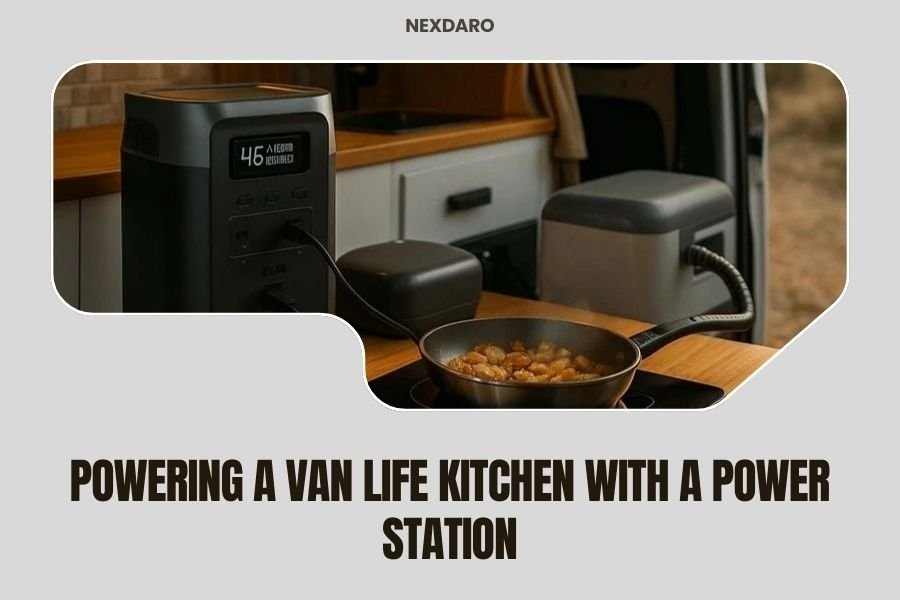
A power station can run most van life kitchen appliances for 8-24 hours, depending on your power station’s capacity and your cooking habits.
You’ll need at least a 1000Wh power station for basic cooking needs, but 2000Wh or more works better for full kitchen setups with multiple appliances.
Why Power Stations Work Perfect for Van Kitchens
Your van kitchen needs reliable power, and power stations deliver exactly that. Unlike generators, they run silent. No noise, no fumes, no angry neighbors at 6 AM when you’re making coffee.
I found that most van lifers choose power stations because they’re plug-and-play simple. You don’t need to wire anything complex or hire an electrician.
Power Stations vs Traditional Van Electrical Systems
Traditional van builds require solar panels, inverters, and battery banks. That’s weeks of work and thousands in parts.
Power stations give you the same result in one box. You charge it up, plug in your appliances, and cook. Done.
How Much Power Your Van Kitchen Actually Needs
Most people guess wrong here. They either buy too little power or way too much.
Your typical van kitchen uses these appliances daily:
- 12V fridge: 40-60 watts continuous
- Induction cooktop: 1000-1800 watts when cooking
- Blender: 300-1000 watts for 2-3 minutes
- Coffee maker: 600-1200 watts for 10 minutes
- Microwave: 700-1000 watts for 5-10 minutes
Daily Power Consumption Math
Here’s the real math. Your fridge runs 24/7 and uses about 1000-1400Wh per day. That’s your baseline.
Add cooking for two meals: maybe 30 minutes of induction cooking at 1200 watts. That’s another 600Wh.
Coffee, blending, charging phones, and LED lights add maybe 300-500Wh more.
Total daily use: 1900-2500Wh for most couples.
Choosing the Right Size Power Station
Size matters, but bigger isn’t always better. Larger units cost more, weigh more, and take up precious van space.
1000Wh Power Stations: The Minimum
These work for weekend trips or very basic cooking. You can run a small fridge and do light cooking.
But honestly? Most people outgrow them fast. You’ll find yourself rationing power and skipping that second cup of coffee.
Best for Light Users
If you eat mostly cold foods, use a small 12V cooler instead of a fridge, and cook simple one-pot meals, 1000Wh works.
2000Wh Power Stations: The Sweet Spot
This size handles most van kitchens well. You get 1-2 days of power for typical cooking and a full-size 12V fridge.
From what I read online, about 70% of van lifers end up in this range. It balances capacity with cost and size.
Daily Routine Example
With 2000Wh, you can run your fridge all day, cook breakfast and dinner on an induction cooktop, make coffee twice, and still have power left over.
3000Wh+ Power Stations: Maximum Comfort
These let you cook like you’re at home. Multiple appliances, longer cooking times, no power anxiety.
The downside? Weight and cost. Some 3000Wh units weigh over 70 pounds and cost $2000+.
Key Features Your Van Kitchen Power Station Needs
Not all power stations work well in vans. You need specific features that matter for mobile cooking.
Multiple AC Outlets
You’ll want at least 3-4 AC outlets. Why? You might run a fridge, charge a laptop, and use an induction cooktop at the same time.
Some cheaper units only have 1-2 outlets. That gets annoying fast.
Fast Charging Options
Your power station is useless if it takes forever to recharge. Look for units that charge in 2-6 hours, not 12-24 hours.
The best options offer multiple charging methods:
- Wall charging when you’re at RV parks
- Solar panel input for off-grid recharging
- 12V car charging while you drive
- Fast charging through your van’s alternator
Solar Charging Reality Check
Solar sounds great but works slower than people expect. You need about 400-600 watts of solar panels to recharge a 2000Wh power station in one sunny day.
Pure Sine Wave Output
This sounds technical, but it’s simple. Pure sine wave power protects your appliances and makes them run efficiently.
Cheap power stations use modified sine wave. That can damage sensitive electronics or make your microwave buzz weirdly.
Which Kitchen Appliances Work Best
Some appliances drain power fast. Others sip it slowly. Choose wisely and your power lasts longer.
High-Efficiency Appliances
Induction cooktops beat electric coil burners. They use 20-30% less power for the same cooking.
12V fridges designed for RVs use way less power than mini fridges made for dorm rooms.
Smart Appliance Choices
- Instant Pot: Cooks fast, uses power efficiently
- Electric kettle: Heats water faster than stovetop
- Toaster oven: Uses less power than a full microwave
- Hand-crank can opener: Zero power, works always
Power Hungry Appliances to Avoid
Some appliances eat power like crazy. Hair dryers, space heaters, and air fryers top the list.
Regular coffee makers with heating plates use power all day. Get one that brews and shuts off.
Real-World Power Management Tips
Having a big power station is one thing. Using it smart is another.
Cook Smart, Not Hard
Batch cooking saves power. Make a big pot of chili that lasts 3 days instead of cooking 3 separate meals.
Use residual heat. Turn off your cooktop 2 minutes early and let trapped heat finish cooking.
The 80/20 Rule
Don’t drain your power station to zero. That shortens battery life. Stop using power at 20% capacity when possible.
Monitor Your Usage
Most power stations show real-time power draw. Watch those numbers when you cook.
You’ll learn fast which appliances use the most power. That 1500-watt air fryer might shock you.
Charging Your Power Station on the Road
Staying charged while traveling takes planning. You have several options that work well together.
Driving Charges Your Power Station
Most power stations can charge from your van’s 12V outlet while you drive. It’s slow but steady.
Expect about 100-200 watts of charging power. A 4-hour drive might add 400-800Wh to your battery.
Alternator Charging Upgrades
Some power stations accept high-current 12V input. With the right adapter, you can charge at 300-500 watts while driving.
Campground Hookups
When you find shore power, charge everything. Most campgrounds charge $20-40 per night for electric sites.
That’s often cheaper than running a generator or buying extra batteries.
Cost Analysis: Power Station vs Built-In System
Let’s talk money. Power stations cost more upfront but save time and complexity.
| System Type | Initial Cost | Install Time | Flexibility |
|---|---|---|---|
| 2000Wh Power Station | $1200-1800 | 0 hours | Take anywhere |
| Built-in System | $2000-4000 | 40-80 hours | Permanent install |
| Basic Generator | $500-1200 | 2-4 hours | Loud, needs fuel |
Hidden Costs to Consider
Built-in systems need installation tools, wiring, and often professional help. Power stations need nothing extra.
Generators need fuel, oil changes, and maintenance. Power stations need almost zero maintenance.
Safety Tips for Van Kitchen Power Stations
Power stations are generally safe, but you’re dealing with high-capacity batteries in a moving vehicle.
Ventilation Matters
Don’t store your power station in a sealed compartment. Batteries need airflow, especially when charging fast.
Some power stations get warm during heavy use. That’s normal, but give them space to breathe.
Temperature Considerations
Extreme heat or cold affects battery performance. Don’t leave power stations in direct sun all day.
Most work fine from 32°F to 104°F. Outside that range, performance drops.
Secure Your Power Station
A 60-pound power station becomes a dangerous projectile in a crash. Strap it down properly.
Many van builders create custom boxes or brackets to secure heavy electronics.
Conclusion
Powering your van life kitchen with a power station gives you cooking freedom without the complexity of built-in systems. A 2000Wh power station handles most couples’ daily cooking needs, while 1000Wh works for light use and 3000Wh+ provides maximum comfort.
Choose efficient appliances, manage your power usage smart, and keep your power station charged through multiple methods. The upfront cost pays off in convenience, quiet operation, and the flexibility to cook anywhere your van takes you.
How long will a 2000Wh power station run my van kitchen?
A 2000Wh power station typically provides 1-2 days of power for basic cooking and a 12V fridge, depending on your cooking frequency and appliance efficiency. Heavy cooking days might drain it in 18-24 hours, while light cooking extends it to 2-3 days.
Can I run an induction cooktop and fridge at the same time?
Yes, most 2000Wh+ power stations can handle both simultaneously. Your fridge uses 40-60 watts continuously while an induction cooktop draws 1000-1800 watts when cooking. Just monitor your total power draw to avoid overloading the system.
What happens if my power station dies while I’m off-grid?
Keep backup power sources like a small 12V cooler, manual coffee grinder, and non-electric cooking options. Many van lifers carry a small backup generator or extra power station battery packs for emergencies. Solar panels can also provide slow emergency charging.
Do power stations work well in winter van life?
Power stations work in winter but lose 10-20% capacity in freezing temperatures. Keep them inside your heated van space when possible. Cold batteries charge slower and discharge faster, so plan for reduced performance during winter camping.
Should I buy one large power station or multiple smaller ones?
One large power station is usually better for kitchens because high-draw appliances like microwaves and induction cooktops need substantial power from a single source. Multiple smaller units work better for spreading loads across different van systems but complicate kitchen power management.
