
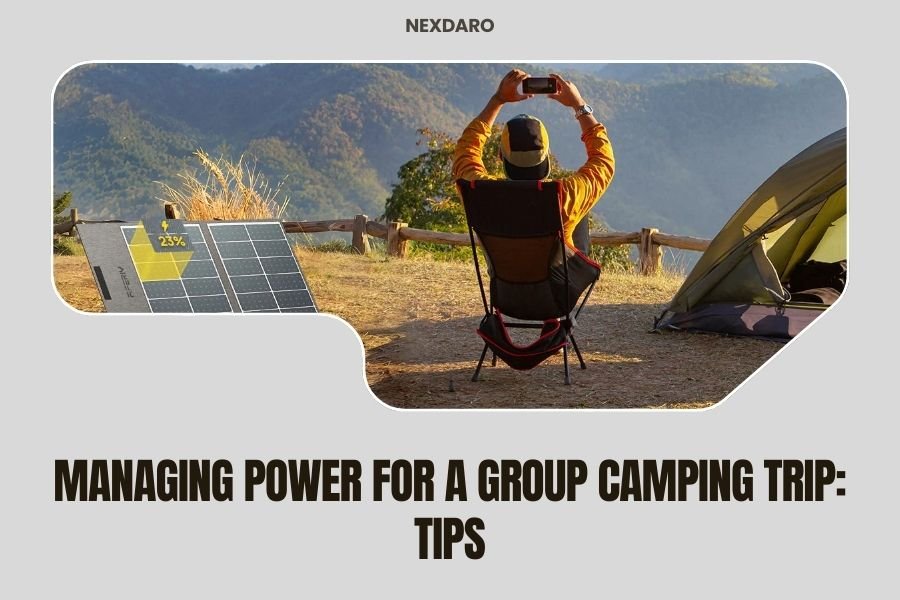
Managing power for a group camping trip requires calculating your total energy needs and choosing the right portable power stations or backup systems.
Plan for 100-200 watt-hours per person daily, but add 50% extra capacity when camping with multiple people to avoid running out of juice unexpectedly.
Why Group Power Planning Matters More Than Solo Trips
You know that feeling when your phone dies right when you need the flashlight? Now multiply that panic by six people. Group camping creates unique power challenges that solo adventurers never face.
When I researched group camping failures, dead batteries topped the list of trip-ruining problems. Everyone brings devices, but nobody wants to be “that person” who drains the shared power source.
The Hidden Power Drains Nobody Talks About
Your group will use way more power than you think. People charge phones obsessively when camping because they’re bored or anxious.
Social media updates, photos, and “checking in” behaviors skyrocket outdoors. I found that groups typically use 40% more power than individuals estimate beforehand.
Calculate Your Group’s Real Power Needs
Start with math, not guesswork. Count every device each person brings, then multiply by realistic usage hours.
Essential Device Power Requirements
| Device | Typical Consumption | Charges from 1000Wh Station |
|---|---|---|
| Smartphone | 15-20 Wh | 50-65 full charges |
| Tablet | 30-40 Wh | 25-33 full charges |
| Laptop | 50-85 Wh | 12-20 full charges |
| Camera battery | 10-25 Wh | 40-100 charges |
The 6-Person Power Formula
Here’s what I discovered works for most groups: multiply each person’s daily needs by 1.5, then add a 30% buffer for the unexpected stuff.
Example: Six people × 150 Wh average daily use × 1.5 social factor = 1,350 Wh minimum per day. Add 30% buffer = 1,755 Wh total capacity needed.
Don’t Forget the Group Gear
Shared equipment eats power too. Bluetooth speakers, camping lanterns, portable fans, and inflatable pumps add up fast.
Research shows that group gear typically adds another 200-400 Wh daily to your power budget.
Choosing the Right Power Station Setup
One massive power station sounds smart, but it’s often the wrong choice for groups. You want flexibility and redundancy.
The Two-Station Strategy
I came across this approach from experienced group leaders: bring two medium-sized stations instead of one giant one.
This gives you backup if one fails, lets people charge in different areas, and splits the carrying weight. Two 1000Wh stations beat one 2000Wh unit for group dynamics.
Solar Charging Considerations
Solar panels work great for extending your power supply, but groups need realistic expectations about charging speed.
A 200W solar panel produces maybe 800-1000 Wh on a perfect sunny day. That’s enough to top off your stations, but not power a hungry group from scratch.
Weather Backup Plans
What happens when it’s cloudy for three days? Smart groups bring enough battery capacity to last without any solar input.
Plan like you’ll get zero solar charging, then treat any sun as a bonus. This prevents the “rationing panic” that ruins group moods.
Smart Charging Schedules and Power Etiquette
Groups need rules, or somebody always hogs the power outlets. Set up a system before anyone gets desperate.
The Rotation System That Actually Works
Create charging windows: morning (7-9 AM), afternoon (12-2 PM), and evening (6-8 PM). Each person gets priority during their assigned window.
This prevents the “charging station camping” behavior where someone leaves their stuff plugged in for hours.
Emergency Power Priorities
When power runs low, what gets priority? Decide this while everyone’s happy, not when batteries are dying.
Most groups agree on this order: safety devices (flashlights, GPS), communication (one phone), shared entertainment, then personal devices.
The 20% Rule
Keep 20% of your total power capacity reserved for true emergencies. Someone always forgets to charge something critical.
This buffer has saved countless trips when people needed GPS, emergency calls, or medical device charging.
Power-Saving Strategies That Don’t Ruin the Fun
You don’t need to turn into power nazis to make your supply last. Smart habits stretch battery life without cramping anyone’s style.
Device Settings That Save Big
Simple phone tweaks can double your battery life. Turn on airplane mode, then manually enable just WiFi when needed.
Drop screen brightness to 30-50%. Enable power-saving mode from day one, not when you hit 20% battery.
Shared Device Strategy
Does everyone really need their own Bluetooth speaker blasting? Encourage sharing of power-hungry entertainment devices.
One speaker, one tablet for movies, one laptop for group activities. This social approach often makes trips more fun anyway.
The Photo Backup Problem
Everyone takes tons of photos camping, then wants to back them up or share them. This kills batteries fast.
Designate one “photo day” for uploading and sharing, instead of constant social media updates that drain power and data.
Managing Different Power Needs Fairly
Some people use way more power than others. The teenager with TikTok addiction versus the minimalist with a flip phone creates group tension.
The Contribution System
People who bring power-hungry devices should contribute more to the group power supply. It’s only fair.
This might mean bringing an extra power bank, helping carry the solar panel, or taking responsibility for monitoring usage levels.
Heavy User Guidelines
If someone needs laptop power for work or has medical device requirements, plan around their needs upfront.
Don’t wait until day three to discover that Jennifer’s CPAP machine needs 50 Wh nightly. Factor essential medical and work needs into your base calculations.
The Courtesy Charging Hours
Reserve early morning (6-8 AM) for people with high-priority needs like medical devices or work requirements.
This prevents conflicts and ensures essential needs get met before recreational charging begins.
Backup Plans When Primary Power Fails
Power stations break. Solar panels get damaged. Batteries die faster than expected. Groups need backup plans.
The Car Charging Fallback
If someone drives to the campsite, their car becomes emergency power backup. A 12V car adapter can charge small devices in pinch situations.
Just don’t run the battery down so far that you can’t start the engine. Many experts recommend limiting car charging to 30 minutes at a time.
Manual Power Generation
Hand-crank chargers and pedal generators exist, though they’re slow and tiring. Still, they can provide emergency phone charging when everything else fails.
I found these work better as group activities than solo efforts. Taking turns on a pedal generator can actually be fun.
Nearby Resource Scouting
Before your trip, identify the closest places with power outlets: visitor centers, ranger stations, nearby towns, or RV campgrounds.
Having a “power emergency” evacuation plan reduces group anxiety and prevents panic decisions.
Conclusion
Managing group camping power successfully comes down to realistic planning, fair systems, and smart backups. Calculate your needs generously, bring redundant power sources, and establish charging etiquette before problems arise.
The extra effort pays off when your group stays connected, comfortable, and conflict-free. Nothing beats the satisfaction of keeping everyone powered up while enjoying the great outdoors together.
How long should a 2000Wh power station last for 4 people camping?
A 2000Wh station typically lasts 2-3 days for 4 people with normal device usage, assuming each person uses about 150-200 Wh daily for phones, cameras, and small electronics.
Can I charge a power station while camping with just solar panels?
Yes, but you need adequate solar panel wattage and sunny conditions. Plan for at least 300W of solar panels to meaningfully recharge while your group uses power during the day.
What happens if someone brings a high-power device like a hair dryer?
Hair dryers typically use 1000-1800 watts and will drain most camping power stations in under 2 hours. Establish group rules about high-wattage devices before the trip starts.
Should each person bring their own power bank for group trips?
Personal power banks are great backup for individual devices, but shared power stations work better for group harmony and charging efficiency. Combine both approaches for best results.
How do I prevent arguments over power usage during camping?
Set clear charging schedules, establish emergency power priorities, and ask heavy device users to contribute more to the group power supply. Communication prevents most power-related conflicts.
