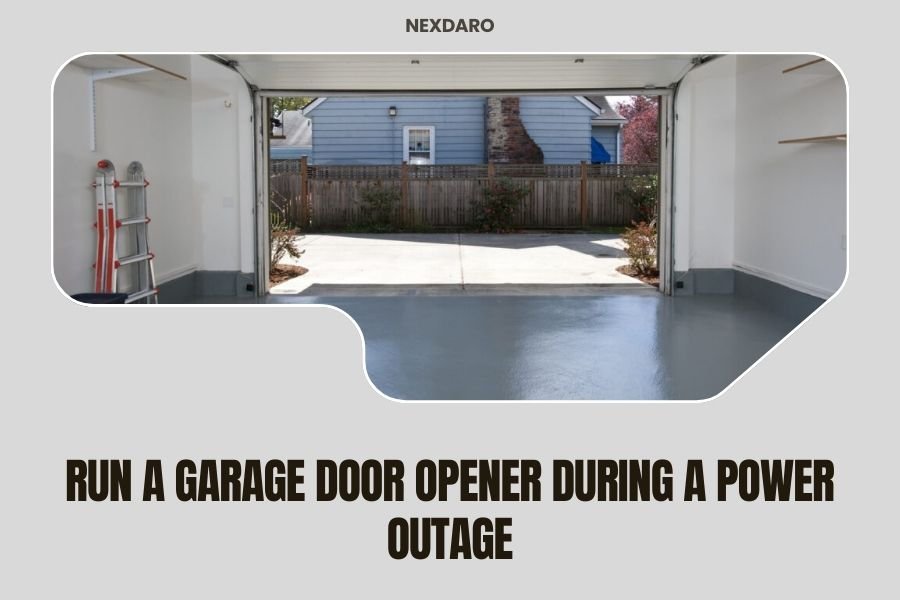
Yes, you can run a garage door opener during a power outage using a portable power station with at least 800-1500 watts of capacity.
Most garage door openers need 500-1000 watts to start up and 200-500 watts to operate, making portable power stations an ideal backup solution.
What Power Do Garage Door Openers Actually Need?
Your garage door opener draws different amounts of power depending on what it’s doing. When you first press that button, the motor needs a big surge of energy to get moving.
I researched typical power requirements and found that most residential garage door openers fall into these ranges:
- Starting power: 800-1500 watts (the initial surge)
- Running power: 200-500 watts (once it’s moving)
- Standby power: 5-15 watts (waiting for your signal)
Chain-drive openers usually need more power than belt-drive models. Heavier doors also demand more energy to lift.
Can Portable Power Stations Handle Your Garage Door?
The good news is that most quality portable power stations can absolutely run your garage door opener. You just need to match the right specs.
When I looked into this topic, I found that the key is having enough starting watts. Your power station needs to handle that initial surge when the motor kicks in.
What Size Power Station Do You Need?
For most garage doors, you’ll want a portable power station with at least 1000 watts of continuous output. This gives you a safety buffer above the typical 800-watt startup requirement.
The battery capacity matters too. A 1000Wh battery can typically run your garage door opener 30-50 times on a single charge, depending on your door’s weight and opener type.
Types of Power Stations That Work Best
Pure sine wave inverters work best for garage door openers. These motors can be picky about power quality, and pure sine wave output prevents potential damage or strange behavior.
Look for power stations with surge protection built in. That startup surge can stress cheaper units without proper safeguards.
How to Set Up Your Backup Power System
Setting up backup power for your garage door is pretty straightforward. You have a few different approaches depending on your comfort level with electrical work.
Direct Plug-In Method
The easiest approach is plugging your garage door opener directly into the portable power station. Most openers have a standard power cord that unplugs from the outlet.
Just unplug from the wall outlet and plug into your power station. Simple as that.
Extension Cord Setup
If your opener is hardwired or the plug is hard to reach, you can use a heavy-duty extension cord. Make sure it’s rated for at least 15 amps to handle the startup surge safely.
Keep the extension cord as short as possible. Long runs can cause voltage drops that might prevent proper startup.
Manual Release First
Before connecting any backup power, pull the manual release cord. This disconnects the opener from the door mechanism. Test that you can lift the door by hand.
Why do this? If something’s wrong with the door itself – like a broken spring – no amount of backup power will help. You’ll just drain your battery trying to lift a door that’s too heavy.
Safety Steps You Can’t Skip
Working with garage doors and electricity requires some basic safety awareness. These aren’t difficult steps, but they’re important ones.
Check Your Door Balance
A properly balanced garage door should stay in place when you lift it halfway up by hand. If it falls down or shoots up, you have spring problems that need fixing first.
An unbalanced door puts extra strain on the opener motor. This means higher power draw and shorter battery life from your power station.
Inspect the Power Cord
Look over the opener’s power cord for any damage, fraying, or worn spots. Damaged cords can cause shorts or fires, especially when you’re dealing with the high currents during startup.
Test the Manual Release
Make sure you know how to manually disconnect and reconnect the opener. During a power outage, you might need to operate the door by hand to conserve battery power.
The manual release usually involves pulling a cord or lever that disengages the drive mechanism.
Power Station Features That Matter Most
Not all portable power stations are created equal when it comes to running garage door openers. Some features make a real difference in performance and reliability.
Surge Capacity
Look for power stations that can handle 2-3 times their rated continuous power for short periods. This surge capacity lets them manage the high startup current without shutting down.
I found that many cheaper units advertise high wattage but can’t actually deliver it when motors start up. Read the fine print on surge ratings.
Battery Chemistry
Lithium iron phosphate (LiFePO4) batteries handle high current draws better than standard lithium-ion. They also last longer and work better in cold garages.
Cold weather reduces battery capacity. If your garage gets really cold in winter, LiFePO4 chemistry performs better than other types.
Multiple AC Outlets
Having extra outlets means you can also power garage lights, a radio, or charge your phone during outages. Just watch your total power draw.
How Long Will Your Battery Last?
Battery runtime depends on how often you use the garage door and what else you’re powering. Let’s break down some realistic numbers.
Typical Usage Calculations
Each door cycle (open or close) uses about 10-20 watt-hours of energy. So a 1000Wh power station could theoretically handle 50-100 door cycles.
But that’s just the motor running. The opener also draws standby power whenever it’s plugged in – usually around 10 watts continuously.
| Power Station Size | Door Cycles | Standby Time |
|---|---|---|
| 500Wh | 25-50 cycles | 50 hours |
| 1000Wh | 50-100 cycles | 100 hours |
| 1500Wh | 75-150 cycles | 150 hours |
Real-World Runtime
In practice, you’ll get less runtime than the theoretical maximum. Power conversion isn’t 100% efficient, and cold weather reduces battery capacity.
Plan for about 70-80% of the calculated runtime in normal conditions. In cold weather, expect closer to 50-60%.
Alternative Backup Power Options
Portable power stations aren’t your only option for backup garage door power. Let’s look at a few alternatives and how they compare.
Gas Generators
Gas generators can definitely run garage door openers, but they come with drawbacks. You can’t run them inside the garage due to carbon monoxide risks.
Setting up a generator outside and running extension cords into the garage works, but it’s less convenient than a portable power station you can just plug in and go.
UPS Battery Backup
Uninterruptible power supplies (UPS) designed for computers usually can’t handle the startup surge of garage door openers. The motor draw is too high for most UPS units.
Some industrial UPS systems can handle motors, but they’re expensive and overkill for residential use.
Car Power Inverters
You can run a garage door opener from your car using a power inverter, but this approach has limitations. Most car outlets are only rated for 10-15 amps, which might not handle the startup surge.
You’d need to connect directly to the car battery with a high-capacity inverter for reliable operation.
Troubleshooting Common Issues
Sometimes your backup power setup doesn’t work as expected. Here are the most common problems and their solutions.
Opener Won’t Start
If the garage door opener doesn’t respond when connected to your power station, check the surge capacity first. The power station might be shutting down to protect itself from the startup current.
Try a power station with higher surge ratings, or check if your opener has a “soft start” mode that reduces the initial power draw.
Door Moves Slowly
Slow operation usually means voltage drop from a long extension cord or a power station that can’t maintain stable voltage under load.
Use the shortest, heaviest-gauge extension cord possible. Or move the power station closer to the opener.
Battery Drains Too Fast
Fast battery drain often comes from the standby power consumption. The opener’s control board draws power continuously, even when not in use.
To conserve battery, unplug the opener when you’re not actively using it. Just remember to plug it back in when you need to operate the door.
Maintenance Tips for Reliable Operation
Keeping your backup power system in good shape means regular maintenance of both the power station and the garage door opener.
Power Station Care
Keep your portable power station charged and cycle it monthly. Lithium batteries last longer when they’re kept between 20-80% charge rather than sitting at 100% all the time.
Store the unit in a temperature-controlled area if possible. Extreme heat or cold can reduce battery life and performance.
Opener Maintenance
Clean and lubricate the garage door tracks, rollers, and hinges regularly. A well-maintained door requires less power to operate, giving you longer runtime from your battery.
Check the door balance at least twice a year. Springs weaken over time, putting more load on the opener motor.
Cost Considerations
Setting up garage door backup power involves some upfront costs, but it can be worth it for the convenience and peace of mind.
Power Station Investment
A quality portable power station suitable for garage door openers typically costs $800-2000, depending on capacity and features.
When I researched pricing, I found that spending a bit more upfront usually gets you better surge handling and longer battery life.
Long-Term Value
Beyond garage door backup, a portable power station serves many other purposes. You can use it for camping, outdoor events, or powering other devices during outages.
Think of it as general emergency preparedness equipment that happens to solve your garage door problem too.
Conclusion
Running your garage door opener during a power outage is definitely possible with the right portable power station. You need at least 1000 watts of capacity to handle the startup surge, and enough battery storage for your expected usage.
The setup is straightforward – just plug and go in most cases. Focus on getting a quality power station with pure sine wave output and good surge handling. Your garage door opener will thank you, and you’ll have reliable access even when the grid goes down.
Remember to maintain both your power station and garage door system for best results. A well-balanced door and properly charged battery will serve you well when you need them most.
Can I use a car battery to power my garage door opener?
Yes, but you’ll need a power inverter rated for at least 1000 watts. Connect directly to the battery terminals, not the 12V outlet, to handle the startup surge. Make sure your car is running to avoid draining the battery completely.
How do I know if my garage door opener is hardwired or plug-in?
Look at the ceiling near your opener motor. If you see a standard electrical cord going to a wall outlet, it’s plug-in. If wires go directly into an electrical junction box or conduit, it’s hardwired and you’ll need an electrician for backup power installation.
Will backup power work with smart garage door openers?
Most smart garage door openers work fine on backup power, but the WiFi connectivity might be lost if your internet router is also down. The basic open/close functions will still work with the wall button or remote control.
Can I leave the power station connected all the time?
Some power stations have a “pass-through” charging feature that lets them stay connected as a UPS system. Check your manual first, as not all models support this. Constant connection can reduce battery lifespan on units not designed for it.
What happens if the power station shuts off during door operation?
If power cuts out while the door is moving, it will stop immediately. You can manually lift or lower the door to a safe position, or restore power and use the remote to complete the cycle. Modern openers have safety features to prevent damage from sudden power loss.