
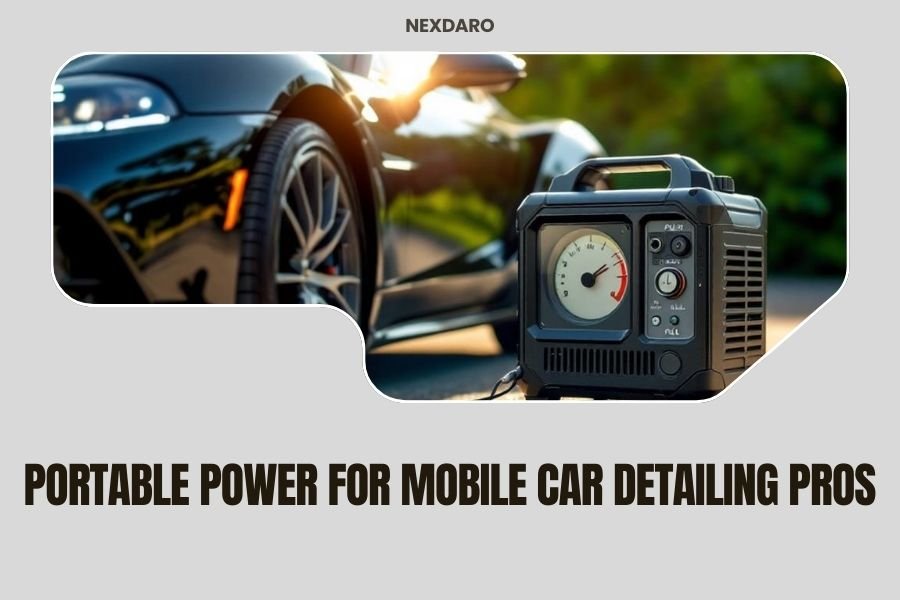
Portable power stations for mobile car detailing provide 1000-3000 watts of clean electricity to run pressure washers, vacuums, and equipment anywhere without grid power.
Most mobile car detailing pros need at least 1500Wh battery capacity and pure sine wave output to power professional equipment reliably for 4-6 hours of continuous work.
Why Mobile Car Detailers Need Portable Power
You can’t detail cars without power. That’s the reality every mobile car detailing professional faces.
Traditional generators are loud, smelly, and often banned in residential areas. They produce dirty power that can damage sensitive equipment. Plus, many HOAs and apartment complexes don’t allow gas generators on their property.
Portable power stations solve these problems. They’re silent, emission-free, and welcome everywhere. You get clean electricity that protects your expensive equipment while keeping customers happy.
The Generator Problem for Mobile Detailers
I researched common complaints from mobile detailing businesses. Noise tops the list. Customers hate the sound of generators during early morning or evening appointments.
Gas generators also create fumes that drift onto freshly cleaned cars. Nothing ruins your work faster than exhaust residue settling on a spotless paint job.
Storage and transport create more headaches. Generators are heavy, bulky, and smell like gas in your van.
Silent Power Changes Everything
Portable power stations run completely silent. You can work at 6 AM without waking anyone up. Customers actually prefer the quiet operation.
The compact design saves space in your vehicle. Most units are about the size of a small cooler. No more wrestling with heavy generators or dealing with fuel spills.
Power Requirements for Car Detailing Equipment
Different tools need different amounts of power. Understanding your equipment’s needs helps you choose the right portable power station.
High-Power Equipment
Pressure washers are your biggest power consumers. Electric models typically draw 1200-2000 watts. Hot water extractors can pull 1500-2500 watts.
Shop vacuums range from 800-1400 watts depending on motor size. Dual-motor units push power needs even higher.
Medium-Power Tools
Polishers and buffers usually need 600-1200 watts. Orbital sanders draw 200-400 watts. Air compressors vary widely from 500-1800 watts.
Low-Power Accessories
LED work lights use 20-50 watts each. Phone chargers, small fans, and radios add minimal load. These items barely register on power station meters.
Calculating Your Total Power Needs
Add up everything you might run simultaneously. Most detailers operate 2-3 tools at once during peak workflow periods.
For example: pressure washer (1500W) + shop vacuum (1000W) + work lights (100W) = 2600W total draw. Your power station needs to handle this peak load.
Key Features for Professional Use
Not all portable power stations work for professional detailing. You need specific features that consumer models often lack.
Pure Sine Wave Output
Your equipment expects clean power from the wall outlet. Pure sine wave output mimics grid electricity perfectly.
Modified sine wave power can damage sensitive electronics in modern equipment. It causes motors to run hot and reduces tool lifespan.
Research from equipment manufacturers shows pure sine wave power extends motor life by 30-40% compared to modified wave alternatives.
High Surge Capacity
Motors need extra power when starting up. This surge can be 3-5 times the running wattage for 2-3 seconds.
A 1200W pressure washer might need 4000W surge power to start. Your power station must handle these brief spikes without shutting down.
Multiple Output Options
Professional power stations offer various outlets. Look for multiple AC outlets, USB ports, and 12V connections.
This flexibility lets you charge phones, run lights, and power different tool types from one unit.
Battery Chemistry Matters
Lithium iron phosphate (LiFePO4) batteries last longer than standard lithium-ion. They handle 3000+ charge cycles versus 500-800 for regular lithium.
The extra cost pays off over time. LiFePO4 units often work reliably for 8-10 years with daily use.
Recommended Power Station Sizes
Your business size and service types determine the right power station capacity.
Small Operations (1500-2000Wh)
Solo detailers or part-time businesses can work with smaller units. These handle basic wash and vacuum jobs for 4-5 hours.
You’ll run one major tool at a time. Perfect for maintenance washes and interior cleaning.
Medium Operations (2000-3000Wh)
Full-time detailers need this capacity range. You can run multiple tools and work 6-8 hours between charges.
This size handles most complete detail jobs including paint correction and ceramic coating application.
Large Operations (3000Wh+)
Multi-person teams or high-end services require maximum capacity. These units power multiple stations and run all day.
Commercial detailing operations often use two medium units instead of one large unit. This provides backup power and flexibility.
Cost Analysis and ROI
Portable power stations cost more upfront than generators. But the math changes when you consider operating expenses.
Initial Investment
Professional-grade power stations range from $1200-4000 depending on capacity. Comparable generators cost $300-800.
The price gap narrows when you add fuel costs, maintenance, and replacement schedules.
Operating Costs
Electricity costs about $0.15 per kWh in most areas. Charging a 2000Wh unit costs roughly $0.30.
Generators burn 1-2 gallons of gas for equivalent runtime. At $3.50 per gallon, that’s $3.50-7.00 per day in fuel alone.
Hidden Savings
Silent operation opens new markets. You can work in noise-restricted areas that competitors can’t access. This alone can increase revenue 20-30%.
No maintenance saves time and money. Generators need oil changes, filter replacements, and annual tune-ups. Power stations need nothing but occasional cleaning.
Charging and Runtime Strategies
Smart charging keeps you working all day. Plan your power management like you plan your route.
Overnight Charging
Most power stations charge fully in 6-8 hours from AC power. Plug in every night and start each day with 100% capacity.
Some units offer fast charging that cuts time to 2-4 hours. Worth the extra cost if you work split shifts.
Mobile Charging Options
Your vehicle’s alternator can charge power stations while driving. This works great between job sites.
Solar panels add charging capability but need good sun exposure. Most mobile detailers find solar impractical due to van parking and weather.
Runtime Extension Tips
Run one major tool at a time when possible. Switching between pressure washer and vacuum extends battery life versus running both together.
Use battery power for essential tools only. Plug small items like phones and radios into your van’s 12V system instead.
Integration with Your Mobile Setup
Power stations work best when integrated into your van’s electrical system.
Mounting and Storage
Secure mounting prevents damage during transport. Build a dedicated compartment or use tie-down straps.
Keep units accessible for monitoring. You need to see battery levels and status lights while working.
Cable Management
Long extension cords reduce efficiency and create trip hazards. Position your power station as close to work areas as possible.
Heavy-duty outdoor extension cords handle equipment loads better than household versions. The extra cost prevents voltage drops and overheating.
Weather and Environmental Considerations
Portable power stations handle weather better than generators but still need protection.
Rain Protection
Most units are splash-resistant but not waterproof. Keep them under canopies or vehicle overhangs during rain.
Plastic storage boxes with ventilation holes work well for weather protection. Just ensure airflow for cooling.
Temperature Effects
Battery performance drops in extreme cold. Expect 20-30% less runtime when temperatures fall below 32°F.
Hot weather above 95°F triggers thermal protection that reduces output. Park in shade when possible and allow cooling breaks.
Maintenance and Longevity
Proper care extends power station life and maintains performance.
Battery Health
Don’t let batteries sit at 0% charge for extended periods. Store units at 50-80% charge during off-seasons.
Monthly use prevents battery degradation. Even if you don’t need power, run a cycle every few weeks.
Cleaning and Storage
Keep cooling vents clear of dust and debris. Canned air works well for regular cleaning.
Store units in temperature-controlled environments when possible. Extreme temperatures accelerate battery aging.
Troubleshooting Common Issues
Know how to handle typical problems before they affect your work day.
Overload Protection
Power stations shut down when overloaded. This protects internal components but stops your work.
Reset by turning the unit off and on. Then reduce the load before restarting equipment.
Low Voltage Warnings
Battery voltage drops as charge decreases. Some equipment stops working before the power station is empty.
This is normal protection for sensitive electronics. Charge the unit or switch to less demanding tools.
Conclusion
Portable power stations change the mobile car detailing game. They open new markets, reduce operating costs, and eliminate the headaches of generator ownership.
The initial investment pays back through fuel savings, reduced maintenance, and access to noise-restricted areas. Professional units with pure sine wave output and adequate capacity handle demanding detailing equipment reliably.
Start with your power requirements and work backward to find the right capacity. Factor in surge needs, runtime expectations, and growth plans. The right power station becomes as important as your pressure washer or vacuum.
Silent, clean power lets you focus on what matters most – delivering exceptional results that keep customers coming back.
Can portable power stations run hot water extractors for car detailing?
Yes, but you need a high-capacity unit with at least 2500W continuous output. Hot water extractors typically draw 1500-2500 watts and require pure sine wave power for proper motor operation.
How long does a 2000Wh power station run a pressure washer?
A 1200W pressure washer runs approximately 1.5-2 hours on a 2000Wh power station, accounting for efficiency losses. Actual runtime varies based on water pressure settings and duty cycle.
Do power stations work better than generators for mobile detailing?
Power stations offer silent operation, no emissions, and cleaner electricity that protects equipment. They work better in residential areas and noise-restricted zones, though generators provide longer runtime for the same cost.
What’s the minimum power station size needed for basic car washing?
A 1500Wh unit with 1500W output handles basic washing with a pressure washer and shop vacuum used separately. This provides 3-4 hours of runtime for maintenance washes and interior cleaning.
Can you charge power stations from your vehicle while driving?
Yes, most power stations charge from 12V outlets while driving, though charging is slower than AC power. Expect 100-200W charging rates, which adds about 1-2 hours of runtime per hour of driving.
