
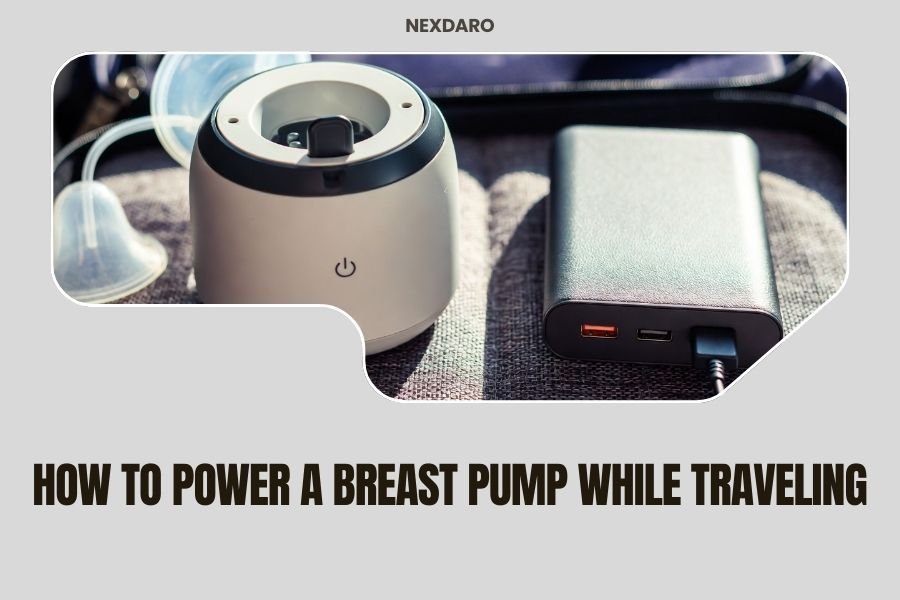
You can power a breast pump while traveling using portable power stations, car adapters, or battery packs designed for medical devices.
The best travel power solution depends on your pump type, trip duration, and available power sources at your destination.
Quick Power Solutions for Travel
Let’s jump straight to what works. You have three main options that I found work reliably for most moms.
Car adapters give you the easiest solution for road trips. Most breast pumps come with 12V car chargers or you can buy universal ones.
Portable power stations work anywhere and can run pumps for days. Think of them as giant phone batteries with regular wall outlets.
Battery-powered pumps eliminate the power problem completely. Many manual and electric pumps now run on rechargeable batteries.
Power Station Basics
Power stations store electricity like massive phone chargers. You charge them at home, then plug in your pump anywhere.
Look for stations with at least 150 watt-hours of capacity. That’s enough for 8-12 pumping sessions depending on your pump model.
Weight matters when you’re packing. Stations under 5 pounds work best for air travel and long walks.
Choosing the Right Power Station
Your pump’s power needs determine what size station you need. Most electric pumps use between 15-25 watts per session.
Calculate Your Power Needs
Check your pump’s label for wattage or voltage and amperage. Multiply volts times amps to get watts.
Count how many times you’ll pump per day. Multiply that by session length and your pump’s watts.
Add 20% extra capacity as a safety buffer. Batteries lose efficiency over time and in cold weather.
Capacity Recommendations
For weekend trips, 150-300 watt-hours handles most needs. That’s roughly 10-20 pumping sessions.
Week-long trips need 500+ watt-hours unless you can recharge daily. Many hotels and airports have charging stations now.
International travel requires checking voltage compatibility. Some pumps only work with specific voltages.
Car Charging Options
Your car provides reliable power for road trips and daily commuting. Most solutions plug into your 12V outlet or USB ports.
Direct Car Adapters
Many pump manufacturers sell car adapters for their specific models. These plug directly into your 12V outlet.
Universal car adapters work with multiple pump brands. Check the voltage and connector type before buying.
Your car needs to be running for most adapters to work properly. The alternator provides steady power flow.
USB-Powered Pumps
Some newer pumps charge via USB-C or micro-USB. These work with car USB ports or phone chargers.
USB power banks extend your pumping time without running the engine. Look for high-capacity banks with multiple ports.
Power Bank Considerations
Airport security allows power banks under 100 watt-hours in carry-on bags. Larger banks must go in checked luggage or stay home.
Cold weather reduces battery performance by 20-40%. Keep power banks warm in winter travel.
Battery-Powered Pump Solutions
Battery pumps solve the power problem completely. You’re not tied to outlets, cars, or heavy equipment.
Rechargeable Electric Pumps
Many companies now make pumps with built-in rechargeable batteries. These typically run for 2-4 hours per charge.
Wearable pumps fit inside your bra and run silently. Perfect for pumping during flights or meetings.
Traditional pumps with battery packs offer more suction power than wearables. Better for moms who need strong suction.
Manual Backup Options
Hand pumps need zero electricity and weigh almost nothing. Great as emergency backups or for short trips.
Modern manual pumps work much better than old versions. Some match electric pump output with the right technique.
When Manual Makes Sense
Hiking, camping, and remote travel where weight and reliability matter most. No batteries to die or chargers to forget.
International travel to places with unreliable electricity. Manual pumps work anywhere, anytime.
Air Travel Considerations
Airlines and TSA have specific rules about batteries and medical devices. Know these before you pack.
TSA Battery Rules
Lithium batteries under 100 watt-hours go in carry-on bags. Larger batteries need airline approval before travel.
Remove batteries from devices if possible. Pack them in original cases or tape over terminals.
Breast pumps count as medical devices. TSA allows them through security with additional screening.
Airline Power Options
Many planes now have USB ports and wall outlets at each seat. Check your airline’s website for power availability.
Bring adapters for international outlets if flying overseas. Power station charging requirements vary by country.
Airport Charging
Most airports have charging stations throughout terminals. Great for topping off power banks during layovers.
Some airports have dedicated nursing rooms with power outlets. Check airport maps or ask information desks.
Hotel and Accommodation Power
Most hotels have standard wall outlets, but some older properties or international locations might surprise you.
Outlet Availability
Business hotels typically have plenty of outlets near beds and desks. Budget hotels might have fewer options.
Bring a small power strip if you have multiple devices to charge. Hotels often have limited outlet access.
International travel requires plug adapters for different outlet types. Voltage converters might be needed too.
Backup Planning
Always have a backup power method. Hotel power can fail or be unavailable when you need it most.
Charge all devices whenever possible. Don’t wait until batteries are empty to start charging.
| Power Method | Best For | Runtime | Weight | Cost |
|---|---|---|---|---|
| Power Station | Any location | 1-3 days | 3-8 lbs | $150-500 |
| Car Adapter | Road trips | Unlimited while driving | 1 lb | $20-50 |
| Power Bank | Short trips | 4-12 hours | 1-2 lbs | $30-100 |
| Battery Pump | Minimal packing | 2-4 hours | 1-3 lbs | $100-300 |
Safety and Maintenance Tips
Keep your power equipment and pump clean and dry. Moisture can damage electronics and create safety hazards.
Battery Care
Don’t let batteries drain completely. Charge them when they reach 20-30% remaining capacity.
Store batteries at room temperature when possible. Extreme heat and cold reduce battery life.
Check battery swelling or damage before each trip. Damaged batteries can be dangerous and won’t hold charge.
Cleaning and Storage
Wipe down power stations and adapters after each trip. Remove any dust or debris from charging ports.
Store equipment in dry places away from direct sunlight. Moisture and heat damage electronics over time.
Troubleshooting Common Issues
Power problems always seem to happen at the worst times. Here’s how to fix the most common issues quickly.
Pump Won’t Turn On
Check all connections first. Loose plugs cause most power problems with pumps and charging equipment.
Test your power source with another device. Phone chargers work well for testing outlets and power banks.
Try a different outlet or charging cable. Sometimes the problem is the power source, not your pump.
Weak Suction Power
Low battery voltage can reduce pump performance. Charge your power source or switch to a fresh battery.
Clean pump parts and check for clogs. Blocked air passages reduce suction even with full power.
Power Bank Problems
Some power banks shut off automatically with low-power devices. Look for banks with “always on” modes.
USB ports provide different power levels. Try different ports or cables if your pump runs slowly.
Cost-Effective Solutions
You don’t need to spend hundreds on travel power. Smart shopping can save money without sacrificing reliability.
Budget Options
Car adapters cost the least and work great for road trips. Universal adapters work with multiple pump brands.
High-capacity phone power banks can run many pumps. Much cheaper than dedicated power stations.
Rental power equipment makes sense for occasional travel. Many baby stores rent pumps and accessories.
Long-term Value
Quality power stations last for years and work with other devices too. Good investment for frequent travelers.
Battery-powered pumps eliminate accessory costs but typically cost more upfront. Calculate total cost over time.
Conclusion
Powering your breast pump while traveling doesn’t have to be complicated or expensive. Start with your trip type and power needs, then choose the simplest solution that works reliably.
Car adapters handle most road trips perfectly. Power stations give you freedom for any destination. Battery pumps eliminate power worries completely but cost more upfront.
Always pack a backup method, especially for important trips. A simple manual pump or extra power bank can save your day when technology fails.
Test everything at home before you leave. The middle of your trip is the worst time to discover compatibility problems or dead batteries.
Can I bring a power station on an airplane?
Yes, but only in carry-on luggage and under 100 watt-hours without airline approval. Larger power stations need pre-approval and may have restrictions depending on the airline.
How long will a car adapter work when the engine is off?
Most car batteries can power a breast pump for 30-60 minutes with the engine off. Running longer risks draining your car battery and needing a jump start.
Do all breast pumps work with universal car adapters?
No, you need to match voltage requirements and connector types. Check your pump’s power requirements before buying any universal adapter to avoid damage.
Can cold weather affect my portable power station?
Yes, battery capacity drops 20-40% in freezing temperatures. Keep power stations warm when possible and expect shorter runtime in winter conditions.
What’s the most reliable backup power method for international travel?
Manual hand pumps work anywhere without electricity, outlets, or batteries. Pack one as an emergency backup even if you plan to use electric pumps primarily.
