
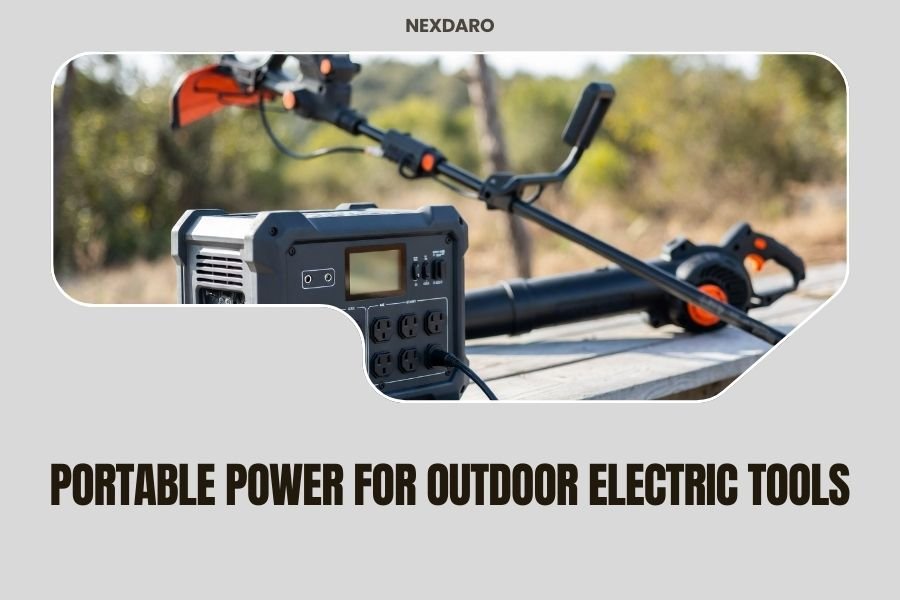
Portable power stations for outdoor electric tools typically need 500-1500 watts capacity to run most common equipment like drills, saws, and sanders effectively.
You can power outdoor electric tools for 2-8 hours depending on your power station’s battery size and the tool’s energy demands.
Why Your Outdoor Projects Need Portable Power
Working on outdoor projects without access to wall outlets used to mean hauling extension cords everywhere. Or settling for less powerful cordless tools that die mid-project.
Portable power stations changed that game completely. These battery-powered units let you bring serious electrical power anywhere your work takes you.
Think of them as silent, clean generators that won’t wake your neighbors at 7 AM. They’re perfect for deck building, fence repairs, or any outdoor project where you need reliable electricity.
What Makes a Power Station Right for Electric Tools
Not all portable power stations work well with electric tools. You need specific features to avoid frustrating shutdowns or damaged equipment.
Power Output Requirements
Most electric tools need steady AC power, just like your home outlets provide. Your power station must deliver clean, stable electricity without voltage drops.
I found that pure sine wave inverters work best. They produce electricity that matches what comes from your wall outlets. Modified sine wave units can damage sensitive tool electronics.
Wattage Capacity Matters Most
Here’s where many people get confused. Tools have two power ratings you need to know about.
Running watts are what the tool uses during normal operation. Starting watts are the power surge when you first turn it on. Some tools need 2-3 times more power to start than to run.
Common Tool Power Needs
- Circular saws: 1200-1800 watts
- Angle grinders: 500-1500 watts
- Drills: 300-800 watts
- Sanders: 200-600 watts
- Jigsaws: 400-700 watts
Choosing the Right Size Power Station
Your power station needs enough capacity for your heaviest tool, plus some extra headroom. Going too small means constant shutdowns. Going too big means paying for power you won’t use.
The 20% Rule
Add 20% to your highest tool’s starting watts. This buffer prevents overload trips when your saw hits a tough knot or your grinder binds up slightly.
If your circular saw needs 1500 starting watts, look for a power station rated for at least 1800 watts continuous output.
Battery Size vs Runtime
Bigger batteries cost more but let you work longer between charges. A 1000Wh battery running a 500-watt sander gives you roughly 2 hours of continuous use.
Most people overestimate how long they actually run tools. You’re not constantly cutting or grinding. Factor in measuring, positioning, and breaks.
Realistic Runtime Expectations
| Battery Size | 500W Tool | 1000W Tool | 1500W Tool |
|---|---|---|---|
| 500Wh | 1 hour | 30 minutes | 20 minutes |
| 1000Wh | 2 hours | 1 hour | 40 minutes |
| 1500Wh | 3 hours | 1.5 hours | 1 hour |
Essential Features for Tool Use
Beyond basic power specs, certain features make your outdoor work much smoother.
Multiple AC Outlets
You’ll want to plug in different tools without constantly swapping cords. Look for at least 2-3 standard AC outlets.
Some jobs need multiple tools running together. Maybe you’re using a work light while operating your drill. Having extra outlets prevents juggling power cords.
Fast Charging Options
Nobody wants to wait 8 hours for their power station to recharge. Modern units can refill in 2-4 hours using fast charging technology.
Solar charging sounds great but works slowly. You’d need a huge solar panel to charge quickly enough for daily tool use. Wall charging remains the most practical option.
Charging Speed Comparison
- Wall outlet (fast charge): 2-4 hours
- Car outlet: 6-10 hours
- Solar panels: 8-16 hours (weather dependent)
Safety Considerations for Outdoor Use
Using electricity outdoors brings unique safety challenges. Your power station needs protection from weather and rough handling.
Weather Protection
Most power stations aren’t fully waterproof. Light rain or morning dew can cause serious damage to electronics.
Keep your unit under cover when possible. A simple tarp or lean-to shelter works well. Never use it in standing water or during heavy rain.
Overload Protection
Quality power stations shut down automatically when you ask for too much power. This protects both the unit and your tools from damage.
Cheap units might not have proper protection circuits. They could damage expensive tools or create fire hazards. Research shows that certified units from established brands offer better protection (UL standards).
Real-World Applications
Let me share some practical scenarios where portable power stations shine for outdoor tool use.
Deck Building Projects
Building a deck far from your house becomes much easier with portable power. You can use full-size circular saws, impact drivers, and sanders without running extension cords.
A 1500-watt power station handles most deck building tools. You’ll get a full day’s work from a 1000Wh battery if you’re not constantly cutting.
Remote Repair Work
Fixing fences, sheds, or outbuildings in remote areas used to mean hand tools only. Now you can bring your electric tools anywhere.
This works great for contractors doing outdoor repairs. No need to locate outlets or ask homeowners to run extension cords.
Camping and RV Projects
Campground maintenance or RV repairs often happen far from electrical hookups. A portable power station lets you use regular tools instead of weak battery-powered alternatives.
Cost vs Value Analysis
Portable power stations cost more upfront than extension cords or basic generators. But they offer unique advantages that justify the investment.
Comparing Your Options
Extension cords cost less but limit where you can work. Generators provide more power but make noise and need fuel. Power stations offer the best balance for most outdoor tool use.
You also save money on gas and maintenance compared to generators. No oil changes, spark plugs, or fuel storage needed.
Long-term Investment
Quality power stations last 5-10 years with normal use. The lithium batteries slowly lose capacity but remain functional much longer than traditional lead-acid batteries.
Many manufacturers offer 2-5 year warranties. This protection gives you confidence in the investment.
Top Mistakes to Avoid
I’ve seen people make the same errors when choosing power stations for tool use. Learn from these common mistakes.
Underestimating Starting Power
The biggest mistake is only looking at running watts. Your circular saw might run on 1200 watts but need 2000 watts to start. Buy based on starting power, not running power.
Ignoring Inverter Quality
Cheap modified sine wave inverters can damage tool electronics. Spend extra for pure sine wave output. Your expensive tools will thank you.
Forgetting About Temperature
Batteries work poorly in extreme cold. Very hot conditions also reduce performance. Plan for seasonal variations in your area.
Maintenance and Care Tips
Proper care extends your power station’s life and keeps it ready when you need it.
Storage Best Practices
Store your unit with 50-80% battery charge. Full discharge or 100% charge for months damages lithium batteries.
Check and recharge every 3-4 months during storage. This prevents the battery from dropping too low.
Cleaning and Inspection
Keep air vents clean and free of debris. Blocked vents cause overheating and reduced performance.
Inspect power cords and outlets regularly. Replace damaged cords immediately to prevent safety hazards.
Future-Proofing Your Investment
Technology keeps improving portable power stations. Consider features that will remain useful as your needs change.
Expandable Systems
Some power stations let you add extra batteries later. This flexibility helps as your tool collection grows or projects get bigger.
Modular systems cost more initially but offer better long-term value. You can start small and expand as needed.
Conclusion
Portable power stations open up new possibilities for outdoor electric tool use. You can work anywhere without compromising on tool performance or dealing with noisy generators.
Choose a unit with 20% more capacity than your most demanding tool’s starting watts. Pure sine wave output protects your equipment investment. Plan for realistic runtimes based on actual work patterns, not continuous operation.
The right power station transforms outdoor projects from frustrating extension cord battles into smooth, professional work sessions. Your productivity and job satisfaction will improve dramatically.
How long do portable power stations last when running electric tools?
Runtime depends on your battery size and tool power draw. A 1000Wh battery typically runs a 500-watt tool for about 2 hours of continuous use, but actual work sessions last longer due to natural breaks for measuring and positioning.
Can I run multiple electric tools at the same time from one power station?
Yes, as long as the combined wattage stays below your power station’s capacity. You can run a drill and work light together, but avoid combining high-draw tools like circular saws and angle grinders simultaneously.
Do portable power stations work in cold weather?
Lithium batteries lose capacity in freezing temperatures, providing 50-70% of their normal runtime. Keep your power station as warm as possible and consider this reduced performance when planning outdoor winter projects.
What’s the difference between modified and pure sine wave for tools?
Pure sine wave output matches standard household electricity and works safely with all electric tools. Modified sine wave can damage sensitive electronics in modern tools and may cause motors to run less efficiently or overheat.
How often should I recharge my portable power station if I don’t use it regularly?
Recharge every 3-4 months during storage periods to maintain battery health. Store the unit at 50-80% charge level rather than completely full or empty to maximize battery lifespan over many years.
