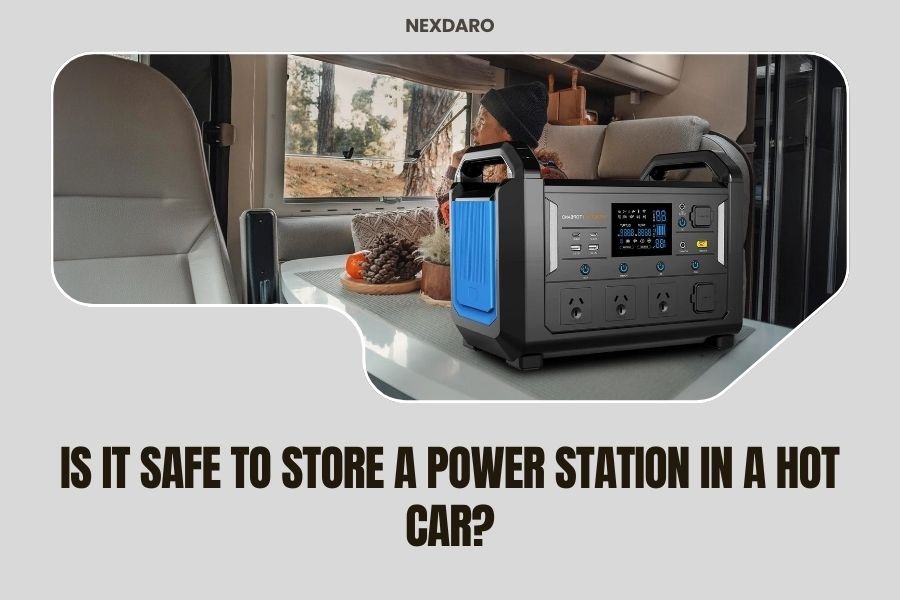
No, it’s not safe to store a power station in a hot car for extended periods because high temperatures can damage the lithium batteries and reduce their lifespan.
Temperatures above 104°F (40°C) can cause permanent battery damage, and cars can reach 150°F or higher on sunny days.
What Heat Does to Your Power Station
Think of your power station’s battery like chocolate in your pocket. Leave it in a hot car, and you’ll come back to a mess. The lithium-ion batteries inside your power station face similar stress when temperatures spike.
Heat makes the battery cells work harder than they should. The chemical reactions inside speed up, causing the battery to degrade faster. You might not notice it right away, but each hot day chips away at your power station’s capacity.
Temperature Thresholds That Matter
Most power stations work best between 32°F and 104°F (0°C to 40°C). Once you cross that upper limit, problems start brewing.
Here’s what happens at different temperature ranges:
- 104-122°F (40-50°C): Battery life starts decreasing
- 122-140°F (50-60°C): Serious damage begins
- Above 140°F (60°C): Risk of thermal runaway
How Hot Cars Really Get
Your car isn’t just warm on summer days—it’s an oven. Research from Stanford University shows that cars can heat up 40°F above the outside temperature in just one hour.
On a 90°F day, your car interior can hit 130°F. That’s well into the danger zone for your power station.
Signs Your Power Station Has Been Heat Damaged
Wondering if heat has already hurt your device? Your power station will give you clues.
Performance Red Flags
Watch for these warning signs:
- Shorter runtime than usual
- Takes longer to charge
- Gets hot during normal use
- Display shows error messages
- Won’t hold a charge overnight
Physical Changes to Look For
Heat damage sometimes shows up on the outside too. Check for swelling around the battery compartment or unusual smells when charging.
If your power station feels different in your hands—maybe a bit puffy or warped—heat might have done internal damage.
The Science Behind Battery Heat Damage
I found research from the National Renewable Energy Laboratory that explains exactly why heat hurts batteries so much.
Chemical Breakdown Process
Inside your power station, lithium ions move back and forth between electrodes. Heat speeds up this process way too much, like forcing someone to run when they want to walk.
The faster movement creates more resistance. More resistance means more heat. More heat means faster breakdown. It’s a cycle that feeds itself.
Permanent vs Temporary Effects
Some heat effects reverse when your power station cools down. But capacity loss is permanent. Once those battery cells degrade, they don’t bounce back.
Think of it like aging—you can’t undo the damage, only slow it down going forward.
Safe Storage Alternatives
So where should you keep your power station when you’re on the road? Let’s talk practical solutions.
Inside Your Vehicle Options
If you must keep it in your car, pick the coolest spot possible. The floor behind the front seat stays cooler than the trunk or dashboard area.
Cover it with a light-colored towel or blanket. This creates a small buffer against direct sunlight and hot air.
Trunk vs Cabin Storage
The trunk usually gets hotter than the cabin because it’s isolated from your air conditioning. Keep your power station in the cabin when possible.
If trunk storage is your only option, try to park in shade and crack the windows slightly for airflow.
Outside the Vehicle Solutions
Sometimes the best choice is taking your power station with you. Many models have convenient carrying cases or handles.
Portable power stations are meant to be portable, right? Don’t leave it baking in your car when you could bring it inside an air-conditioned building.
Best Practices for Hot Weather Travel
Planning a summer road trip with your power station? These strategies will keep it happy and healthy.
Pre-Trip Preparation
Charge your power station to about 50-60% before hitting the road. A fully charged battery generates more heat, while a completely dead battery can also suffer damage in extreme temperatures.
Check your route for shaded parking options. Apps like iOverlander or Campendium often show covered parking areas at popular stops.
During Your Journey
Use your air conditioning to your advantage. Keep the cabin cool while driving, and your power station will stay comfortable too.
Take breaks in shaded areas when possible. Even 15 minutes out of direct sun can make a big difference for interior temperatures.
Emergency Cooling Methods
What if you return to find your car blazing hot? Don’t panic, but act quickly.
Move your power station to a cooler location immediately. Don’t try to use it right away—let it cool down naturally for at least 30 minutes.
When to Seek Professional Help
If your power station was exposed to extreme heat for hours, consider having it checked by a professional before using it again.
Many manufacturers offer diagnostic services that can test battery health and safety after heat exposure.
| Temperature Range | Storage Time | Risk Level | Action Needed |
|---|---|---|---|
| Below 104°F | Unlimited | Safe | Normal use |
| 104-122°F | Under 2 hours | Moderate | Monitor closely |
| 122-140°F | Under 30 minutes | High | Remove immediately |
| Above 140°F | Never | Dangerous | Avoid completely |
Manufacturer Guidelines and Warranties
I researched warranty policies from major power station brands, and most exclude heat damage from coverage.
What Voids Your Warranty
Storing your power station outside its recommended temperature range can void your warranty. Manufacturers can often tell if heat damage occurred, even if other problems develop later.
Keep your receipts and follow storage guidelines to protect your investment.
Documentation Tips
Take photos of your power station’s condition before and after trips. If problems develop, you’ll have evidence that you cared for it properly.
Save screenshots of weather conditions during your travels. This information can help with warranty claims if needed.
Long-Term Effects on Battery Life
Even short periods of heat exposure add up over time. Each hot day shortens your battery’s overall lifespan.
Capacity Loss Patterns
Research from Tesla’s battery team shows that high-temperature storage can reduce battery capacity by 2-5% per year beyond normal aging.
That might not sound like much, but it means your power station will need replacing sooner than expected.
Cost of Replacement
Power station batteries typically can’t be replaced by users. When the battery dies, you often need to buy a whole new unit.
Proper temperature management can extend your power station’s life by 2-3 years, saving you hundreds of dollars.
Conclusion
Storing your power station in a hot car puts your investment at risk and can create safety hazards. The heat damages battery cells, reduces capacity, and shortens lifespan in ways you can’t undo.
Your best bet? Take it with you when you leave the car, or find creative ways to keep it cool during travel. A few minutes of planning can save you hundreds of dollars and keep your power station running strong for years to come.
Remember, these devices are built to power your adventures—not to become casualties of them. Treat your power station right, and it’ll keep the lights on when you need them most.
Can I leave my power station in a car overnight during summer?
Only if overnight temperatures stay below 80°F and your car will remain in shade. Even then, check the forecast—morning sun can heat up your car quickly after dawn.
What should I do if my power station got overheated in my car?
Move it to a cool, dry place and let it reach room temperature before using it. Wait at least 30 minutes, then test it briefly to check for normal operation before full use.
Are some power station brands better at handling heat than others?
Most quality brands use similar lithium battery technology with comparable heat tolerances. Look for models with active cooling fans or better ventilation design rather than focusing on brand alone.
How can I tell if my car is too hot for my power station?
If the interior feels uncomfortably hot to you, it’s too hot for your power station. You can also use a simple thermometer—anything over 100°F inside your car means you should remove your power station.
Will keeping my power station partially charged help it handle heat better?
Yes, storing it at 40-60% charge reduces heat generation compared to a fully charged battery. This gives you a small safety buffer, but it doesn’t eliminate heat damage risks entirely.