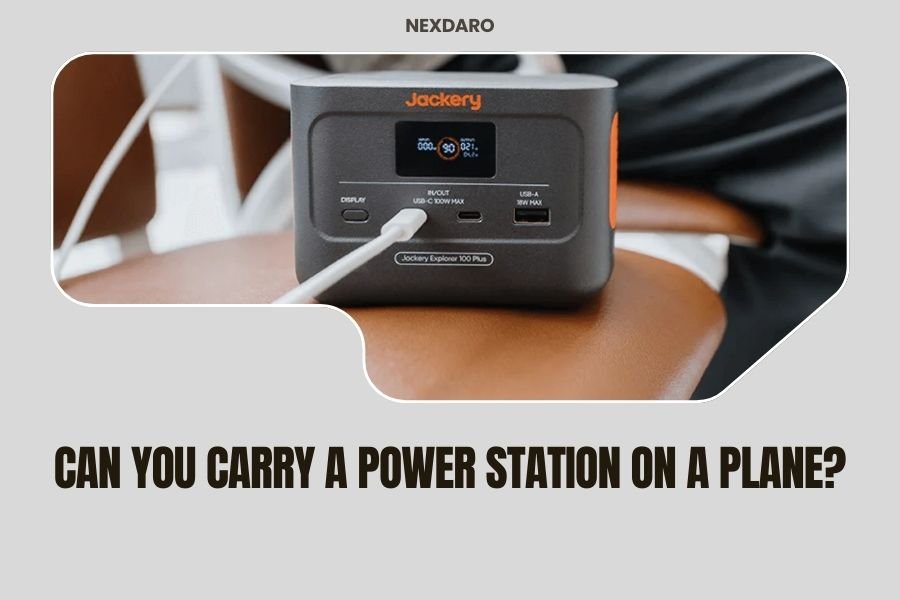
You generally cannot carry a power station on a plane if it exceeds 100 watt-hours, as most portable power stations fall above this TSA limit.
Smaller power banks under 100Wh can go in carry-on bags, but larger power stations with lithium batteries must be shipped separately or left at home when flying.
What Airlines Actually Allow for Power Stations
Airlines treat power stations like big batteries. The magic number is 100 watt-hours (Wh). Stay under this limit, and you’re good to go.
Most camping power stations pack 300-1000Wh or more. That puts them way over the airline limit. Your trusty Jackery 500 or Goal Zero Yeti? They’re staying home.
The 100 Watt-Hour Rule Explained
Think of watt-hours like fuel tank size. Airlines worry about lithium battery fires. Bigger batteries mean bigger risks in their eyes.
Here’s how the math works: Find the Wh rating printed on your device. No math needed if it’s listed directly.
If you only see mAh and voltage, multiply them and divide by 1000. A 20,000mAh power bank at 3.7V equals about 74Wh. That works.
TSA Guidelines You Need to Know
The Transportation Security Administration sets clear rules. Lithium batteries over 100Wh cannot go in checked bags. Period.
They also can’t go in carry-on if they’re over 100Wh. You’re stuck between a rock and a hard place with big power stations.
I found that TSA agents often don’t know exact watt-hour calculations. They’ll likely flag any device that looks like a power station for inspection.
What Size Power Banks Actually Work for Flying
Small power banks are your friend for air travel. Look for devices clearly marked under 100Wh.
Many 20,000-30,000mAh power banks squeeze under the limit. They won’t run your camping fridge, but they’ll charge your phone plenty.
Popular Flight-Safe Options
Research shows these capacity ranges typically work:
- 10,000-20,000mAh at 3.7V (37-74Wh)
- 26,000mAh at 3.7V (96Wh) – cutting it close but legal
- Most phone charging power banks under 25,000mAh
Anker, RAVPower, and similar brands often print the Wh rating clearly. Look for “99Wh” or similar markings.
What About Portable Laptop Chargers
Laptop power banks push the limits. Some 65W or 100W USB-C chargers stay under 100Wh.
These work great for tablets, phones, and small electronics. Just don’t expect to power camping gear.
International Flight Rules Vary
Different countries have different rules. Most follow similar 100Wh guidelines, but enforcement varies.
European airlines tend to be stricter about battery checks. Asian carriers often focus more on total device count.
IATA International Standards
The International Air Transport Association suggests the 100Wh limit globally. Most airlines follow these guidelines.
Some airlines allow 100-160Wh devices with airline approval. Good luck getting that approval though. It’s rarely worth the hassle.
Connecting Flights Add Complexity
Your power bank might pass TSA but get stopped in Frankfurt or Tokyo. Different agents interpret rules differently.
Stick well under 100Wh for international travel. Better safe than sorry when you’re 5,000 miles from home.
Why Airlines Restrict Large Power Stations
Lithium battery fires spread fast in confined spaces. Airlines learned this lesson from laptop and phone incidents.
Your 500Wh power station contains serious energy. That’s like carrying multiple laptop batteries bundled together.
Real Safety Incidents
The Federal Aviation Administration tracks battery incidents. I found reports of cargo fires from large lithium batteries.
Passenger planes don’t have the fire suppression systems that cargo planes do. Flight crews need to land quickly if batteries catch fire.
How Fire Risk Increases
Larger batteries create more heat when they fail. Thermal runaway spreads to nearby cells.
Your camping power station might work fine at sea level. But cabin pressure and temperature changes stress batteries differently.
Smart Alternatives for Travel Power
You don’t need a massive power station for most trips. Think about what you actually need to charge.
Two or three smaller power banks often work better than one big unit anyway. You can charge them separately overnight.
Multiple Small Power Banks
Pack three 20,000mAh units instead of one 60,000mAh power station. You get similar total capacity with airline approval.
This approach also reduces single points of failure. One power bank dies? You still have backups.
Solar Charging Panels
Foldable solar panels contain no batteries. They pass airport security easily.
Pair a 20W solar panel with flight-legal power banks. You get renewable charging without airline headaches.
Best Solar Panel Features for Travel
- Foldable design under 2 pounds
- USB-A and USB-C outputs
- Weather-resistant coating
- Built-in kickstand or grommets
Hotel and Destination Power Options
Many destinations have power station rentals. RV parks, camping stores, and outdoor gear shops rent equipment.
This costs more upfront but saves shipping headaches. Plus you don’t risk losing expensive gear to airline mix-ups.
Shipping Your Power Station Instead
Ground shipping works for getting power stations to your destination. UPS and FedEx handle lithium batteries with proper labeling.
Ship to your hotel, campground, or a UPS Store near your destination. Pick it up when you arrive.
Shipping Cost Reality Check
Expect $30-80 for shipping a power station across the country. Heavy batteries cost more to ship.
International shipping gets complex fast. Customs forms, battery declarations, and import rules vary by country.
Proper Shipping Requirements
Lithium batteries need special labels and packaging. Most shipping stores handle this, but ask specifically.
Keep your power station partially charged (30-50%) for shipping. Completely dead batteries can be harder to revive later.
What Airport Security Actually Checks
TSA agents look for large battery packs in X-ray machines. Power stations show up clearly on screens.
They’ll pull your bag for manual inspection. Be ready to explain what the device does and show the watt-hour rating.
How to Handle Security Screening
Point out the Wh rating immediately. Don’t make agents hunt for technical specs.
If the rating isn’t clear, agents often err on the side of caution. That means confiscation or returning to check-in.
Items That Trigger Extra Screening
- Anything labeled “power station” or “generator”
- Large rectangular battery packs
- Devices with multiple ports and displays
- Equipment that looks industrial or professional
Agent Training Varies
Smaller airports might have less experience with power equipment. Allow extra time for explanations.
Major airports see everything. Agents there usually recognize common power banks quickly.
Reading Battery Specifications Like a Pro
Manufacturers sometimes hide the watt-hour rating in technical specs. Here’s how to find what matters.
Look for “Wh,” “watt hours,” or “watt-hours” first. That’s your golden number for airline compliance.
Converting Other Measurements
If you only see amp-hours (Ah) and voltage (V), multiply them together. A 12V, 40Ah battery equals 480Wh. Way too big for planes.
Milliamp-hours (mAh) need division by 1000 after multiplying. That 20,000mAh power bank at 3.7V becomes 74Wh.
| Capacity | Voltage | Watt Hours | Flight Legal? |
|---|---|---|---|
| 10,000mAh | 3.7V | 37Wh | Yes |
| 20,000mAh | 3.7V | 74Wh | Yes |
| 26,800mAh | 3.7V | 99Wh | Yes (barely) |
| 500Wh Power Station | Various | 500Wh | No |
Why Voltage Matters
Higher voltage batteries pack more energy per amp-hour. A 12V battery hits watt-hour limits faster than 3.7V ones.
Most phone power banks use 3.7V cells internally. Laptop chargers often use higher voltages and hit limits quicker.
Special Cases and Exceptions
Medical devices sometimes get exceptions to battery rules. CPAP machines and mobility equipment fall under different guidelines.
Professional photography and filming equipment may qualify for special handling. You’ll need advance airline approval though.
Business Equipment Considerations
Traveling for work with essential power equipment? Some airlines offer special cargo services.
This costs significantly more than regular baggage fees. Budget several hundred dollars for specialized handling.
Military and Government Travel
Military orders or government business may qualify for different rules. Check with your travel office for special procedures.
Even then, commercial airlines follow TSA rules strictly. Official travel doesn’t automatically override battery limits.
Conclusion
Flying with power stations means accepting serious limitations. The 100 watt-hour rule eliminates most camping and emergency power equipment from flights.
Your best bet is planning around smaller power banks, solar panels, and destination rentals. Ship large power stations separately if you absolutely need them.
Remember that airline rules exist for good safety reasons. Lithium battery fires in aircraft create genuine emergencies that risk everyone onboard.
Can you bring a 200Wh power station on a plane?
No, you cannot bring a 200Wh power station on a plane. Airlines limit lithium batteries to 100 watt-hours for both carry-on and checked luggage. Anything larger must be shipped separately via ground transportation.
What happens if TSA finds an oversized power bank?
TSA will confiscate oversized power banks and dispose of them. You won’t get the device back, and you can’t check it in your luggage either. The only options are throwing it away or returning to your car if you drove to the airport.
Do power stations count toward carry-on weight limits?
Yes, power stations count toward both weight and size limits for carry-on bags. Even flight-legal power banks under 100Wh must fit within your airline’s carry-on restrictions, which typically range from 15-22 pounds total.
Can you bring multiple power banks totaling over 100Wh?
Yes, you can bring multiple power banks as long as each individual unit stays under 100Wh. Airlines limit the total number to around 15-20 devices per passenger, but the watt-hour limit applies per device, not combined total.
Are there any airlines that allow larger power stations?
No major airlines consistently allow power stations over 100Wh in passenger compartments. Some may approve 100-160Wh devices with advance permission, but this requires airline-specific approval that’s rarely granted for recreational travel.