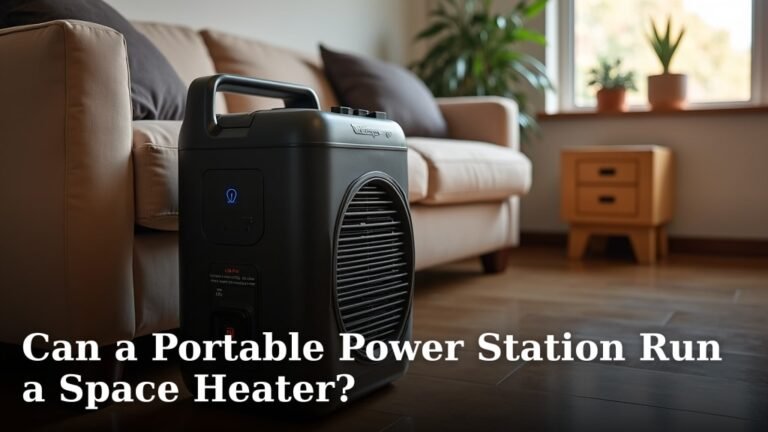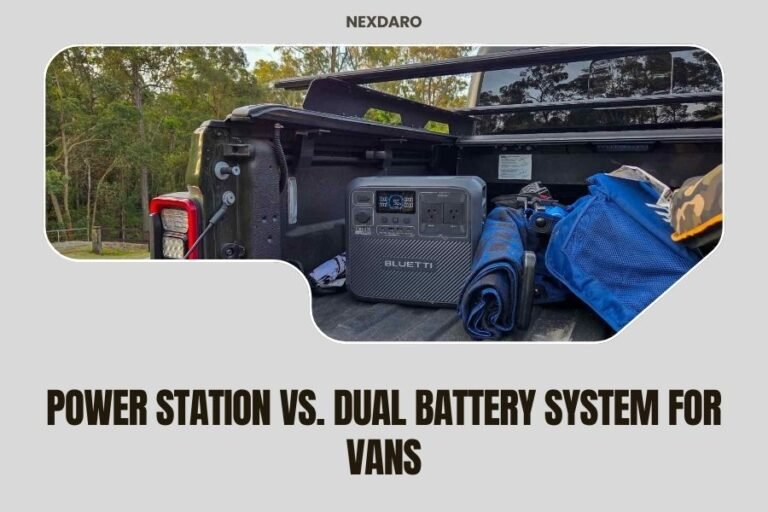
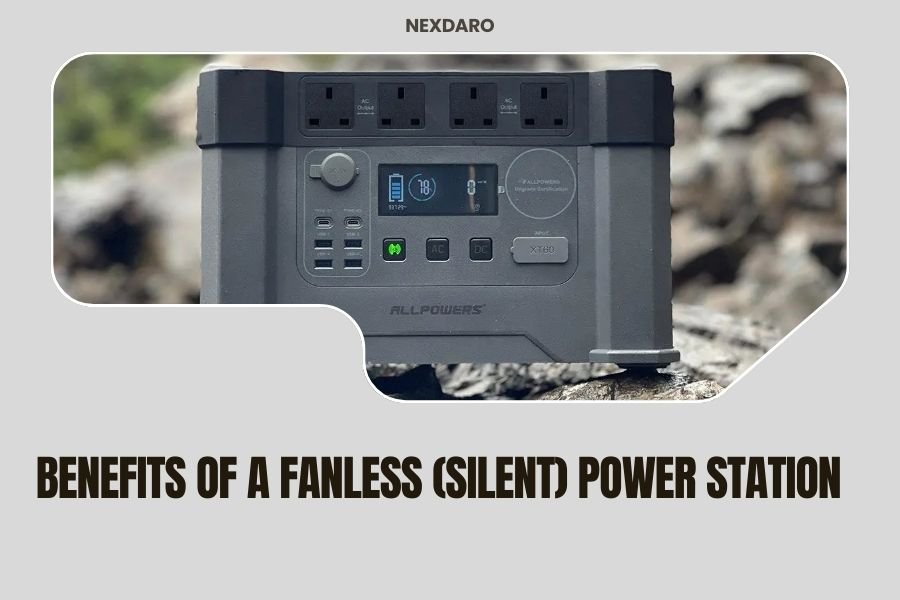
Fanless power stations offer completely silent operation without compromising power output, making them perfect for noise-sensitive environments like camping, RV travel, and indoor backup power use.
You get all the benefits of portable power without the constant hum of cooling fans that can disturb sleep, wildlife, or peaceful outdoor moments.
What Makes a Power Station Fanless
A fanless power station uses passive cooling instead of mechanical fans. Think of it like a smartphone – it generates heat but manages it through design rather than moving parts.
These units rely on heat sinks, thermal pads, and smart power management. The internal components spread heat across metal surfaces that naturally release it into the air.
How Silent Operation Works
Traditional power stations use fans when they get warm. Fanless models keep components cooler through better design and materials.
You’ll find aluminum heat sinks and thermal management systems that work like radiators. No moving parts means zero noise during operation.
Top Benefits of Silent Power Stations
Perfect for Sleeping Environments
Ever tried sleeping next to a humming fan? It’s not fun. Fanless power stations let you charge devices and run appliances without disturbing your rest.
Research shows that consistent background noise can reduce sleep quality, even if you don’t fully wake up. Silent power means better sleep in your tent, RV, or during power outages at home.
Camping and RV Benefits
You came outdoors for peace and quiet. Why bring a noisy generator alternative?
Silent operation means you can:
- Charge phones without waking tent neighbors
- Run CPAP machines quietly all night
- Power lights for reading without background buzz
- Respect campground quiet hours
Better for Wildlife and Nature
Animals are sensitive to mechanical sounds. Fan noise can scare away the wildlife you came to observe.
Silent power stations let you set up trail cameras, lighting, or charging stations without creating an artificial soundscape that disrupts natural behavior.
Photography and Recording
Trying to record nature sounds with a fan humming nearby? Good luck with that audio quality.
Fanless units work great for powering camera equipment, microphones, and recording gear without contaminating your audio with mechanical noise.
Indoor and Emergency Use Advantages
Home Backup Power
When the power goes out at night, you want backup electricity – not a new source of noise keeping everyone awake.
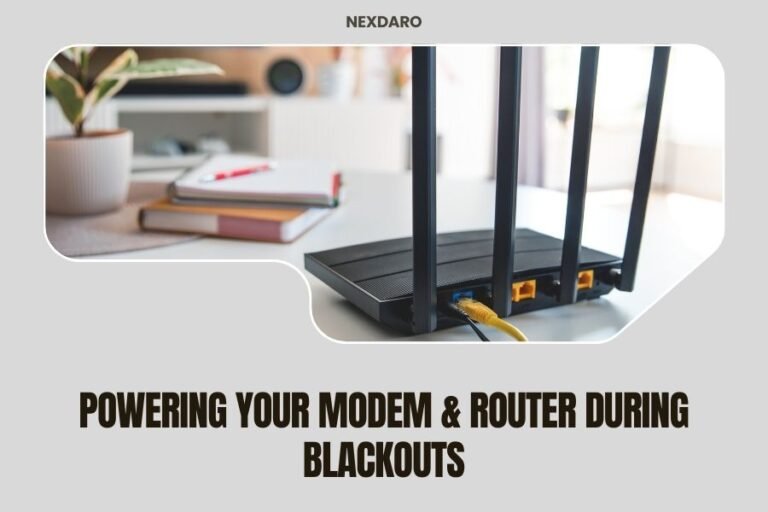
Silent power stations can run your router, charge devices, and power essential electronics without adding stress through constant background hum.
Office and Work Spaces
Need portable power for your home office or workshop? Fan noise gets old fast when you’re trying to concentrate.
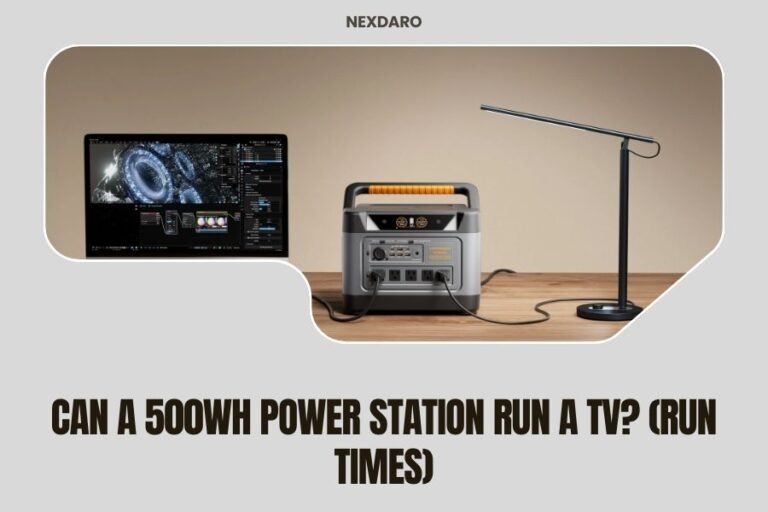
Fanless units provide clean, quiet power for tools, lights, computers, and equipment without the distraction of cooling fans cycling on and off.
Medical Equipment Compatibility
Some medical devices work better in quiet environments. CPAP machines, oxygen concentrators, and monitoring equipment can benefit from silent power sources.
You avoid the issue of competing noise sources that might mask important audio alerts or interfere with sensitive equipment.
Technical Advantages of Fanless Design
Fewer Moving Parts Mean Less Maintenance
Fans collect dust, wear out bearings, and eventually fail. Fanless design removes these failure points completely.
You get a more reliable unit that needs less cleaning and maintenance over time. No fan means no moving parts to break or replace.
Dust and Debris Resistance
Fans suck in dust, sand, and particles that can clog internal components. Without fans, your power station stays cleaner internally.
This matters especially in dusty camping environments, beaches, or construction sites where airborne particles are common.
Consistent Performance
Fan-cooled units can throttle performance when fans can’t keep up with heat. Fanless designs manage heat more predictably.
You get steady power output without sudden drops when the unit gets warm. The passive cooling works continuously without cycling on and off.
Comparing Fanless vs Fan-Cooled Power Stations
| Feature | Fanless | Fan-Cooled |
|---|---|---|
| Noise Level | 0 dB (Silent) | 30-50 dB |
| Moving Parts | None | Fan motors |
| Dust Ingress | Minimal | Higher risk |
| Maintenance | Very low | Fan cleaning needed |
| Reliability | Higher | Fan failure risk |
When Fanless Makes Sense
Choose fanless power stations when noise matters more than maximum power capacity. They work best for moderate power needs in quiet environments.
Perfect situations include bedside backup power, quiet camping, RV bedroom use, and any application where you value peace over peak performance.
Power Capacity Considerations
Fanless units typically max out at lower wattages than fan-cooled versions. This trade-off happens because passive cooling has limits.
You’ll find fanless models ranging from 300W to 1000W output. For higher power needs, fan cooling becomes necessary to prevent overheating.
Energy Efficiency Benefits
No Fan Power Consumption
Cooling fans use power – usually 5-15 watts when running. That might not sound like much, but it adds up over time.
Fanless designs put 100% of stored energy toward your devices instead of wasting some on cooling fans.
Longer Runtime on Battery
Without fans drawing power, you get slightly longer runtime from the same battery capacity. Every watt saved extends your available power.
This efficiency gain works best during light loads when fan-cooled units would cycle fans frequently.
Limitations to Consider
Heat Management Challenges
Passive cooling has limits. Fanless power stations may reduce output or shut down when they get too hot.
High ambient temperatures or continuous high-power loads can trigger thermal protection. You need to understand these limits before buying.
Power Output Restrictions
Most fanless units top out around 1000W continuous output. If you need more power, you’ll probably need fan cooling.
This limitation comes from physics – passive cooling can only dissipate so much heat without airflow assistance.
Price Premium
Better thermal management costs more. Fanless power stations often cost 20-30% more than comparable fan-cooled models.
You pay extra for advanced heat sinks, thermal design, and the engineering needed to make silent operation work effectively.
Choosing the Right Fanless Power Station
Match Capacity to Your Needs
Calculate your actual power requirements before shopping. Don’t buy more capacity than you need just because it’s available.
Smaller fanless units often provide better value and portability for typical camping and emergency backup needs.
Consider Your Environment
Hot climates stress fanless cooling systems more than moderate temperatures. Account for where you’ll use the power station most often.
Desert camping requires different thermal considerations than forest camping or indoor emergency use.
Brand Reliability Factors
Look for companies with proven thermal management experience. Not all fanless designs work equally well under stress.
Check warranty terms and customer reviews specifically about overheating issues. Good thermal design should prevent frequent shutdowns.
Conclusion
Fanless power stations deliver genuine benefits when quiet operation matters more than maximum power output. You get reliable, maintenance-free portable power without the constant background noise of cooling fans.
The silent operation makes them perfect for camping, RV travel, emergency backup power, and any situation where noise would be disruptive. While they cost more and have power limitations compared to fan-cooled alternatives, the peace and quiet often justify the trade-offs.
Consider your actual power needs, usage environment, and budget when deciding. If you value silence and don’t need extreme power output, a fanless power station can significantly improve your portable power experience.
Can fanless power stations handle the same power loads as fan-cooled models?
No, fanless power stations typically max out around 1000W continuous output due to passive cooling limitations. Fan-cooled models can handle higher sustained loads because active cooling removes heat more effectively than passive heat dissipation alone.
Do fanless power stations overheat more easily than regular models?
They can reach thermal limits faster under heavy loads or high ambient temperatures, but quality fanless designs include robust thermal protection. They’ll throttle output or temporarily shut down rather than damage internal components, then resume normal operation once cooled.
Are fanless power stations worth the extra cost for casual camping?
For weekend camping and light power needs, the quiet operation often justifies the price premium. You’ll appreciate silent phone charging, lighting, and device power without disturbing the peaceful outdoor experience or bothering fellow campers.
How much quieter are fanless power stations compared to fan-cooled versions?
Fanless models operate at 0 decibels since they have no moving parts, while fan-cooled units typically generate 30-50 decibels when fans activate. This difference is noticeable – like comparing complete silence to a quiet library or soft conversation level.
Can I use a fanless power station indoors during power outages?
Yes, fanless power stations work excellently for indoor emergency backup power. They provide silent operation for essential devices like routers, lights, and phone charging without adding noise stress during already challenging power outage situations.