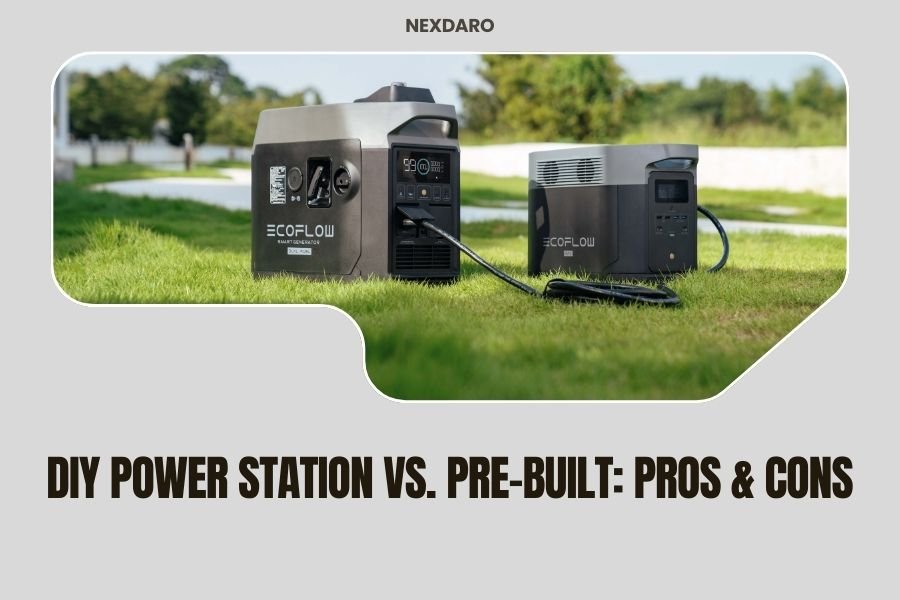
DIY power stations cost 30-50% less than pre-built units but require technical skills and time investment, while pre-built power stations offer plug-and-play convenience with warranties but at higher prices.
Your choice between DIY and pre-built depends on your technical comfort level, budget constraints, and how quickly you need portable power solutions.
Building your own power station sounds exciting, doesn’t it? You get to save money and create something custom. But is it worth the effort compared to buying a ready-made unit?
I researched both approaches and found surprising trade-offs. Let me walk you through everything you need to know.
What Makes DIY Power Stations Appealing
DIY power stations let you control every component. You pick the battery type, inverter quality, and charging options.
Think of it like building a computer. You choose each part based on your needs and budget.
Cost Savings That Actually Matter
Building your own typically costs 30-50% less than buying pre-built. A 1000Wh DIY setup might cost $600-800, while commercial versions run $1200-1500.
You skip the manufacturer’s markup, fancy packaging, and marketing costs. That money stays in your pocket.
Complete Customization Freedom
Want more USB ports? Add them. Need specific outlet types? Your choice. Prefer LiFePO4 batteries over lithium-ion? Go for it.
Pre-built units force you into their design decisions. DIY builds adapt to your exact needs.
Learning Experience Benefits
Building teaches you how power systems work. You’ll understand voltage, capacity, and safety better.
When something breaks later, you can fix it yourself instead of shipping it back to the manufacturer.
The Real Challenges of DIY Power Stations
DIY isn’t all sunshine and savings. I found several significant hurdles that stop many people.
Technical Knowledge Requirements
You need to understand electrical basics. Voltage mismatches can damage components or create safety risks.
Battery management systems require careful selection. Get this wrong, and your expensive batteries might fail early.
Safety Considerations You Can’t Ignore
Lithium batteries can catch fire if mishandled. Proper fusing, ventilation, and charging protocols become your responsibility.
No manufacturer warranty covers your mistakes. One wrong connection could destroy everything.
Time Investment Reality
Research takes weeks. Shopping for compatible parts adds more time. Assembly and testing require patience.
Expect 20-40 hours total from start to finish. That’s assuming no major problems or part returns.
Component Sourcing Headaches
Finding quality parts from reliable suppliers takes effort. Cheap components often fail quickly.
Shipping delays happen. You might wait weeks for that perfect inverter or battery management system.
Why Pre-Built Power Stations Win Fans
Pre-built units solve problems immediately. No research, no assembly, no troubleshooting.
Instant Gratification Factor
Order today, use tomorrow. Most units arrive ready to charge and power your devices.
Emergency situations don’t wait for DIY projects. Pre-built units provide immediate backup power.
Professional Design Integration
Engineers optimize everything together. Battery capacity matches inverter capabilities. Charging systems work efficiently.
Display screens show real-time data. Smart features like app control come standard in many models.
Tested Safety Standards
UL certification and FCC approval mean professional testing. Safety features like overload protection come built-in.
Quality control catches defects before reaching customers. You get reliable performance from day one.
Warranty Protection Value
Most manufacturers offer 2-5 year warranties. Some cover battery degradation beyond normal wear.
Customer support helps with questions and problems. Many brands offer repair services and replacement parts.
Pre-Built Power Station Drawbacks
Convenience costs money. You also sacrifice flexibility and control.
Higher Price Premium
Manufacturer markups add 50-100% to component costs. Marketing budgets and dealer profits increase prices further.
Premium features you might not need still affect the price. You pay for R&D costs across their entire product line.
Limited Customization Options
Stuck with their port selection and battery chemistry choices. Want more AC outlets? Buy a bigger model.
Expansion options rarely exist. Most units can’t add extra battery capacity later.
Proprietary Parts Problem
Replacement parts cost more and limit your options. Some manufacturers discontinue support after a few years.
Can’t upgrade individual components. The whole unit becomes obsolete when technology improves.
Cost Comparison Breakdown
| Capacity | DIY Cost Range | Pre-Built Cost Range | Savings |
|---|---|---|---|
| 500Wh | $400-600 | $600-900 | $200-300 |
| 1000Wh | $600-900 | $1200-1800 | $400-600 |
| 2000Wh | $1200-1600 | $2000-3000 | $800-1000 |
Hidden Costs in DIY Projects
Tools and enclosures add expense. Quality meters, soldering equipment, and safety gear cost extra.
Mistakes happen. Wrong parts, damaged components, and do-overs increase your total investment.
Pre-Built Hidden Value
Professional assembly labor would cost hundreds. Testing equipment and quality control add value you don’t see.
Customer support and warranty service provide peace of mind worth considering in your calculations.
Performance Differences That Matter
How do DIY and pre-built units actually perform in real use?
DIY Performance Potential
Choose premium components for better efficiency. High-quality inverters waste less power during conversion.
Optimize for your specific use case. Size batteries exactly for your needs without paying for excess capacity.
Common DIY Performance Issues
Mismatched components reduce efficiency. Poor wiring creates voltage drops and heat buildup.
Battery management systems need proper calibration. Skip this step, and capacity readings become unreliable.
Pre-Built Consistency Advantages
Everything works together from the start. Manufacturers test combinations for optimal performance.
Firmware updates improve efficiency and add features. Smart charging algorithms extend battery life.
Reliability and Longevity Factors
Which approach gives you longer-lasting power solutions?
DIY Reliability Variables
Component quality varies wildly. Cheap parts fail sooner but premium components often outlast pre-built units.
Your assembly skills affect reliability. Solid connections and proper mounting prevent many failures.
Pre-Built Quality Control
Professional assembly reduces connection problems. Factory testing catches many defects early.
But you can’t control component selection. Some manufacturers use cheaper parts to hit price points.
Serviceability Differences
DIY units let you replace individual parts. Pre-built units might need complete replacement for minor failures.
Documentation helps with DIY repairs. Pre-built units often have limited repair information available.
When DIY Makes Perfect Sense
Some situations strongly favor building your own power station.
Technical Enthusiasts
Love electronics projects? DIY builds satisfy that creative itch while providing useful results.
Already own tools and understand electrical systems? Your existing skills reduce the learning curve.
Budget-Conscious Users
Need maximum capacity for minimum money? DIY delivers the best bang for your buck.
Have time but limited cash? Your labor substitutes for manufacturer costs.
Specific Use Cases
Unique power requirements that pre-built units don’t match well. Custom mounting needs for RVs or boats.
Integration with existing systems where standard units won’t fit properly.
When Pre-Built Units Win
Other situations make buying ready-made units the smart choice.
Time-Pressed Situations
Need backup power before the next storm? Pre-built units arrive ready to work.
Busy lifestyle leaves little time for projects? Convenience justifies the extra cost.
Risk-Averse Users
Worried about electrical safety? Professional assembly and testing reduce risks.
Want warranty protection and customer support? Manufacturers provide peace of mind.
Business and Professional Use
Commercial applications need reliability and support. Warranty coverage protects business operations.
Professional image matters when clients see your equipment. Polished products look more trustworthy.
Making Your Decision
Consider these key questions before choosing your path:
- Do you enjoy technical projects and have basic electrical knowledge?
- Can you invest 20-40 hours in research, shopping, and assembly?
- Are you comfortable taking responsibility for safety and reliability?
- Do you need custom features unavailable in pre-built units?
- Is saving 30-50% worth the extra effort and risk?
Answer yes to most questions? DIY might suit you perfectly.
Prefer convenience and professional support? Pre-built units offer better value for your situation.
Conclusion
Both DIY and pre-built power stations serve different needs well. DIY builds offer significant cost savings and complete customization for technically inclined users willing to invest time and effort. Pre-built units provide convenience, professional design, and warranty protection at higher prices.
Your choice depends on balancing cost, time, technical comfort, and reliability needs. Neither approach is universally better – just better for different situations and users.
Start by honestly assessing your skills, available time, and priorities. The right choice becomes clear when you match the approach to your specific circumstances.
Can I upgrade a DIY power station later?
Yes, DIY builds allow component upgrades like adding battery capacity or swapping inverters. Pre-built units rarely offer upgrade options beyond external battery packs on specific models.
How long does a DIY build typically take?
Expect 20-40 hours total including research, part selection, ordering, assembly, and testing. First-time builders often need more time for learning and troubleshooting.
Do DIY power stations void equipment warranties?
DIY builds have no overall warranty, though individual components keep their warranties. Pre-built units offer complete system warranties but may void coverage if you modify them.
Which approach offers better battery life?
Both can achieve excellent battery life with quality components and proper management. DIY builds let you choose premium batteries, while pre-built units optimize charging algorithms professionally.
Are DIY power stations safe for beginners?
Basic electrical knowledge and safety awareness are essential. Complete beginners should start with pre-built units or take electrical safety courses before attempting DIY builds with lithium batteries.