
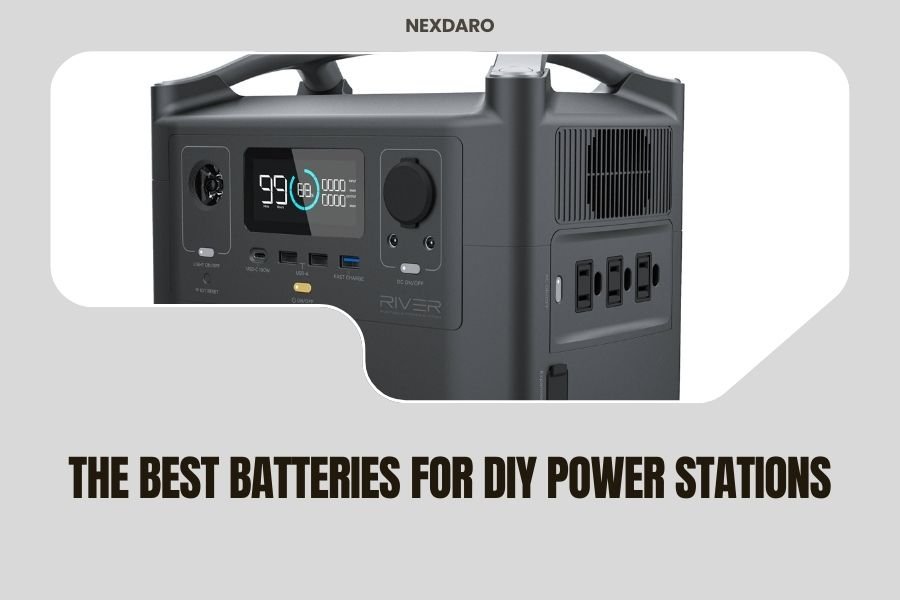
The best batteries for DIY power stations are lithium iron phosphate (LiFePO4) batteries, which offer the longest lifespan and safest operation for most builders.
AGM lead-acid batteries provide a budget-friendly alternative, while lithium-ion NMC batteries deliver the highest energy density for compact builds.
Why Battery Choice Makes or Breaks Your DIY Power Station
Your battery choice determines everything about your power station. Will it last five years or fifteen? Can you use it in freezing weather? How much will you spend replacing it?
I researched dozens of DIY builds and found that most failures trace back to poor battery selection. You don’t want to learn this lesson the expensive way.
Top 3 Battery Types for DIY Power Stations
Three battery types dominate the DIY power station world. Each serves different needs and budgets.
Lithium Iron Phosphate (LiFePO4) Batteries
LiFePO4 batteries are the gold standard for DIY power stations. They last 3,000 to 6,000 charge cycles and handle temperature swings better than other lithium types.
You can discharge them to 90% capacity without damage. Compare that to lead-acid batteries, which suffer permanent damage if you drain them below 50%.
Why LiFePO4 Wins for Most Builds
- Safest lithium chemistry with minimal fire risk
- Works in temperatures from -4°F to 140°F
- Maintains 80% capacity after 3,000 cycles
- No toxic gases during operation
- Flat discharge curve provides steady power
LiFePO4 Drawbacks to Consider
The upfront cost stings. You’ll pay $400-800 for a 100Ah LiFePO4 battery versus $150-250 for equivalent lead-acid capacity.
Cold weather charging requires a heated environment or special low-temperature cells. Standard LiFePO4 batteries stop accepting charge below 32°F.
AGM Lead-Acid Batteries
AGM (Absorbed Glass Mat) batteries offer the lowest entry cost for DIY power stations. They’re sealed, maintenance-free, and widely available.
Many beginners start here because the technology is familiar. Car batteries, golf cart batteries, and marine batteries often use AGM construction.
When AGM Makes Sense
- Tight budget builds under $500 total
- Occasional use applications
- Cold weather operation below 32°F
- High current loads like inverter welders
AGM Limitations You Must Accept
AGM batteries weigh 2-3 times more than lithium options. A 100Ah AGM battery weighs around 65 pounds versus 25 pounds for LiFePO4.
You get 300-500 charge cycles before capacity drops significantly. That’s one-tenth the lifespan of quality lithium batteries.
Lithium-Ion NMC Batteries
NMC (Nickel Manganese Cobalt) lithium batteries pack the most energy into the smallest space. They’re common in electric vehicles and high-end power tools.
I found that experienced builders choose NMC for portable builds where every pound matters. Think backpacking or van life applications.
NMC Strengths for Compact Builds
- Highest energy density of common battery types
- Good cold weather performance
- Fast charging capability
- 2,000+ cycle lifespan
NMC Safety Concerns
NMC batteries require careful thermal management. They can enter thermal runaway and catch fire if overcharged or physically damaged.
You need a quality battery management system (BMS) and proper ventilation. This adds complexity and cost to your build.
Battery Capacity Planning for Your Build
How much capacity do you actually need? Most people guess wrong and either overbuild or come up short.
Calculate Your Daily Power Needs
List every device you plan to power. Note the wattage and hours of daily use. Multiply watts by hours to get watt-hours (Wh).
A laptop using 65 watts for 4 hours needs 260 Wh daily. A mini-fridge drawing 100 watts for 8 hours needs 800 Wh.
Add Safety Margins
Never size your battery bank at exactly 100% of your calculated needs. Weather, aging, and unexpected loads require extra capacity.
I recommend adding 25-50% buffer capacity for reliable operation. If you calculate 1,000 Wh daily needs, plan for 1,250-1,500 Wh of usable battery capacity.
Usable vs. Total Capacity
This trips up many first-time builders. You can’t use 100% of your battery’s rated capacity without shortening its life.
| Battery Type | Usable Capacity | Total Capacity Needed |
|---|---|---|
| LiFePO4 | 90% | 111% of daily needs |
| AGM Lead-Acid | 50% | 200% of daily needs |
| Lithium NMC | 80% | 125% of daily needs |
Voltage Considerations: 12V vs. 24V vs. 48V
Your system voltage affects wire sizes, component costs, and expansion options. Higher voltage systems handle more power with thinner wires.
12V Systems: Simple but Limited
Most DIY builders start with 12V because car accessories and RV components are readily available. You can find 12V inverters, charge controllers, and fuses everywhere.
Stick with 12V for systems under 1,000 watts. Beyond that, the thick cables and high currents become expensive and unwieldy.
24V Systems: The Sweet Spot
24V systems cut your current in half compared to 12V. That means smaller wires, lower voltage drop, and higher efficiency.
Many experts recommend 24V for systems between 1,000-3,000 watts. You get most of the benefits without the complexity of higher voltages.
48V Systems: Maximum Efficiency
48V systems excel for large installations over 3,000 watts. Solar charge controllers and inverters run more efficiently at higher voltages.
The downside? Limited component selection and higher complexity. You’ll need step-down converters for 12V accessories.
Battery Management Systems: Your Safety Net
A battery management system (BMS) protects your investment from overcharging, over-discharging, and thermal issues. Think of it as insurance for your battery bank.
Built-in vs. External BMS
Many LiFePO4 batteries include internal BMS circuits. These handle basic protection but limit monitoring and control options.
External BMS units cost $100-300 extra but provide Bluetooth monitoring, programmable parameters, and better cell balancing.
Essential BMS Features
- Overvoltage and undervoltage protection
- Overcurrent protection for charge and discharge
- Temperature monitoring and protection
- Cell balancing for series configurations
- Remote monitoring capability
Charging Your DIY Power Station
How you charge your batteries affects their lifespan and daily usability. Most DIY systems use multiple charging sources.
Solar Charging Considerations
Solar panels provide free electricity but require proper charge controllers. MPPT controllers cost more than PWM types but harvest 20-30% more power.
Size your solar array for your worst-case month. Winter sun is weak, and cloudy days happen. I found that most builders underestimate solar requirements by 30-50%.
AC Charging from Wall Outlets
AC chargers let you top off your battery bank quickly. Look for chargers with lithium-specific charging profiles if you choose LiFePO4 batteries.
Lead-acid chargers work with AGM batteries but may not fully charge lithium types. The voltage and current curves differ between battery chemistries.
DC Charging from Vehicles
DC-DC chargers draw power from your vehicle’s alternator while driving. This works great for van life and mobile applications.
Modern vehicles use smart alternators that may not charge auxiliary batteries properly. Dedicated DC-DC chargers solve this problem.
Common Battery Mistakes to Avoid
I researched dozens of failed DIY builds and found the same mistakes repeated over and over. Learn from others’ expensive lessons.
Mixing Battery Types and Ages
Never mix different battery types in the same bank. Old batteries drag down new ones, and different chemistries have incompatible charging needs.
If you must expand your system later, replace all batteries at once or use separate banks with independent charging.
Ignoring Temperature Effects
Battery capacity drops in cold weather and life shortens in extreme heat. Plan for your local climate conditions.
Many RV builders learned this lesson when their batteries died after one hot summer in Arizona. Proper ventilation and insulation prevent premature failure.
Temperature Management Solutions
- Insulate battery compartments in cold climates
- Provide ventilation in hot environments
- Use temperature sensors in your monitoring system
- Choose batteries rated for your temperature range
Undersized Wiring and Fuses
Thick wires and proper fuses prevent fires and voltage drop issues. Many builders skimp here and regret it later.
Use wire sizing calculators and add safety margins. A 100-amp load needs bigger wire than the minimum rating suggests, especially over long runs.
Cost Analysis: Upfront vs. Lifetime Value
Battery costs extend beyond the initial purchase. Factor in replacements, maintenance, and system complexity.
Total Cost of Ownership
AGM batteries cost less upfront but need replacement every 2-3 years with regular use. LiFePO4 batteries cost 2-3 times more but last 10-15 years.
Over ten years, LiFePO4 batteries often cost less per kilowatt-hour delivered. The break-even point usually occurs around year three of heavy use.
Building Your First Battery Bank
Start small and expand later if possible. This lets you learn the system without massive upfront investment.
Beginner-Friendly Configuration
I recommend starting with a single 100Ah LiFePO4 battery for most first builds. This provides 1,280 Wh of usable capacity and room to grow.
Add a 30-amp MPPT charge controller, 2,000-watt pure sine wave inverter, and basic monitoring. Total cost runs $800-1,200 for a capable system.
Essential Safety Equipment
- Class T fuses for overcurrent protection
- Battery disconnect switch
- Ventilation fans if needed
- Fire extinguisher rated for electrical fires
- Digital multimeter for troubleshooting
Conclusion
The best batteries for your DIY power station depend on your budget, use patterns, and performance needs. LiFePO4 batteries offer the best long-term value for most builders, while AGM batteries work for budget-conscious projects. NMC lithium batteries excel in weight-sensitive applications but require careful management.
Start with proper capacity planning, choose quality components, and don’t skip safety equipment. Your battery choice affects every other system component, so invest time in getting it right. Remember that batteries are the heart of your power station – everything else depends on reliable, safe energy storage.
What size battery do I need for a weekend camping power station?
For basic weekend camping with LED lights, phone charging, and a small cooler, a 100Ah LiFePO4 battery provides plenty of capacity. This delivers about 1,280 usable watt-hours, enough for 2-3 days of moderate use without recharging.
Can I use car batteries in a DIY power station?
Regular car batteries aren’t suitable for power stations because they’re designed for short, high-current bursts rather than deep cycling. Use deep-cycle AGM or gel batteries if you want lead-acid technology, as these handle repeated discharge cycles much better.
How long do LiFePO4 batteries actually last in real-world use?
Quality LiFePO4 batteries typically last 10-15 years with regular use, maintaining 80% capacity after 3,000-6,000 charge cycles. Many users report excellent performance after 5+ years, making them cost-effective despite higher upfront prices.
Is it safe to build a lithium battery power station indoors?
LiFePO4 batteries are safe for indoor use with proper ventilation and a quality BMS system. They don’t produce toxic gases during normal operation and have excellent thermal stability. Avoid NMC lithium batteries indoors due to higher fire risk.
What happens if I connect batteries with different capacities together?
Connecting batteries with different capacities in parallel creates imbalanced charging and discharging, potentially damaging the smaller battery. The larger battery may overcharge the smaller one, or the smaller battery may drag down overall performance. Always use identical batteries in parallel configurations.
