
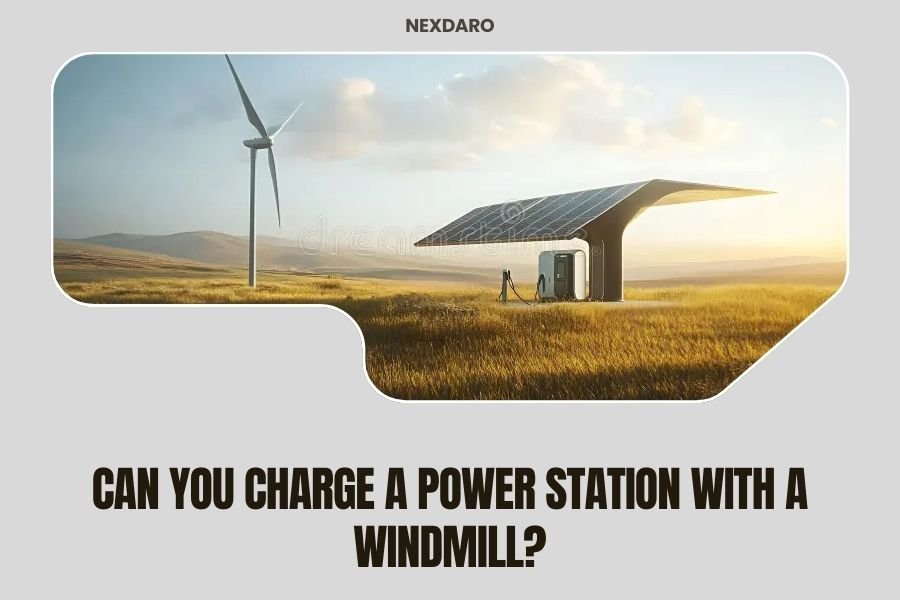
Yes, you can charge a power station with a windmill by connecting a wind turbine to your portable power station through compatible charging ports or an inverter system.
Wind turbines generate DC power that can directly charge power stations, making them an effective renewable energy solution for off-grid situations when wind conditions are adequate.
How Wind Charging Works with Power Stations
Wind turbines create electricity when moving air spins their blades. This motion turns a generator inside the turbine that produces electrical current.
Most small wind turbines output 12V or 24V DC power. This matches perfectly with power station input requirements. You connect the turbine directly to your power station’s DC input port.
Basic Connection Methods
I found that most power stations accept wind turbine connections through these methods:
- DC barrel jack connections for smaller turbines
- Anderson Powerpole connectors for medium setups
- MC4 solar connectors that work with wind systems too
- XT60 plugs for higher-power turbines
Types of Wind Turbines for Power Stations
Horizontal Axis Turbines
These look like tiny versions of big wind farm turbines. They need steady wind from one direction to work well.
Research shows these turbines work best in open areas with consistent wind patterns. They’re less effective in turbulent or changing wind conditions.
Vertical Axis Turbines
These spin around a vertical shaft and catch wind from any direction. They handle gusty conditions better than horizontal types.
I found online that vertical turbines often work better for camping and RV situations where wind direction changes frequently.
Savonius Style Turbines
These use curved blades that look like an “S” shape. They start spinning in very light winds but don’t generate as much power.
Darrieus Style Turbines
These have straight or curved blades attached at top and bottom. They generate more power but need stronger winds to start spinning.
Wind Requirements for Effective Charging
Most small wind turbines need at least 8-10 mph wind to start generating useful power. Peak performance happens around 25-35 mph winds.
Your location makes a huge difference. Coastal areas, hilltops, and open plains offer better wind resources than forests or valleys.
Measuring Wind Speed
You can check wind conditions with simple tools:
- Handheld anemometers measure exact wind speed
- Weather apps show local wind forecasts
- Visual clues like swaying branches indicate wind strength
Seasonal Wind Patterns
Wind patterns change throughout the year. Spring and fall typically offer the most consistent winds in many regions.
I heard from experts that combining wind and solar charging gives you power options in different weather conditions.
Power Output Expectations
| Turbine Size | Wind Speed (mph) | Typical Output (watts) | Daily Generation |
|---|---|---|---|
| 400W Small Turbine | 15 mph | 100-150W | 2-4 kWh |
| 400W Small Turbine | 25 mph | 250-350W | 6-8 kWh |
| 1000W Medium Turbine | 15 mph | 200-300W | 5-7 kWh |
| 1000W Medium Turbine | 25 mph | 600-800W | 14-19 kWh |
Equipment You Need
Wind Turbine Selection
Choose turbines rated between 400W to 1000W for most portable power stations. Smaller turbines won’t charge effectively. Larger ones create more power than most power stations can handle.
Charge Controllers
Many wind turbines need charge controllers to prevent overcharging your power station. Some power stations have built-in charge management.
PWM controllers work fine for small setups. MPPT controllers cost more but extract maximum power from your turbine.
Dump Load Controllers
Wind turbines can’t be suddenly disconnected like solar panels. They need dump loads to absorb excess power when your power station is full.
Mounting Systems
Your turbine needs secure mounting to handle wind forces. Options include:
- Tripod mounts for temporary setups
- Pole mounts for semi-permanent installations
- Guy-wire systems for taller installations
Installation and Setup Process
Site Selection
Pick locations with steady wind and minimal obstacles. Trees, buildings, and hills create turbulence that reduces power generation.
Mount your turbine at least 30 feet above nearby obstacles when possible. Higher mounting almost always means better wind.
Safety Considerations
Wind turbines have spinning parts that can cause injury. Keep them away from walking paths and camping areas.
Check local regulations before installing wind turbines. Some areas restrict turbine height or noise levels.
Electrical Safety
Always disconnect your turbine during severe weather. High winds can damage both the turbine and your power station.
Advantages of Wind Charging
24/7 Power Generation
Wind can blow day and night, giving you charging power when solar panels sit idle. This extends your off-grid capabilities.
Weather Independence
Cloudy days that stop solar charging might still have enough wind for power generation. You’re not dependent on sunny weather.
Compact Storage
Small wind turbines pack down smaller than equivalent solar panel arrays. This matters when space is limited.
Challenges and Limitations
Noise Concerns
Wind turbines create noise from spinning blades and mechanical components. This can disturb camping neighbors or wildlife.
Wind Dependency
No wind means no power. Many locations have calm periods that stop power generation completely.
Turbulence Issues
Gusty or turbulent wind reduces efficiency and can damage turbine components over time.
Maintenance Requirements
Moving parts need regular inspection and maintenance. Bearings, blades, and electrical connections wear out with use.
Cost Considerations
Small wind turbines cost between $200 to $800. Add mounting hardware, controllers, and cables for complete systems.
From what I read, wind systems often cost more per watt than solar panels. But they can generate power when solar can’t.
Return on Investment
Wind charging pays off fastest in consistently windy locations. Calculate your local wind resources before investing.
Hybrid Wind and Solar Systems
Combining wind and solar charging gives you the best of both worlds. When the sun isn’t shining, wind might be blowing.
Many experts say hybrid systems provide more consistent power than either wind or solar alone. You’re covered in more weather conditions.
System Design
Connect both wind and solar inputs through a charge controller to your power station. Size each component based on your power needs and local conditions.
Real-World Performance Tips
Start with a smaller turbine to test wind conditions at your location. You can always upgrade if wind resources prove adequate.
Monitor your power generation over several weeks. Wind patterns vary and you need long-term data to make good decisions.
Optimization Strategies
- Position turbines away from buildings and trees
- Use guy wires for stability in high winds
- Check connections regularly for corrosion
- Keep spare parts for common wear items
Conclusion
Charging your power station with a windmill is definitely possible and can be highly effective in the right conditions. Wind turbines offer 24-hour charging potential and work when solar panels can’t.
Success depends on having adequate wind resources at your location. Start small, test your local conditions, and expand your system based on real-world results. The combination of wind and solar charging gives you maximum energy independence for off-grid adventures.
Can small wind turbines damage my power station?
Properly sized wind turbines with appropriate charge controllers won’t damage your power station. The main risk comes from voltage spikes during high winds, which quality charge controllers prevent.
How much wind speed do I need for effective charging?
You need at least 8-10 mph sustained winds for useful power generation. Most turbines reach rated output around 25-30 mph winds, so consistent moderate winds work better than occasional strong gusts.
Are vertical or horizontal wind turbines better for power stations?
Vertical turbines handle changing wind directions better and work in turbulent conditions, making them better for most camping situations. Horizontal turbines generate more power in steady winds but need consistent wind direction.
Can I run wind and solar charging at the same time?
Yes, most power stations accept multiple charging inputs simultaneously. Use a hybrid charge controller or connect each source through separate inputs to charge from wind and solar together.
What happens to my wind turbine during storms?
Most small turbines have built-in protection that furls the blades or changes pitch in extreme winds. You should still disconnect and secure your turbine when severe weather approaches to prevent damage.
