
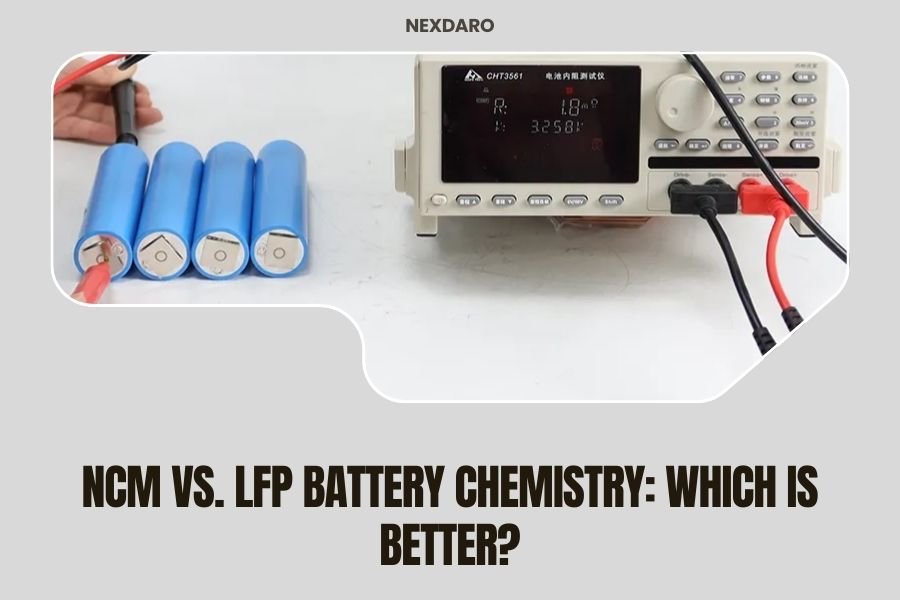
NCM batteries offer higher energy density and lighter weight, while LFP batteries provide better safety and longer lifespans for portable power stations.
Your choice between NCM vs LFP battery chemistry depends on whether you prioritize weight and capacity or safety and longevity in your power station.
You’re shopping for a portable power station, and suddenly you’re hit with confusing acronyms: NCM and LFP. Don’t worry – I’ve been there too. Let me break down everything you need to know about these battery types so you can make the right choice.
Think of this decision like choosing between a sports car and a reliable family sedan. Both get you where you need to go, but they excel in different areas.
What Are NCM and LFP Batteries?
NCM stands for Nickel Cobalt Manganese lithium-ion batteries. These use a blend of three metals in their cathode. LFP means Lithium Iron Phosphate batteries, which use iron phosphate instead.
Both are lithium-ion batteries, but their internal chemistry creates very different performance profiles. I found that most people don’t realize how much this chemistry difference affects their daily use.
NCM Battery Basics
NCM batteries pack more energy into smaller spaces. They’re like that friend who can fit way too much stuff in their backpack. The nickel provides high energy density, cobalt adds stability, and manganese brings safety.
You’ll find NCM batteries in most electric cars and many portable electronics. They’re the go-to choice when weight and size matter most.
LFP Battery Fundamentals
LFP batteries are the marathon runners of the battery world. They don’t sprint as fast, but they keep going for years. The iron phosphate structure creates a rock-solid foundation that resists overheating and degradation.
Many solar storage systems and long-term backup power solutions rely on LFP chemistry. They’re built for the long haul.
Energy Density Comparison
Here’s where NCM batteries shine brightest. They typically deliver 150-250 Wh/kg (watt-hours per kilogram), while LFP batteries usually max out around 90-160 Wh/kg.
What does this mean for you? An NCM power station might weigh 30 pounds and store 1000Wh. An LFP unit with the same capacity could weigh 40-50 pounds.
Real-World Impact on Portability
I researched camping forums and found that weight becomes a big deal when you’re hiking to remote locations. Those extra 10-20 pounds can make or break your adventure plans.
But if you’re car camping or using the power station at home, that weight difference might not matter much to you.
Safety Characteristics
Safety is where LFP batteries take the crown. They’re much more stable when things go wrong. Overheating, overcharging, or physical damage rarely leads to dangerous situations.
NCM batteries require more careful handling. They can experience thermal runaway – a chain reaction where heat builds up quickly. Good battery management systems prevent this, but the risk exists.
Temperature Performance
LFP batteries handle extreme temperatures better. They work reliably from -4°F to 140°F. NCM batteries get cranky in very hot or cold conditions.
Are you planning to use your power station in Arizona summers or Minnesota winters? LFP might be your friend.
Built-in Safety Features
Both battery types need protection circuits. NCM batteries require more sophisticated monitoring because of their higher risk profile. LFP batteries are more forgiving if something goes slightly wrong.
Lifespan and Cycling Performance
This is where LFP batteries really dominate. Research shows they typically last 3000-5000 charge cycles while maintaining 80% capacity. NCM batteries usually hit that same degradation point around 1000-2000 cycles.
Let’s put this in perspective. If you use your power station twice a week, an LFP battery might last 30-50 years. An NCM battery would need replacement in 10-20 years.
Depth of Discharge Differences
LFP batteries don’t mind being completely drained. You can use nearly 100% of their capacity without hurting longevity. NCM batteries prefer staying between 20-80% charge for maximum lifespan.
This means your LFP power station gives you more usable energy over its lifetime.
Cost Analysis
NCM power stations typically cost less upfront. The materials are cheaper, and the manufacturing is more established. You might save $200-500 initially by choosing NCM.
But here’s the twist: LFP often wins on total cost of ownership. Those extra cycles mean you’re buying fewer replacement batteries over time.
Long-term Value Calculation
I found online calculators that help estimate battery costs over 10 years. In most scenarios, LFP comes out ahead if you use your power station regularly.
However, if you only need backup power for emergencies, NCM’s lower upfront cost might make more sense.
Environmental Impact
LFP batteries are generally more eco-friendly. They don’t contain cobalt, which often comes from problematic mining operations. Iron and phosphate are abundant and easier to source responsibly.
NCM batteries require cobalt mining, which raises environmental and ethical concerns. However, their longer energy density means less material overall for the same capacity.
Recycling Considerations
Both battery types are recyclable, but LFP is simpler to process. The materials are less toxic and easier to separate during recycling.
Performance in Different Applications
Your intended use should drive your decision. Let me break down where each chemistry excels.
Best Uses for NCM Batteries
- Backpacking and hiking trips where weight matters
- Emergency backup power you rarely use
- Applications requiring maximum power in minimum space
- Budget-conscious buyers prioritizing upfront cost
Best Uses for LFP Batteries
- Daily or weekly power station use
- Extreme temperature environments
- Long-term off-grid living situations
- Safety-critical applications
Hybrid Considerations
Some manufacturers are experimenting with hybrid approaches. They might use NCM for peak power delivery and LFP for base storage. These systems are still developing but could offer the best of both worlds.
Charging Speed and Efficiency
NCM batteries generally accept faster charging rates. They can handle 1C or even 2C charging speeds safely. This means a 1000Wh NCM power station might fully charge in 30-60 minutes under ideal conditions.
LFP batteries are more conservative with charging speeds. They typically max out around 0.5C to 1C. The same 1000Wh capacity might need 60-120 minutes to charge completely.
Heat Generation During Charging
Fast charging generates heat, and NCM batteries are more sensitive to temperature increases. LFP batteries stay cooler during charging, which helps their longevity.
Making Your Decision
Here’s my practical framework for choosing between NCM and LFP battery chemistry in your portable power station.
| Factor | Choose NCM If | Choose LFP If |
|---|---|---|
| Usage Frequency | Monthly or less | Weekly or daily |
| Weight Priority | Must be lightweight | Weight doesn’t matter |
| Budget | Lower upfront cost needed | Best long-term value wanted |
| Safety Concerns | Standard use with good ventilation | Maximum safety required |
| Environment | Mild temperatures | Extreme hot or cold conditions |
Questions to Ask Yourself
Will you carry this power station more than 100 yards from your vehicle? NCM might be worth the weight savings.
Do you plan to use it multiple times per month for the next 5+ years? LFP will likely save you money and hassle.
Are you okay with being more careful about charging habits and storage? NCM requires more attention to detail.
Future Technology Trends
Both battery chemistries continue improving. I came across research showing NCM batteries getting safer through better thermal management. LFP batteries are becoming more energy-dense through structural improvements.
Some experts predict that the gap between these technologies will narrow over the next 5-10 years. But for now, the trade-offs remain significant.
Emerging Alternatives
Keep an eye on sodium-ion and solid-state batteries. These might eventually challenge both NCM and LFP, but they’re not ready for consumer power stations yet.
Conclusion
Your choice between NCM and LFP battery chemistry comes down to priorities. NCM offers superior portability and lower upfront costs, making it perfect for occasional use and weight-sensitive applications. LFP delivers unmatched safety, longevity, and long-term value for frequent users who don’t mind extra weight.
Most experts I researched agree that occasional users should lean toward NCM, while regular users benefit more from LFP. Consider your specific needs, usage patterns, and budget to make the right choice for your situation.
Which battery chemistry is safer, NCM or LFP?
LFP batteries are significantly safer than NCM batteries. They resist thermal runaway, handle overcharging better, and remain stable even when damaged. NCM batteries require more sophisticated safety management systems to prevent overheating issues.
How much longer do LFP batteries last compared to NCM?
LFP batteries typically last 3-5 times longer than NCM batteries. While NCM batteries provide 1000-2000 charge cycles, LFP batteries can handle 3000-5000 cycles while maintaining 80% capacity. This translates to decades of difference in real-world use.
Are NCM portable power stations worth the weight savings?
NCM power stations are worth the weight savings if you frequently carry your unit long distances or have strict weight limitations. For car camping, home backup, or stationary use, the weight difference rarely justifies choosing NCM over LFP’s other advantages.
Can I charge NCM and LFP batteries at the same speed?
NCM batteries generally accept faster charging rates than LFP batteries. NCM can handle 1-2C charging speeds, while LFP typically maxes out at 0.5-1C. However, LFP batteries generate less heat during charging, which helps preserve their longevity advantage.
Which battery chemistry offers better value for money?
LFP batteries offer better long-term value despite higher upfront costs, especially for users who cycle their power stations frequently. NCM provides better short-term value for occasional users who prioritize lower initial investment over lifespan considerations.
