
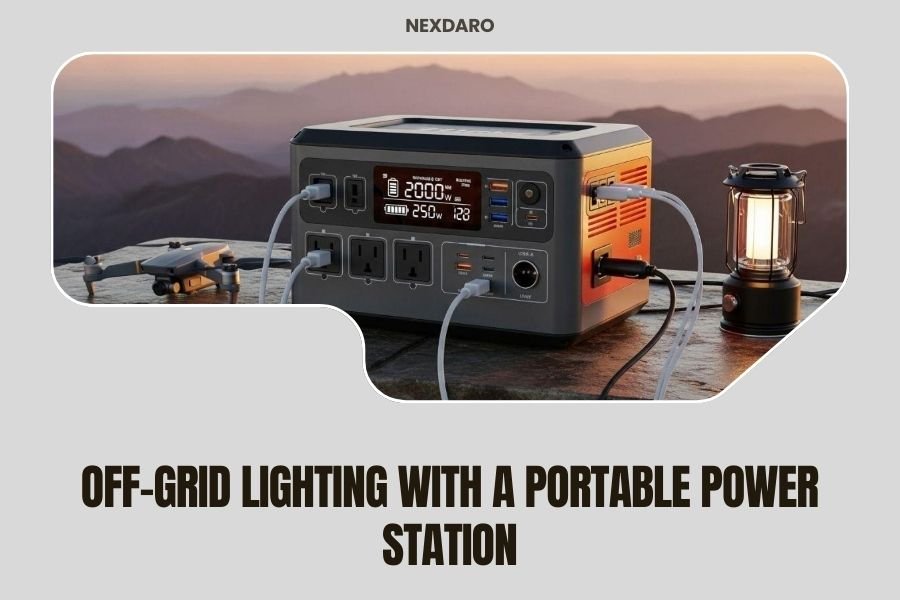
A portable power station can run LED lights for 10-100+ hours depending on wattage, giving you reliable off-grid lighting for camping, emergencies, or remote work sites.
Most portable power stations between 300-1000Wh capacity handle multiple LED lights, phone charging, and small devices simultaneously for days without grid power.
Why Choose Portable Power Stations for Off-Grid Lighting
You need dependable light when you’re away from wall outlets. Portable power stations beat generators hands down for lighting needs.
They’re silent. No noise to wake sleeping campers or disturb wildlife. They’re clean too – no fumes or exhaust like gas generators.
Battery technology improved dramatically in recent years. Lithium iron phosphate (LiFePO4) batteries last 3,000+ cycles compared to old lead-acid’s 300-500 cycles.
Power Capacity You Actually Need
LED lights use surprisingly little power. A bright 10-watt LED bulb runs 50 hours on a 500Wh power station.
Here’s the simple math: Divide your power station’s watt-hours by your light’s wattage. That’s your runtime in hours.
Most people overestimate their lighting needs. Three 5-watt LED bulbs lighting your entire campsite draw just 15 watts total.
Best Lighting Options for Power Stations
LED technology changed everything for off-grid lighting. You get bright, efficient light that barely touches your battery.
LED Strip Lights
LED strips give you the most bang for your buck. A 16-foot strip using 20 watts can light an entire tent or RV interior.
Many strips come with USB connectors. Just plug directly into your power station’s USB port. No inverter needed.
Warm white (3000K) feels cozy for evening use. Cool white (5000K) works better for tasks like cooking or reading.
Adhesive vs Magnetic Strips
Adhesive strips stick permanently but can damage surfaces. Magnetic strips work great on metal RVs or truck beds.
Some strips include clips or hooks for temporary mounting. Perfect for tents or awnings.
Portable LED Lanterns
Battery-powered lanterns eliminate wiring completely. You charge them from your power station during the day.
Look for lanterns with multiple brightness settings. High for tasks, low for ambient evening light.
Many modern lanterns double as phone chargers. Useful when your power station is busy running other devices.
Inflatable Solar Lanterns
These lightweight options pack tiny but provide surprising light output. Great backup lighting that charges itself.
I found online that inflatable lanterns typically last 8-15 hours on low setting after full solar charging.
String Light Options
LED string lights create perfect ambiance around campsites or outdoor gatherings.
Edison-style LED bulbs look classy but use more power than simple string LEDs. Balance style with battery life.
Solar string lights charge themselves but won’t work on cloudy days. Plug-in versions guarantee reliability.
Calculating Your Power Needs
Smart planning prevents dead batteries when you need light most. Start with your must-have lighting.
| Light Type | Typical Wattage | Runtime on 500Wh Station |
|---|---|---|
| LED Bulb (bright) | 10W | 50 hours |
| LED Strip (16ft) | 20W | 25 hours |
| LED Lantern | 5W | 100 hours |
| String Lights | 15W | 33 hours |
Daily Usage Planning
Most people use lights 4-6 hours per evening. Plan for your longest expected nights.
Winter camping means 12+ hour nights. Summer might only need 4 hours of artificial light.
Add 20% buffer to your calculations. Batteries lose capacity in cold weather, and you’ll want backup power.
Recharging Strategy
Solar panels recharge your station during the day. A 100W panel needs 6-8 sunny hours to refill a 500Wh station.
Car charging works too. Your vehicle’s 12V outlet can recharge smaller stations while driving.
Installation and Setup Tips
Getting your lighting system right the first time saves headaches later.
Voltage Considerations
Most power stations output 12V DC, 120V AC, and 5V USB. Match your lights to avoid conversion losses.
DC lights skip the inverter, saving 10-15% more battery power. Every bit counts when you’re off-grid.
USB lights work great for small areas. Many power stations have multiple USB ports.
Inverter Efficiency
AC lights need your station’s inverter running. Pure sine wave inverters work better than modified sine wave for LED lights.
Some cheap LEDs flicker or buzz with modified sine wave power. Research shows pure sine wave eliminates these issues.
Wiring and Connections
Keep wire runs short to minimize voltage drop. Long thin wires waste power as heat.
Use appropriately sized fuses or breakers. Even low-voltage DC systems need overcurrent protection.
Waterproof connections matter outdoors. Heat shrink tubing and dielectric grease prevent corrosion.
Switch Placement
Put light switches where you’ll actually use them. Nobody wants to walk across camp to turn off lights.
Wireless switches solve this problem. Battery-powered remotes control lights from anywhere.
Safety and Best Practices
Electrical safety doesn’t take a vacation when you go off-grid.
Heat Management
LEDs run cool, but power stations generate heat while running. Keep air vents clear.
Never cover your power station or run it inside enclosed spaces. Carbon monoxide isn’t a risk, but overheating kills batteries.
Weather Protection
Most power stations aren’t waterproof. Protect them from rain and morning dew.
Condensation forms when temperatures drop overnight. A breathable cover prevents moisture buildup.
Battery Maintenance
Don’t drain lithium batteries completely. Stop using them around 10-20% remaining charge.
Store partially charged (50-60%) in cool, dry places. Extreme temperatures shorten battery life.
Many experts say modern power stations handle maintenance automatically. Built-in battery management systems prevent overcharging and deep discharge.
Temperature Effects
Cold weather reduces battery capacity temporarily. Your 500Wh station might only deliver 400Wh at freezing temperatures.
Hot weather permanently damages batteries faster. Keep power stations shaded during summer use.
Troubleshooting Common Issues
Problems happen. Knowing quick fixes keeps your lights on.
Lights Won’t Turn On
Check connections first. Loose plugs cause 80% of lighting problems.
Verify your power station has charge. Many units shut down completely when batteries get too low.
Test different outlets if one doesn’t work. Power stations sometimes have individual port failures.
Flickering or Dim Lights
Low battery voltage causes flickering. Recharge your station or switch to lower-power lights.
Poor connections create voltage drop. Clean terminals and tighten connections.
Shorter Runtime Than Expected
Old batteries lose capacity. Lithium batteries degrade slowly but steadily over years of use.
Cold weather temporarily reduces capacity. Bring your power station inside to warm up.
Parasitic loads drain power when you’re not looking. Some devices draw standby power even when “off.”
Charging Problems
Solar panels need direct sunlight. Cloudy skies and shade dramatically reduce charging speed.
Dirty panels charge poorly. Dust, leaves, and bird droppings block light.
Seasonal Lighting Considerations
Your lighting needs change with the seasons and activities.
Winter Camping
Long nights mean more lighting hours. Plan for 12+ hours of potential light usage.
Cold reduces battery capacity. Bring extra power or plan shorter trips.
Snow reflects light beautifully. You might need less artificial lighting than expected around camp.
Summer Adventures
Short nights save battery power. You might only need lights 4-5 hours total.
Hot days charge solar panels efficiently. Take advantage of long daylight hours.
Bugs love bright lights. Consider amber or red LEDs that attract fewer insects.
Budget-Friendly Lighting Solutions
You don’t need expensive gear for good off-grid lighting.
DIY Options
Basic LED strips cost $20-30 for 16 feet. Add a 12V plug and you’re set.
Mason jar lanterns look great and cost almost nothing. Drop battery LED strings inside for instant ambiance.
Reflectors multiply light output. Aluminum foil or mirrors behind lights double brightness.
Multi-Purpose Devices
Headlamps work double duty. Great for tasks and emergency area lighting when hung up.
Phone flashlights are surprisingly bright. Use them while your main lights charge.
Conclusion
Off-grid lighting with a portable power station opens up amazing possibilities. You can camp longer, work remote sites, or handle emergencies with reliable light that lasts days.
The key is matching your power capacity to your actual needs. LED technology makes this easier than ever – even modest power stations run multiple lights for extended periods.
Start simple with basic LED strips or lanterns. You can always expand your system as you learn what works best for your adventures. The freedom of reliable off-grid lighting is worth every bit of planning effort.
How long can a 500Wh power station run LED lights?
A 500Wh power station can run a 10W LED light for about 50 hours, or three 5W LED lights for roughly 33 hours total. Runtime depends on the total wattage of your lights and other devices connected to the station.
Can I run regular household light bulbs from a portable power station?
Yes, but it’s inefficient. Standard incandescent bulbs use 5-10 times more power than equivalent LED bulbs. A 60W incandescent bulb will drain your battery much faster than a 10W LED that produces similar brightness.
Do I need pure sine wave output for LED lights?
Most quality LED lights work fine with modified sine wave inverters, but some cheaper LEDs may flicker or buzz. Pure sine wave output eliminates these issues and is generally better for sensitive electronics.
How do I prevent my LED lights from attracting bugs while camping?
Use warm white LEDs (3000K or lower) instead of cool white, as insects are less attracted to warmer light colors. Red or amber LED options attract the fewest insects while still providing usable light for most activities.
What’s the best way to charge my power station while using it for lighting?
Solar charging during the day works best for continuous use. A 100W solar panel can typically replace the power used by LED lighting overnight, creating a sustainable off-grid lighting system for extended trips.
