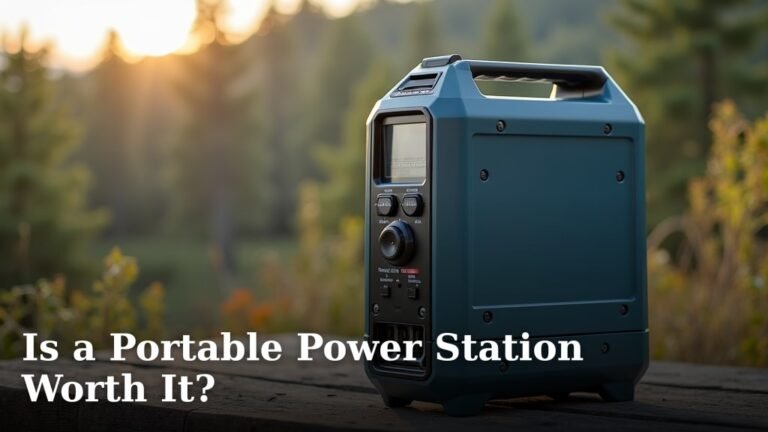
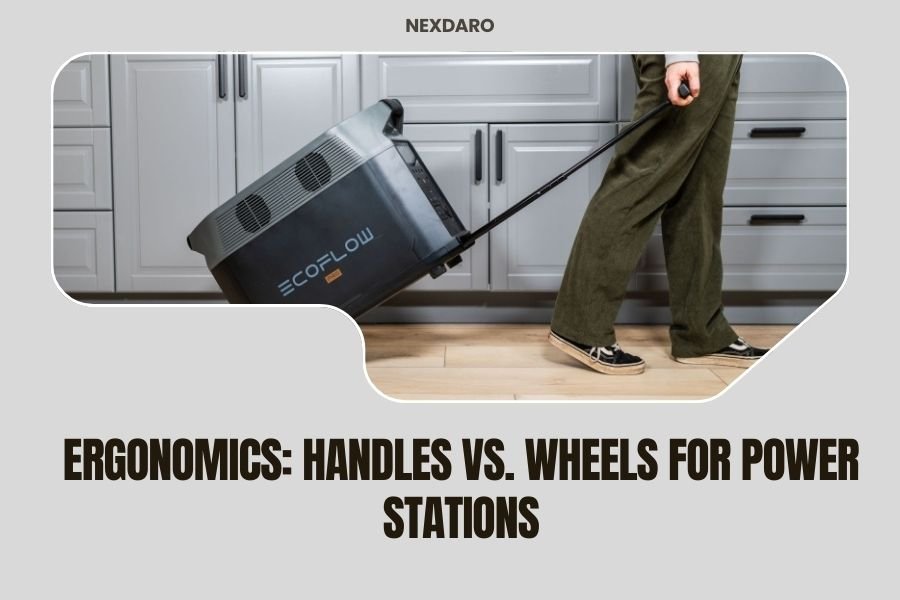
Power station handles work best for short distances and quick moves, while wheels are better for long distances and heavy loads over 30 pounds.
Your choice between handles vs. wheels for power stations depends on where you’ll use it most – indoors, camping, or job sites.
Quick Answer: Which Is Right for You?
Let me cut straight to what matters. If your power station weighs under 25 pounds and you mainly use it indoors or on smooth surfaces, handles are perfect. They’re lighter, simpler, and won’t break.
But if you’re dealing with a 40+ pound beast that needs to travel across campsites or job sites? Wheels will save your back and your sanity.
Weight Matters More Than You Think
Here’s what I found when researching power station ergonomics. Most people underestimate how heavy these units get when fully loaded.
A basic 500Wh unit might feel fine at 15 pounds. Add some accessories and suddenly you’re carrying 25 pounds awkwardly shaped like a briefcase.
The 30-Pound Rule
Many ergonomics experts point to 30 pounds as the tipping point. Below that? Most healthy adults can handle repeated lifting without strain.
Above 30 pounds? Your risk of back injury goes up fast, especially with awkward loads (Occupational Safety and Health Administration).
Power Station Weight Ranges
| Capacity | Typical Weight | Best Option |
|---|---|---|
| 300-600Wh | 15-25 lbs | Handles |
| 700-1200Wh | 25-35 lbs | Either works |
| 1500Wh+ | 35-60 lbs | Wheels preferred |
Handle Designs: The Good and Bad
Not all handles are created equal. I’ve come across three main types while researching portable power options.
Single Top Handle
This is like carrying a heavy suitcase. Works fine for light units under 20 pounds. Get much heavier and your wrist will complain.
The weight distribution feels unnatural. Your arm has to compensate for the bulk swinging below your grip.
Dual Side Handles
Much better for heavier units. Two people can carry together, or you can switch hands easily.
The downside? Some designs make the unit wider, which can be awkward in tight spaces.
Telescoping Handles
These extend upward like luggage handles. Great concept, but quality varies wildly between brands.
Cheap telescoping handles break under stress. Good ones add cost and weight to the unit.
Wheel Systems: More Complex Than You’d Think
Wheels sound simple, but the engineering matters a lot for real-world use.
Wheel Size Makes a Difference
Small wheels (under 4 inches) struggle with anything but smooth floors. They catch on cracks, gravel, and small obstacles.
Larger wheels (6+ inches) roll over rough terrain much better. But they add bulk and weight to your power station.
Two Wheels vs. Four Wheels
Two-wheel systems work like a hand truck. You tilt the unit back and roll it. This works great but requires space to maneuver.
Four-wheel systems roll upright like a shopping cart. Easier to control but more parts that can break.
Wheel Material Considerations
Hard plastic wheels are cheap and lightweight. They work fine indoors but get noisy on hard floors.
Rubber wheels grip better and run quieter. They cost more and can wear out over time.
Where You Use It Changes Everything
Your environment should drive this decision more than the power station’s specs.
Indoor Use Cases
Inside your home or office, handles usually win. You’re moving short distances on smooth floors.
Wheels can scratch hardwood floors or leave marks on carpet. They also take up more storage space.
Camping and Outdoor Adventures
This is where wheels really shine, especially larger units. From your car to the campsite, wheels handle uneven ground much better than your arms handle heavy lifting.
Just watch out for sand and fine dirt. They can jam wheel bearings over time.
RV and Car Camping
If you’re car camping, wheels make loading and unloading much easier. No more awkward lifting in and out of tight spaces.
Backpacking and Hiking
Wheels are useless on trails. Stick with handles and keep the weight under 20 pounds if you’re carrying it far.
Job Site and Work Use
Construction sites are tough on equipment. Wheels take a beating from debris, mud, and rough surfaces.
Many contractors I’ve read about prefer sturdy handles for work environments. Less to break, easier to toss in a truck.
Maintenance and Durability Factors
Simple handles almost never break. There’s not much to go wrong with a solid grip attached to a strong frame.
Common Wheel Problems
Wheels add moving parts, and moving parts wear out. Here’s what goes wrong:
- Bearings seize up from dirt and moisture
- Wheel attachments loosen or break
- Telescoping handles jam or snap
- Small wheels crack under heavy loads
Repair and Replacement
Most manufacturers don’t sell replacement wheels or handles separately. When they break, you’re stuck with a less portable power station.
This is why simple, sturdy designs often outlast fancy ones.
Cost and Weight Trade-offs
Wheel systems add $50-150 to a power station’s cost. They also add 3-8 pounds of weight.
For smaller units, this weight penalty defeats the purpose. You’re adding bulk to make carrying easier, but now there’s more to carry.
When Wheels Pay Off
The math works when the base unit weighs over 30 pounds. Adding 5 pounds of wheels to save your back on a 40-pound unit makes sense.
Adding 5 pounds of wheels to a 20-pound unit? Now you’ve got a 25-pound unit that’s bulkier and more complex.
Special Situations and Exceptions
Physical Limitations
If you have back problems, arthritis, or other physical limits, wheels can be worth it even on lighter units.
Many users with mobility issues find wheeled units much more manageable, regardless of weight.
Frequent Long-Distance Moves
Some people move their power stations long distances regularly. Airport terminals, large event venues, or big campsites.
For these use cases, wheels save energy even if the unit isn’t super heavy.
Multi-Person Households
When different family members use the same power station, wheels level the playing field. Not everyone can comfortably lift 35 pounds.
Making Your Decision
Start with these three questions:
- How much does your loaded power station weigh?
- How far do you typically move it?
- What surfaces will you roll or carry it on?
Go with Handles If:
- Your unit weighs under 25 pounds
- You mainly use it indoors
- You value simplicity and durability
- Storage space is tight
Choose Wheels If:
- Your unit weighs over 35 pounds
- You move it long distances regularly
- You use it on relatively smooth surfaces
- Multiple people need to move it
Conclusion
The handles vs. wheels decision comes down to matching the tool to your needs. Heavy units benefit from wheels, especially when you’re covering distance. Light units work fine with simple handles and avoid the complexity of moving parts.
Don’t get caught up in features you won’t use. A reliable handle beats broken wheels every time. But if you’re regularly wrestling with a heavy power station, good wheels will transform how you use it.
Think about your specific situation, not just the specs. Where you go and how you get there matters more than the power station’s capacity when it comes to portability.
Why do some power stations have both handles and wheels?
Dual systems give you options for different situations. You can wheel it across parking lots but lift it by handles into tight spaces. This works best on mid-weight units around 30-40 pounds.
Can I add wheels to a handle-only power station later?
Some companies make universal wheel attachments, but they often don’t fit securely. Most power stations aren’t designed for retrofitting wheels safely.
Do wheels work well on gravel and dirt camping areas?
Large wheels (6+ inches) handle gravel okay, but small wheels struggle. Soft dirt can clog wheel mechanisms. Clean them regularly if you camp in dusty conditions.
Are telescoping handles worth the extra cost?
Only if you’re tall or need the leverage for heavy units. They add failure points and cost. Fixed handles are more reliable for most users.
How much weight can I safely lift repeatedly without wheels?
Most ergonomics guidelines suggest staying under 25-30 pounds for repeated lifting. Your personal limits depend on fitness, age, and any existing injuries.