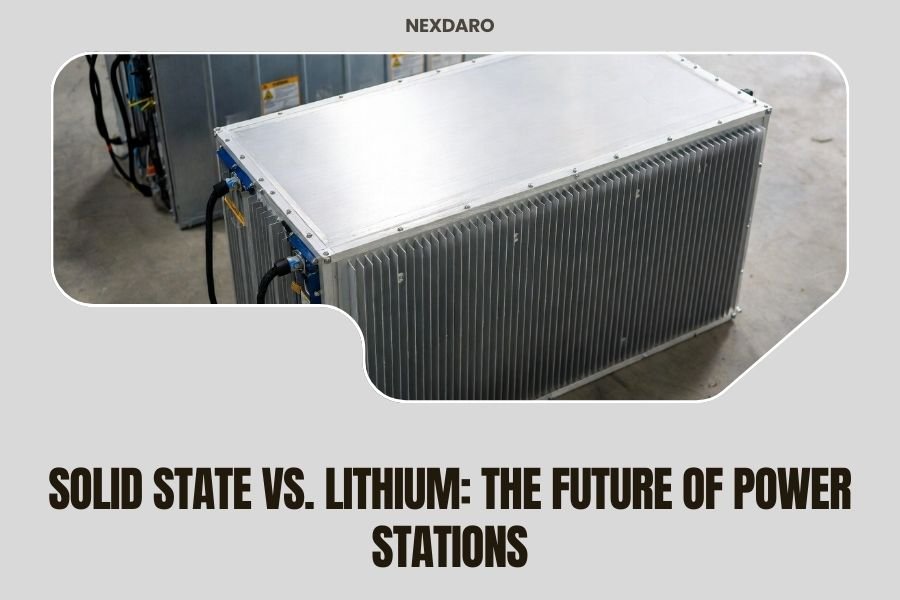
Solid state power stations use solid electrolytes instead of liquid ones, offering better safety and longer life than traditional lithium batteries.
Lithium power stations remain more affordable and widely available, but solid state technology promises faster charging and higher energy density for the future.
What Makes Solid State Different From Regular Lithium Batteries
You might wonder what all the fuss is about with solid state batteries. Think of it like this: regular lithium batteries have liquid inside that can leak or catch fire. Solid state batteries replace that liquid with a solid material.
This change sounds small, but it’s huge. The solid electrolyte won’t leak, burn, or explode like liquid electrolytes can. It’s like replacing a water balloon with a rubber ball.
How Solid State Batteries Work
Inside any battery, ions move between two sides to create power. Regular lithium batteries use liquid to help ions move. Solid state batteries use ceramic or polymer materials instead.
These solid materials guide ions just as well as liquids. But they’re much safer and can handle more charge cycles.
The Science Behind Solid Electrolytes
Research from MIT shows that solid electrolytes can be made from materials like lithium phosphorus oxynitride. These materials conduct ions without the safety risks of liquid electrolytes.
The solid structure also prevents dendrites. These are tiny metal spikes that grow inside regular batteries and cause failures.
Safety Comparison: Which Technology Wins
Safety is where solid state batteries shine brightest. You’ve probably heard about lithium batteries catching fire or exploding. This happens because of thermal runaway.
Thermal Runaway Explained
When lithium batteries get too hot, the liquid inside can start a chain reaction. Heat makes more heat, and the battery can burst into flames.
Solid state batteries don’t have this problem. The solid materials stay stable even at high temperatures.
Real-World Safety Benefits
For your power station, this means you can:
- Store it in hot garages without worry
- Use it near flammable materials safely
- Travel with it on planes (once regulations catch up)
- Charge it overnight without supervision
Testing Data From Battery Labs
Studies from the National Renewable Energy Laboratory show solid state batteries pass nail penetration tests. Regular lithium batteries often fail these same tests with fires or explosions.
Performance Differences You’ll Actually Notice
Beyond safety, you’ll see real performance differences between these technologies in your daily use.
Charging Speed Comparison
Solid state batteries can charge much faster. While your current lithium power station might take 6-8 hours to charge, solid state versions could do it in 1-2 hours.
This happens because solid electrolytes can handle higher current without damage. It’s like having a wider highway for electricity to flow.
Energy Density and Weight
Solid state batteries pack more energy into less space. You could get the same power in a unit that’s 30-50% smaller and lighter.
Imagine carrying your current power station’s capacity in something the size of a laptop bag.
Temperature Performance
Cold weather kills regular lithium batteries. Solid state batteries work better in both hot and cold conditions. Your winter camping trips would get much easier.
Lifespan and Durability Analysis
One area where solid state clearly wins is how long the batteries last.
Charge Cycle Comparisons
Regular lithium batteries give you about 2,000-3,000 charge cycles before they degrade significantly. Solid state batteries can handle 10,000+ cycles while keeping most of their capacity.
That means your power station could last decades instead of years.
Degradation Patterns
Lithium batteries lose capacity gradually, then fail suddenly. Solid state batteries degrade more predictably and slowly.
You’ll know exactly when to replace your power station instead of being surprised by sudden failure.
Cost Analysis: Present and Future
Here’s where reality hits. Solid state batteries cost much more right now.
| Technology | Current Cost per kWh | Expected 2030 Cost |
|---|---|---|
| Lithium Ion | $140-180 | $100-120 |
| Solid State | $400-600 | $150-200 |
Why Solid State Costs More
Manufacturing solid electrolytes requires specialized equipment and processes. Most factories aren’t set up for this yet.
It’s like when flat-screen TVs first came out. Early adopters paid premium prices for new technology.
When Prices Will Drop
Industry analysts expect solid state prices to fall dramatically by 2028-2030. Mass production and improved manufacturing will drive costs down.
Current Market Availability
You can’t walk into a store and buy solid state power stations yet. The technology is still moving from labs to production lines.
Who’s Making Solid State Batteries
Toyota, Samsung, and QuantumScape are leading development. Several Chinese manufacturers are also making progress.
Most are focusing on electric vehicles first, then consumer electronics and power stations.
Expected Timeline for Power Stations
Research suggests we’ll see the first solid state power stations in 2026-2027. They’ll be expensive and limited at first.
Mass market availability likely won’t happen until 2028-2030.
Environmental Impact Considerations
Both technologies have environmental trade-offs, but solid state looks cleaner overall.
Mining and Materials
Solid state batteries need fewer rare earth materials. They also last longer, reducing replacement frequency.
The solid electrolytes are often made from more abundant materials than lithium battery chemicals.
Recycling Advantages
Solid state batteries are easier to recycle safely. No liquid chemicals to handle or toxic gases to manage.
Which Should You Choose Right Now
For most people buying a power station today, lithium ion is still the smart choice. Here’s my recommendation based on your situation:
Buy Lithium Ion If You
- Need a power station within the next 2-3 years
- Want proven, reliable technology
- Have a tight budget
- Need replacement parts and service support
Wait for Solid State If You
- Can wait until 2027-2030
- Want cutting-edge safety and performance
- Don’t mind paying premium prices
- Plan to use your power station for decades
The Middle Ground Strategy
Buy a basic lithium power station now for immediate needs. Plan to upgrade to solid state when prices drop and availability improves.
Future Predictions and Trends
The next five years will bring massive changes to portable power technology.
What 2030 Might Look Like
I expect solid state power stations will match lithium ion prices while offering twice the performance. Weight could drop by half while capacity doubles.
Charging times under 30 minutes for large capacity units seem realistic.
Impact on the Industry
Traditional lithium power station makers will need to adapt or disappear. New companies focused on solid state technology might dominate the market.
Conclusion
Solid state represents the future of power stations, but we’re not there yet. The technology offers better safety, longer life, and superior performance. But high costs and limited availability make it impractical for most buyers today.
Lithium ion power stations remain your best choice for current needs. They’re affordable, reliable, and widely supported. Just know that in 5-7 years, solid state technology will likely make today’s lithium stations look outdated.
My advice? Buy what you need now, but keep an eye on solid state development. The transition will happen faster than most people expect.
What happens if I buy a lithium power station now and solid state becomes standard?
Your lithium power station will still work fine for years. Think of it like buying a smartphone – it doesn’t stop working when newer models come out. You’ll just have upgrade options available when your current unit reaches end of life.
Can solid state batteries explode or catch fire like regular lithium batteries?
Solid state batteries are much safer and resistant to thermal runaway that causes fires in regular lithium batteries. The solid electrolyte materials remain stable even when punctured or overheated, making explosions extremely unlikely.
Will solid state power stations work with my current solar panels and devices?
Yes, solid state power stations will use the same input and output standards as current models. Your solar panels, cables, and devices will work normally. The main difference will be internal battery technology, not external connections.
How much longer will solid state power stations last compared to lithium ones?
Solid state batteries can handle 10,000+ charge cycles compared to 2,000-3,000 for regular lithium. This means a solid state power station could last 15-20 years with regular use, while lithium versions typically last 5-8 years.
Are there any downsides to solid state batteries besides cost?
Solid state technology is newer and less tested in real-world conditions. Manufacturing defects could be harder to predict, and repair options may be limited initially. The technology also performs differently in extreme temperatures, though generally better than lithium ion.