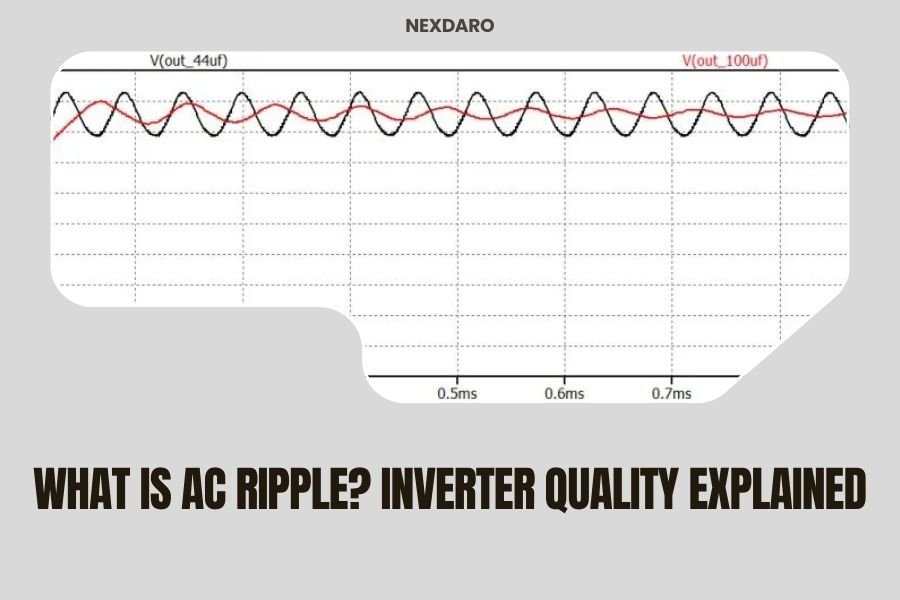
AC ripple is the unwanted alternating current variation that appears in your portable power station’s DC output, typically measuring less than 5% in quality inverters.
This electrical noise can damage sensitive electronics like laptops and medical devices, making inverter quality a key factor when choosing your power station.
Understanding AC Ripple in Power Systems
Think of AC ripple like static on an old radio. Your power station converts DC battery power to AC household current, but this conversion isn’t perfect. Small amounts of AC “noise” leak back into the DC side.
This happens because inverters use switching circuits that turn on and off thousands of times per second. Each switch creates tiny electrical fluctuations that add up to ripple.
What Causes AC Ripple in Inverters
Your inverter’s switching frequency creates the main source of ripple. Cheaper inverters switch at lower frequencies, creating more noticeable ripple.
Poor filtering components also increase ripple levels. Quality inverters use better capacitors and inductors to smooth out these variations.
Modified vs Pure Sine Wave Impact
Modified sine wave inverters produce square-shaped AC output that contains more harmonic distortion. This creates higher ripple levels compared to pure sine wave inverters.
Pure sine wave inverters generate smooth, rounded AC output that matches grid power quality. They typically produce much lower ripple levels.
How AC Ripple Affects Your Devices
Sensitive electronics hate AC ripple. Your laptop’s power supply expects clean DC input, but ripple can cause overheating and component stress.
Medical devices like CPAP machines are especially vulnerable. High ripple levels can cause malfunctions or shortened lifespan.
Device Categories and Ripple Sensitivity
I researched which devices are most affected by AC ripple, and found some clear patterns:
- Laptops and tablets – Very sensitive to ripple above 2%
- LED lights – May flicker with high ripple levels
- Audio equipment – Can produce buzzing or humming sounds
- Basic appliances – Usually tolerate higher ripple levels
Signs Your Device is Affected
Watch for these warning signs that suggest high AC ripple:
- Unusual heating in power adapters
- Flickering in LED displays
- Audio interference or buzzing
- Shortened battery life in rechargeable devices
Measuring AC Ripple Levels
AC ripple is measured as a percentage of the total DC output voltage. A 12V system with 0.12V of ripple has 1% ripple.
Quality portable power stations typically specify ripple levels in their technical documentation. Look for this specification when comparing models.
Acceptable Ripple Standards
Industry standards help you understand what ripple levels are acceptable for different applications.
| Application Type | Maximum Ripple | Recommended Level |
|---|---|---|
| Sensitive Electronics | 2% | Under 1% |
| General Electronics | 5% | Under 3% |
| Basic Appliances | 10% | Under 5% |
Testing Methods for Ripple
Professional testing requires an oscilloscope to visualize ripple waveforms. Most users rely on manufacturer specifications instead.
Some multimeters can measure AC voltage on DC circuits, giving you a rough ripple estimate. Connect the meter in AC mode across your DC output.
Inverter Quality Factors
Several design elements determine your inverter’s ripple performance. Understanding these helps you choose better power stations.
Switching Frequency Impact
Higher switching frequencies generally produce lower ripple. Quality inverters switch at 20kHz or higher, while cheaper units may use 1-5kHz.
Faster switching requires better components and increases cost, which is why budget inverters often have higher ripple.
Filter Circuit Design
Good filtering requires quality capacitors and inductors placed strategically throughout the circuit. These components smooth out switching noise.
Cheaper inverters skimp on filtering components, leading to higher ripple levels and potential device compatibility issues.
Circuit Board Layout Considerations
Proper PCB design minimizes electromagnetic interference that contributes to ripple. Wide copper traces and good grounding reduce noise.
Professional inverter designs use multiple ground planes and careful component placement to minimize ripple generation.
Choosing Low-Ripple Power Stations
When shopping for portable power stations, look for specifications that mention ripple levels. Reputable brands publish these numbers.
Pure sine wave output is your first clue about quality. These inverters almost always have better ripple specifications.
Key Specifications to Check
Beyond ripple percentage, several other specs indicate inverter quality:
- Total Harmonic Distortion (THD) under 3%
- Frequency stability within ±0.5Hz
- Voltage regulation within ±5%
- Pure sine wave output specification
Brand Reputation Matters
Established brands invest more in inverter design and quality control. They’re more likely to publish accurate ripple specifications.
I found that premium brands typically achieve ripple levels under 2%, while budget options may exceed 5%.
Reducing Ripple in Your Setup
Even with higher-ripple power stations, you can take steps to protect sensitive devices.
External Filtering Solutions
DC power conditioners can reduce ripple between your power station and sensitive devices. These units cost $50-200 depending on capacity.
UPS units with online topology also filter power, though they add complexity to your portable setup.
Cable and Connection Quality
Poor connections can actually increase ripple levels. Use quality cables with proper gauge ratings for your current draw.
Keep DC cables as short as possible, since longer runs can pick up additional electrical noise from the environment.
Impact on Battery Life
High ripple levels don’t just affect your devices – they can also impact your power station’s internal battery longevity.
Excessive ripple creates heat in battery management circuits, potentially shortening the overall system lifespan.
Heat Generation from Ripple
Ripple current flowing through battery connections creates resistive heating. This heat stresses battery cells and management electronics.
Quality inverters with low ripple help your power station run cooler and last longer over time.
Conclusion
AC ripple represents a key quality indicator for portable power station inverters. Levels under 2% protect your sensitive electronics, while higher ripple can cause device problems or shortened lifespan.
When choosing your next power station, prioritize pure sine wave output and check ripple specifications. Your laptops, medical devices, and other sensitive electronics will thank you for investing in cleaner power quality.
Can AC ripple damage my laptop permanently?
High ripple levels can stress your laptop’s power supply components over time, potentially leading to premature failure. Most modern laptops have some protection, but consistent exposure to ripple above 5% may shorten component lifespan.
Do all pure sine wave inverters have low ripple?
Pure sine wave output generally correlates with better ripple performance, but it’s not guaranteed. Some pure sine wave inverters still produce 3-5% ripple due to poor filtering design. Always check the ripple specification separately.
How can I test ripple levels without expensive equipment?
Set your multimeter to AC voltage mode and measure across the DC output terminals while the inverter is running under load. This gives you a rough ripple voltage reading that you can convert to percentage by dividing by the DC voltage.
Why do cheaper power stations have higher ripple?
Cost-cutting measures include lower switching frequencies, cheaper filter components, and simplified circuit designs. These compromises increase ripple levels but reduce manufacturing costs significantly.
Will using a surge protector help with AC ripple issues?
Standard surge protectors don’t filter AC ripple effectively. You need specialized DC power conditioners or line filters designed specifically for ripple reduction. These devices cost more but provide better protection for sensitive electronics.