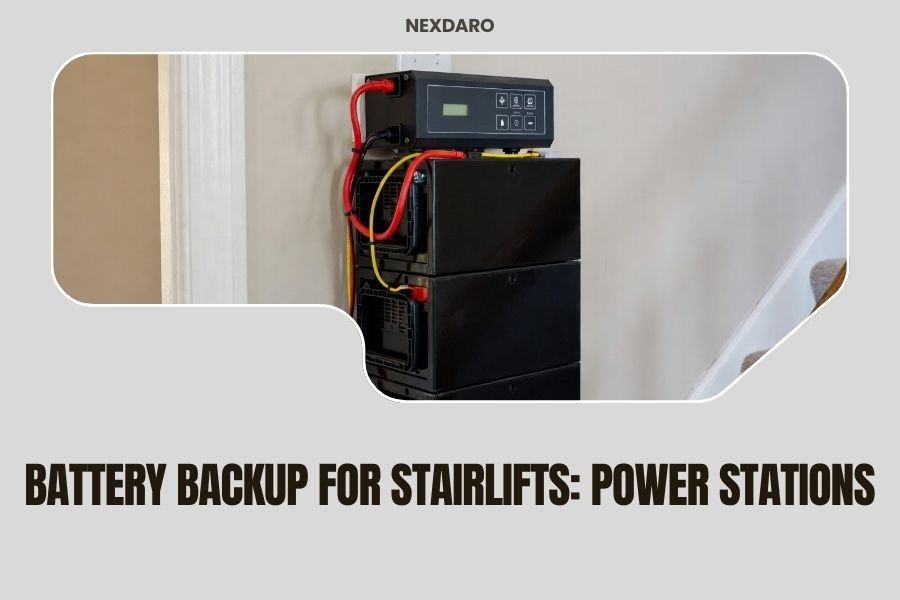
Battery backup for stairlifts using power stations provides reliable emergency power when the electricity goes out, keeping you safely mobile in your home.
Power stations work as external battery systems that automatically kick in during outages, typically providing 8-24 hours of stairlift operation depending on usage and battery capacity.
What Are Power Stations for Stairlifts?
Power stations are portable battery systems that store electricity for later use. Think of them as really big phone chargers for your stairlift.
When the power goes out, these units take over automatically. Your stairlift keeps working like nothing happened. No manual switching needed.
How They Differ from Built-in Batteries
Many stairlifts come with small built-in battery backups. These typically last 2-4 hours max.
Power stations offer much more capacity. They can keep your stairlift running for days, not hours. Plus, you can recharge them anytime.
Why You Need Battery Backup for Your Stairlift
Power outages happen when you least expect them. Storms, equipment failures, or maintenance work can leave you stranded upstairs or downstairs.
If you rely on a stairlift for mobility, being stuck on one floor creates real problems. What if you need medication from another floor? Or food? Or the bathroom?
Safety Concerns During Outages
I found research showing that home accidents increase during power outages. People try risky alternatives when their usual mobility aids stop working.
Attempting stairs without your stairlift puts you at serious risk of falls. The National Safety Council reports that stair-related injuries send someone to the emergency room every 6 minutes.
Medical Emergency Situations
What happens if you have a medical emergency during an outage? First responders might need to reach you on any floor.
With backup power, your stairlift stays operational. You maintain independence and access to all areas of your home.
Types of Power Stations for Stairlifts
Not all power stations work the same way. You’ll find three main types when shopping around.
Lithium-Ion Power Stations
These are the newest and most popular option. They’re lighter than other types and charge faster.
Lithium batteries last longer too. Many experts say they can handle 2,000-5,000 charge cycles before losing capacity.
Pros of Lithium Systems
- Lightweight and portable
- Fast charging (2-6 hours)
- Long lifespan
- No maintenance required
Cons of Lithium Systems
- Higher upfront cost
- Can be damaged by extreme temperatures
- May need special disposal when worn out
Lead-Acid Power Stations
These use older battery technology. They’re heavier but cost less upfront.
Lead-acid batteries work well in most temperatures. They’re also easier to recycle when they wear out.
AGM vs. Gel Lead-Acid Options
AGM (Absorbent Glass Mat) batteries handle vibration better. They’re good if you move the power station around.
Gel batteries work better in extreme temperatures. They also discharge more slowly when not in use.
Hybrid Power Systems
Some power stations combine different battery types. Others add solar panels or other charging methods.
These systems cost more but give you extra backup options. If one charging method fails, you have alternatives.
Choosing the Right Power Station Size
Size matters when picking a power station. Too small, and you’ll run out of juice too soon. Too big, and you’re wasting money.
Understanding Stairlift Power Requirements
Most residential stairlifts use 200-400 watts when running. They draw power in short bursts during each trip up or down.
A typical stairlift trip takes 1-3 minutes. If you make 10 trips per day, that’s maybe 30 minutes of actual power use.
Calculating Your Daily Usage
Count how many times you use your stairlift daily. Multiply by your average trip time. That gives you total daily runtime.
Most people use their stairlift 4-8 times per day. That equals about 10-30 minutes of actual motor time.
Battery Capacity Recommendations
I researched typical power station sizes and found these guidelines work well:
| Usage Level | Recommended Capacity | Expected Runtime |
|---|---|---|
| Light (2-4 trips/day) | 500-1000Wh | 3-7 days |
| Moderate (5-8 trips/day) | 1000-2000Wh | 2-5 days |
| Heavy (9+ trips/day) | 2000Wh+ | 2-4 days |
Installation and Setup Process
Setting up a power station for your stairlift isn’t rocket science. Most systems plug right into your existing setup.
Professional vs. DIY Installation
Simple plug-in power stations work as DIY projects. You connect them like plugging in any appliance.
Hardwired systems need professional installation. These connect directly to your stairlift’s electrical system.
When to Call a Professional
Call an electrician if you need to:
- Run new electrical circuits
- Install automatic transfer switches
- Connect multiple stairlifts to one system
- Meet local electrical code requirements
Placement Considerations
Where you put your power station matters. It needs to stay cool, dry, and accessible for maintenance.
Avoid basements if they flood. Skip attics if they get too hot. A climate-controlled closet or utility room works best.
Ventilation Requirements
All batteries generate some heat when charging. Make sure air can flow around your power station.
Leave at least 6 inches of space on all sides. Don’t stuff it in a tight cabinet without airflow.
Maintenance and Care Tips
Power stations need regular attention to work when you need them most. Think of it like maintaining your car.
Regular Testing Schedule
Test your backup system monthly. Disconnect main power briefly and make sure the stairlift runs on battery.
This tells you if everything works properly. It also keeps the battery exercised and healthy.
What to Check During Tests
During each test, check:
- How long the battery lasts
- Whether switching happens automatically
- Any unusual noises or smells
- All indicator lights work correctly
Battery Health Monitoring
Most modern power stations show battery health on a display. Watch for decreasing capacity over time.
When batteries drop below 70-80% of original capacity, start planning replacement. Don’t wait until they fail completely.
Cost Considerations
Power station prices vary widely based on capacity and features. Budget anywhere from $300 to $3,000 for a good system.
Upfront Investment vs. Long-term Value
Cheaper systems might save money upfront but cost more long-term. They often need replacement sooner.
Quality power stations last 5-10 years with proper care. That breaks down to maybe $50-100 per year for peace of mind.
Hidden Costs to Consider
Don’t forget about:
- Installation fees if you need professional help
- Replacement batteries after 5-10 years
- Higher electricity bills from regular charging
- Maintenance or repair costs
Insurance and Warranty Coverage
Some insurance plans cover medically necessary mobility equipment. Ask your provider about power station coverage.
Good warranties cover defects for 2-5 years. Extended warranties might be worth it for expensive systems.
Top Features to Look For
Shopping for power stations can feel overwhelming. Focus on these key features that actually matter.
Automatic Transfer Switching
This feature switches to battery power instantly when electricity fails. No manual intervention needed.
Good systems switch in under 10 milliseconds. Your stairlift won’t even notice the power changed.
Multiple Charging Options
Wall charging is standard. Some units also charge from car outlets or solar panels.
Multiple charging options give you flexibility. If one method fails, you have backups.
Solar Charging Capability
Solar charging works great for long outages. The sun keeps your batteries topped off during extended emergencies.
You’ll need adequate roof space and proper sun exposure. Solar works best in sunny climates.
Remote Monitoring and Alerts
Smart power stations send alerts to your phone. You’ll know about low battery, system faults, or maintenance needs.
This helps prevent surprises. You can fix problems before they leave you stranded.
Common Problems and Solutions
Even good power stations sometimes have issues. Here are the most common problems and how to fix them.
Battery Not Holding Charge
This usually means the battery is getting old. Batteries naturally lose capacity over time.
Try a full discharge and recharge cycle first. If that doesn’t help, you probably need a new battery.
Slow Charging Issues
Slow charging often points to temperature problems. Batteries charge slower when they’re too hot or cold.
Check ventilation around your power station. Make sure nothing blocks airflow.
When to Replace Components
Replace batteries when they hold less than 70% of original capacity. Replace charging cables if they get damaged.
Don’t try to repair internal components yourself. That’s a job for professionals.
Conclusion
Battery backup for stairlifts using power stations gives you independence and safety during power outages. The right system keeps you mobile when the electricity fails.
Choose a power station with enough capacity for your usage patterns. Look for automatic switching, multiple charging options, and good warranty coverage.
Regular testing and maintenance keep your backup system ready when you need it most. The peace of mind alone makes the investment worthwhile.
How long will a power station run my stairlift during an outage?
Runtime depends on your power station size and usage patterns. A 1000Wh unit typically provides 3-7 days of normal stairlift operation, assuming 4-6 trips per day of 2-3 minutes each.
Can I use a regular generator instead of a power station for stairlift backup?
Generators work but have drawbacks. They produce noise, exhaust fumes, and require outdoor operation. Power stations work silently indoors and switch automatically without delay.
Will a power station work with any brand of stairlift?
Most power stations work with standard residential stairlifts that use 110-120V AC power. Check your stairlift’s power requirements and connection type to ensure compatibility.
How often should I replace the battery in my power station?
Lithium batteries typically last 5-10 years with proper care. Lead-acid batteries need replacement every 3-5 years. Replace when capacity drops below 70-80% of original performance.
Do I need a permit to install a power station for my stairlift?
Simple plug-in units usually don’t require permits. Hardwired installations or systems requiring new electrical circuits may need permits and professional installation depending on local codes.