
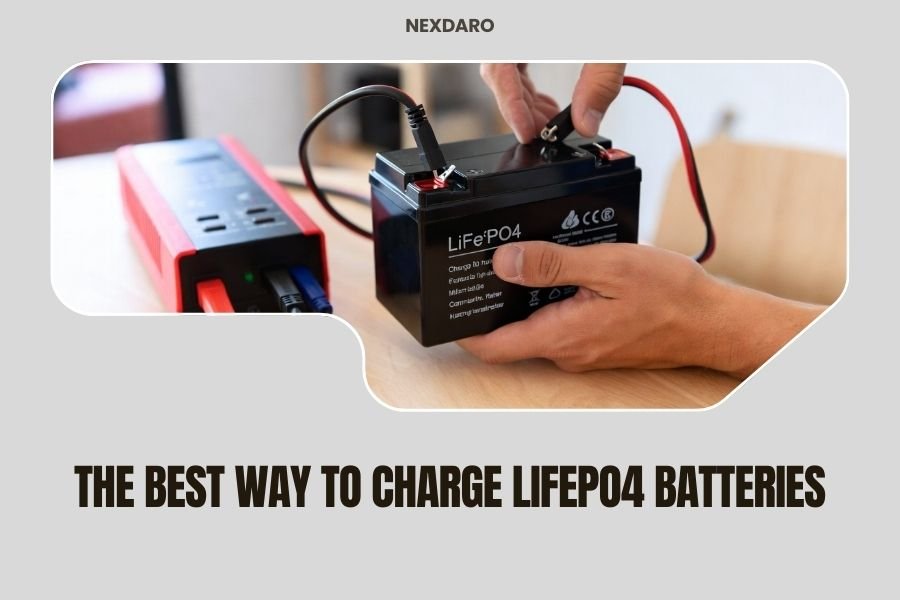
The best way to charge LiFePO4 batteries is using a dedicated LiFePO4 charger with the correct voltage and current settings for your specific battery capacity.
You should charge at a rate between 0.2C to 1C (20% to 100% of battery capacity) and stop charging when the battery reaches 14.6V for 12V systems.
Understanding LiFePO4 Battery Charging Basics
LiFePO4 batteries work differently than the old lead-acid batteries you might be used to. Think of them like a smartphone battery – they need the right charger to stay healthy and last longer.
These batteries use lithium iron phosphate chemistry. This makes them safer and longer-lasting than regular lithium batteries. But they still need proper care when charging.
Why LiFePO4 Batteries Need Special Charging
Your LiFePO4 battery has a narrow voltage range where it operates best. Too much voltage can damage the cells inside. Too little won’t fully charge it.
Regular lead-acid chargers often push 14.8V or higher. LiFePO4 batteries prefer 14.4V to 14.6V maximum. That small difference matters a lot over time.
Choosing the Right Charger for Your LiFePO4 Battery
Not all chargers work well with LiFePO4 batteries. You need one designed specifically for this chemistry. Generic chargers might work short-term but can cause problems later.
Dedicated LiFePO4 Chargers
These chargers understand exactly what your battery needs. They automatically adjust voltage and current throughout the charging process. Many experts recommend starting with a quality dedicated charger.
Look for chargers that list LiFePO4 or LFP in their specifications. They should mention the correct voltage range for your battery size.
Smart Chargers with LiFePO4 Settings
Some multi-chemistry chargers include LiFePO4 modes. These can work well if they have the right voltage settings. Always check the manual to make sure the LiFePO4 mode matches your battery specs.
Features to Look For
- Adjustable charging current
- Temperature compensation
- Automatic shutoff
- LED status indicators
- Reverse polarity protection
Determining the Correct Charging Rate
Charging rate affects how fast your battery charges and how long it lasts. The sweet spot for most LiFePO4 batteries sits between 0.2C and 1C.
What Does C-Rate Mean?
C-rate describes charging speed relative to battery capacity. A 100Ah battery charged at 0.5C gets 50 amps of charging current. At 1C, it gets 100 amps.
Most manufacturers suggest staying under 1C for daily charging. Higher rates work for emergencies but can reduce battery life over time.
Safe Charging Rates by Battery Size
| Battery Capacity | 0.2C Rate | 0.5C Rate | 1C Rate |
|---|---|---|---|
| 50Ah | 10A | 25A | 50A |
| 100Ah | 20A | 50A | 100A |
| 200Ah | 40A | 100A | 200A |
Temperature Effects on Charging Rate
Cold batteries charge slower and need lower current. Hot batteries can handle normal rates but might need cooling. Most LiFePO4 batteries work best between 32°F and 113°F.
Voltage Settings for Different LiFePO4 Systems
Your charging voltage depends on your battery configuration. Single cells need different voltage than battery banks.
12V LiFePO4 Battery Systems
A 12V LiFePO4 battery actually contains four cells in series. Each cell charges to 3.65V, making the total 14.6V maximum.
Set your charger between 14.2V and 14.6V. Many people use 14.4V as a good middle ground. This voltage fully charges the battery without stressing the cells.
24V and 48V Systems
24V systems need 28.8V maximum (14.4V × 2). 48V systems need 57.6V maximum (14.4V × 4). Always double-check your battery manual for exact specifications.
Float Voltage Considerations
LiFePO4 batteries don’t need float charging like lead-acid batteries. Once fully charged, disconnect the charger or set float voltage to 13.6V for 12V systems.
Step-by-Step Charging Process
Charging your LiFePO4 battery properly involves more than just plugging in a charger. Follow these steps for best results.
Pre-Charging Checks
Check battery temperature before starting. Cold batteries under 32°F shouldn’t be charged until they warm up. Hot batteries over 113°F need cooling first.
Look at battery voltage with a multimeter. Batteries under 10V might have protection circuits engaged. These need special wake-up procedures.
Connecting Your Charger
Always connect positive to positive and negative to negative. Double-check connections before turning on power. Wrong connections can damage both charger and battery.
Start with lower charging current if your charger allows adjustment. You can increase current once charging begins normally.
Monitoring the Charging Process
Watch voltage climb during the first hour. Normal batteries should reach 13V quickly. Slow voltage rise might indicate battery problems.
Current should stay steady until the battery nears full charge. Then current drops as voltage reaches maximum.
Common Charging Mistakes to Avoid
Many people make simple mistakes that can shorten battery life. Learning what not to do saves money and frustration.
Using the Wrong Charger Type
Lead-acid chargers often work short-term but cause long-term damage. They use equalization cycles and high voltages that LiFePO4 batteries don’t need.
Car alternators also present challenges. Most push 14.8V or higher, which can overcharge LiFePO4 cells. Consider a DC-DC charger designed for lithium batteries.
Charging Too Fast
Fast charging seems convenient but creates heat and stress. Your battery might accept 2C or 3C rates, but daily fast charging reduces lifespan.
Save fast charging for emergencies. Stick to 0.5C or slower for regular use.
Ignoring Temperature Limits
Charging frozen batteries can cause permanent damage. The electrolyte changes behavior at low temperatures. Wait for batteries to warm naturally or use gentle heating.
Troubleshooting Charging Problems
Sometimes your LiFePO4 battery won’t charge normally. Most problems have simple solutions once you understand what’s happening.
Battery Won’t Accept Charge
Built-in protection circuits might have activated. This happens when batteries sit discharged too long or experience over-discharge.
Try charging with very low current (0.1C) for several hours. Some chargers have wake-up modes for this situation.
Charging Stops Before Full
Your charger might think the battery is full when voltage reaches the set point. But current should drop to near zero for true full charge.
Check charger settings and make sure it’s designed for LiFePO4 chemistry. Some chargers need manual adjustment of termination current.
Slow Charging Issues
Cold temperatures slow chemical reactions inside batteries. Charging current automatically reduces to protect the cells.
Move batteries to warmer locations when possible. Insulation helps maintain temperature in cold weather.
Maintaining Your LiFePO4 Battery
Proper maintenance keeps your battery working well for many years. LiFePO4 batteries need less maintenance than lead-acid but still benefit from attention.
Regular Voltage Checks
Check battery voltage monthly when not in use. Healthy batteries should hold 13.2V to 13.4V when resting.
Voltage dropping below 12.8V suggests the battery needs charging soon. Don’t let it drop below 12V if possible.
Balancing Cell Voltages
Individual cells can drift apart over time. Some chargers include balancing features that equalize cell voltages during charging.
If your charger doesn’t balance, consider a separate battery management system. This helps ensure all cells charge and discharge evenly.
Conclusion
Charging LiFePO4 batteries correctly keeps them healthy and extends their working life. Use dedicated chargers with proper voltage settings between 14.2V and 14.6V for 12V systems. Keep charging rates between 0.2C and 1C for daily use.
Remember to check temperature before charging and avoid using old lead-acid chargers. With proper care, your LiFePO4 battery should provide reliable power for many years. The small investment in a good charger pays for itself through longer battery life and better performance.
Can I use a regular car charger on my LiFePO4 battery?
Most car chargers designed for lead-acid batteries use voltages too high for LiFePO4 cells. Look for chargers specifically labeled for lithium or LiFePO4 chemistry to avoid damage.
How often should I charge my LiFePO4 battery?
Charge when the battery drops to about 20% capacity (around 12.8V). Unlike lead-acid batteries, LiFePO4 cells don’t need to stay at 100% charge and can sit partially discharged without damage.
What happens if I overcharge my LiFePO4 battery?
Overcharging can trigger built-in protection circuits that disconnect the battery. Repeated overcharging may reduce capacity over time or cause permanent damage to individual cells.
Why does my LiFePO4 battery charge slowly in winter?
Cold temperatures slow the chemical reactions inside battery cells. Many LiFePO4 batteries have built-in protection that reduces charging current when temperatures drop below 32°F to prevent damage.
Do I need a battery management system with my LiFePO4 charger?
A BMS helps protect against overcharge, overdischarge, and balances individual cell voltages. While not always required, it adds an extra layer of protection that can extend battery life significantly.