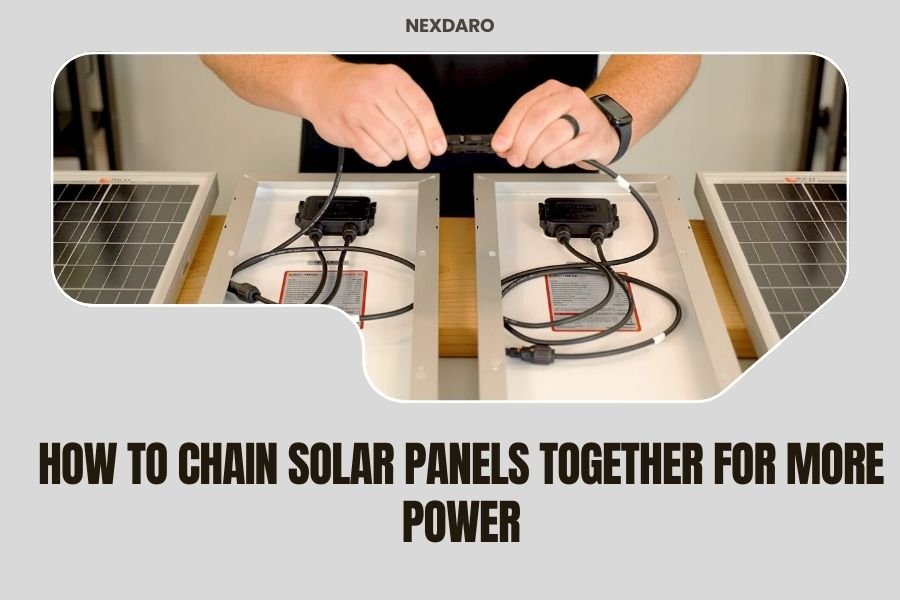
To chain solar panels together for more power, you connect them in series (increasing voltage) or parallel (increasing current) using MC4 connectors and proper gauge wire.
Series wiring adds up the voltage of each panel while keeping current the same, while parallel wiring adds up current while keeping voltage constant.
Understanding Solar Panel Chaining Basics
Chaining solar panels is like connecting batteries – you can wire them to get different results. The method you choose depends on what your power station or charge controller needs.
Think of it this way: if one solar panel gives you 100 watts, two panels can give you 200 watts. But the way you connect them changes how that power gets delivered.
What Does “Chaining” Actually Mean?
When we say “chain” solar panels, we mean connecting multiple panels to work as one bigger system. You’re not just setting panels next to each other – you’re electrically linking them.
This lets you collect more energy from the sun and charge your portable power station faster. It’s especially helpful when you’re camping or during power outages.
Two Ways to Chain Solar Panels
You have two main options when connecting panels: series and parallel. Each method gives you different results.
Series Connection: Adding Voltage
In series, you connect the positive terminal of one panel to the negative terminal of the next panel. This creates a chain where electricity flows through each panel in order.
Series connection adds up the voltage of each panel. If you have two 18-volt panels in series, you get 36 volts total. The current stays the same as a single panel.
When to Use Series Wiring
Series works best when your charge controller or power station needs higher voltage. Many MPPT charge controllers prefer higher voltage because they work more efficiently.
I found that series connections also work better with long wire runs. Higher voltage means less power loss over distance.
Parallel Connection: Adding Current
In parallel, you connect all positive terminals together and all negative terminals together. Each panel works independently but feeds into the same output.
Parallel connection adds up the current (amps) while keeping voltage the same. Two 5-amp panels in parallel give you 10 amps at the original voltage.
When to Use Parallel Wiring
Parallel works well when panels get uneven shade. If one panel gets covered, the others keep producing full power.
This method also matches lower-voltage systems better. Many 12-volt power stations prefer parallel-connected panels.
Tools and Materials You Need
Before you start chaining panels, gather the right equipment. Using cheap connectors or wrong wire sizes can create dangerous situations.
Essential Connectors
MC4 connectors are the standard for solar panels. They’re weatherproof and lock securely. Most panels come with short leads that have MC4 connectors attached.
You’ll need MC4 branch connectors for parallel connections. These let you combine multiple positive or negative leads into one output.
Proper Wire Selection
Wire gauge matters for safety and efficiency. Research shows that undersized wire can overheat and cause fires (National Electrical Code).
For most portable setups, 12 AWG wire handles up to 20 amps safely. Use 10 AWG for higher current or longer runs.
Wire Length Considerations
Longer wires mean more voltage drop. Keep connections as short as possible, especially with parallel setups that run lower voltage.
I found online that keeping wire runs under 25 feet works well for most camping setups. Beyond that, you start losing noticeable power.
Step-by-Step Series Connection Guide
Series connection is straightforward once you understand the flow. You’re creating one long electrical path through all your panels.
Planning Your Series Setup
First, check your charge controller’s maximum voltage rating. Add up your panel voltages to make sure you don’t exceed this limit.
Most panels produce about 18-22 volts. Three panels in series could hit 66 volts, which might be too much for some controllers.
Making the Connections
Start with your first panel’s positive lead. This stays disconnected – it becomes your system’s positive output.
Connect the first panel’s negative lead to the second panel’s positive lead using an MC4 extension cable. Repeat this pattern for additional panels.
The last panel’s negative lead becomes your system’s negative output. Now you have two leads going to your charge controller.
Step-by-Step Parallel Connection Guide
Parallel connections need branch connectors to combine multiple wires safely. Don’t just twist wires together – this creates weak points.
Setting Up Parallel Wiring
Use MC4 branch connectors (also called Y-connectors) to join your positive leads. These connectors have multiple inputs and one output.
Connect all your positive panel leads to one branch connector. Do the same with all negative leads using another branch connector.
Managing Multiple Panels
For more than three panels, you might need larger branch connectors or multiple smaller ones chained together.
Keep your parallel runs organized. Label positive and negative clearly to avoid confusion later.
Series vs Parallel Comparison
| Factor | Series Connection | Parallel Connection |
|---|---|---|
| Voltage Output | Adds up panel voltages | Same as single panel |
| Current Output | Same as single panel | Adds up panel currents |
| Shade Tolerance | Poor – one shaded panel affects all | Good – panels work independently |
| Wire Requirements | Simple – fewer connections | Complex – needs branch connectors |
Safety Tips for Solar Panel Chaining
Solar panels produce electricity whenever light hits them. You can’t turn them off like household circuits.
Working with Live Circuits
Cover panels with blankets or work in low light when possible. Even indoor lighting can make panels produce some voltage.
Wear insulated gloves and use insulated tools. Keep one hand in your pocket when working to avoid creating a path across your heart.
Avoiding Common Mistakes
Never mix different panel types in series. Mismatched panels create hot spots and reduce overall output.
Don’t exceed your charge controller’s voltage or current ratings. Check these limits before adding more panels.
Troubleshooting Connection Problems
Sometimes your chained panels won’t produce the power you expect. Here’s how to track down issues.
Testing Your Connections
Use a multimeter to check voltage at each connection point. Series connections should show increasing voltage as you move down the chain.
Parallel connections should show the same voltage at each branch but increasing current when you add panels.
Finding Weak Links
Loose MC4 connections cause problems. These connectors should click firmly into place and resist pulling apart.
Water in connections creates corrosion over time. Make sure all connections stay dry or use proper weatherproof enclosures.
Maximizing Your Chained Panel Performance
Getting the connections right is just the start. Panel placement and maintenance keep your system running well.
Optimal Panel Positioning
Point all panels in the same direction for best results. Mixing orientations creates mismatched power production.
Keep panels clean and free of debris. Even small amounts of dirt can reduce output by 10-15% from what I read online.
Monitoring System Performance
Many charge controllers show real-time power production. Watch these numbers to spot problems early.
Keep a simple log of daily power production. This helps you notice when performance drops over time.
Conclusion
Chaining solar panels together multiplies your power generation and charges your portable power station faster. Series connections work well when you need higher voltage, while parallel connections give you more current and better shade tolerance.
The key is matching your connection method to your equipment’s needs and following safety practices. With proper MC4 connectors and correctly sized wire, you can build a reliable solar system that serves you for years. Start small with two panels to learn the process, then expand your setup as your power needs grow.
Can I mix different wattage solar panels when chaining them together?
You can mix different wattage panels, but they should have similar voltage ratings. In series, the lowest current panel limits the whole string. In parallel, mismatched voltages can cause issues, so stick with panels that have the same voltage output.
How many solar panels can I chain together safely?
The limit depends on your charge controller’s maximum voltage and current ratings. For series, add up panel voltages and stay under your controller’s voltage limit. For parallel, add up the currents and stay under the current limit. Most portable setups work well with 2-4 panels.
Do I need special fuses when chaining multiple solar panels?
Parallel connections benefit from fuses on each panel to prevent reverse current flow if one panel fails. Series connections typically don’t need individual fuses since current flows through all panels equally. Always check your charge controller’s recommendations.
Will chaining solar panels work with any portable power station?
Most modern portable power stations accept chained solar panels, but check the input voltage and current limits first. Some smaller units only handle 12V input, while others accept up to 60V or more. Match your panel configuration to these specifications.
What happens if one panel gets damaged in a chained setup?
In series wiring, one damaged panel can stop power production from the entire string. In parallel wiring, other panels continue working normally even if one fails. This is why parallel connections offer better reliability for critical applications.