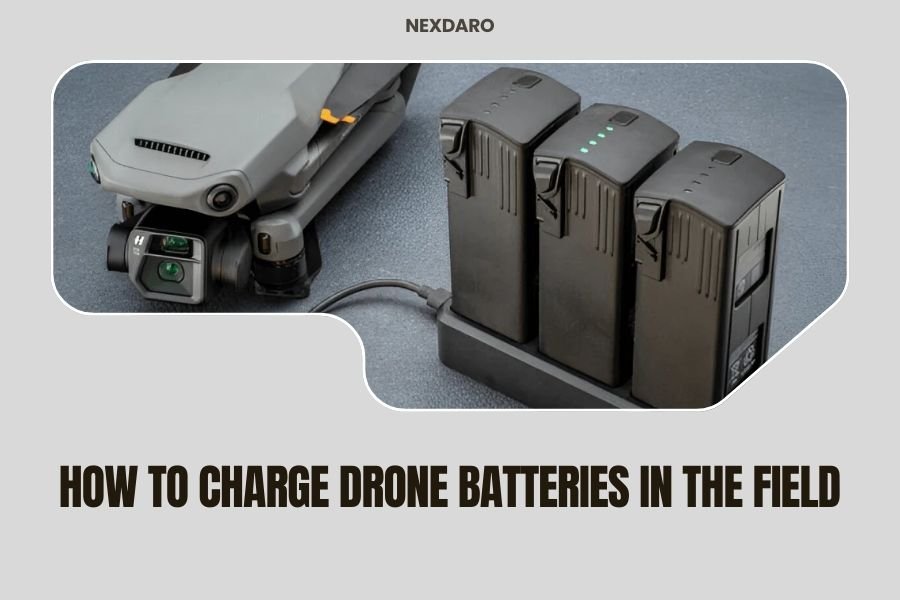
You can charge drone batteries in the field using portable power stations, power banks, car chargers, or solar panels designed for drone batteries.
The best method depends on your drone model and how long you’ll be away from traditional power sources.
Running out of battery power during a drone flight can ruin your entire outdoor adventure. Whether you’re capturing mountain landscapes or filming a beach vacation, dead batteries mean missed opportunities.
I’ve researched the most reliable ways to keep your drone powered up when you’re miles from the nearest outlet. Let me walk you through practical solutions that actually work in real-world conditions.
Why Field Charging Matters for Drone Pilots
Most drone batteries last 20-30 minutes per flight. That’s barely enough time to get the shots you want.
Professional photographers and hobbyists face the same problem. You need multiple batteries or a way to recharge quickly between flights.
Traditional wall chargers won’t help when you’re camping or hiking. You need portable solutions that work anywhere.
Best Portable Power Sources for Drone Batteries
Portable Power Stations
Power stations are your most reliable option for field charging. They provide AC outlets just like home power.
Most drone chargers plug directly into these stations. No adapters needed. No compatibility issues.
Look for stations with at least 300Wh capacity. This gives you 5-8 full battery charges for most consumer drones.
Power Station Benefits
- Works with any drone charger
- Charges multiple batteries simultaneously
- Powers other gear like cameras and phones
- Long-lasting lithium batteries
High-Capacity Power Banks
Power banks offer a lighter alternative to power stations. They’re perfect for day trips and short adventures.
You’ll need banks with USB-C PD (Power Delivery) or specific drone charging ports. Regular USB won’t work for most drone batteries.
Capacity matters here too. Look for 20,000mAh or higher for multiple charges.
Power Bank Considerations
- Check voltage compatibility with your drone
- Verify connector types match
- Consider charging speed limitations
- Weight vs capacity trade-offs
Vehicle-Based Charging Solutions
12V Car Chargers
Many drone manufacturers make 12V car chargers. These plug into your vehicle’s cigarette lighter port.
Car charging works great for road trips and RV adventures. Your vehicle becomes a mobile charging station.
Just remember that car charging drains your vehicle battery. Don’t charge with the engine off for extended periods.
Inverters for Standard Chargers
Power inverters convert 12V DC to 120V AC power. This lets you use your regular wall charger in your car.
Choose pure sine wave inverters for sensitive electronics. Modified sine wave can damage some chargers.
Size your inverter properly. Most drone chargers need 100-200 watts.
Solar Charging Systems
Portable Solar Panels
Solar panels provide unlimited power as long as the sun shines. They’re perfect for extended backcountry trips.
You’ll need panels that output enough power for your drone charger. Most need 60-100 watts minimum.
Foldable panels balance portability with power output. Rigid panels are more efficient but harder to transport.
Solar Setup Requirements
- Direct sunlight for best performance
- Charge controller to prevent overcharging
- Battery bank for power storage
- Weather protection for panels
Solar Power Limitations
Solar charging isn’t instant. You need patience and planning.
Cloudy weather reduces output dramatically. Have backup power sources ready.
Panel angle and positioning affect efficiency. Expect to adjust throughout the day.
Choosing the Right Charging Method
Match Your Adventure Type
Day trips work fine with power banks. Weekend camping needs power stations or car charging.
Extended backcountry adventures require solar systems with battery storage.
Consider your transportation method too. Backpackers need lightweight solutions. Car campers can carry heavier gear.
Know Your Power Needs
Calculate how many battery charges you need per day. Most pilots want 3-5 full charges for serious photography work.
Factor in charging time between flights. Some chargers take 90 minutes per battery.
Don’t forget about other devices. Phones, cameras, and tablets also need power.
Specific Drone Brand Solutions
DJI Drone Charging
DJI makes car chargers for most popular models. They’re reliable but expensive.
Third-party options exist but check compatibility carefully. Wrong voltage can damage expensive batteries.
DJI’s charging hubs work well with power stations. They charge multiple batteries in sequence.
DJI Charging Tips
- Use DJI or certified chargers only
- Avoid cheap knockoff chargers
- Monitor charging temperature
- Don’t leave batteries unattended while charging
Other Brand Considerations
Autel, Skydio, and Parrot have different charging requirements. Research your specific model’s needs.
Universal chargers exist but may charge slowly or incompletely.
When in doubt, stick with manufacturer-approved charging solutions.
Safety Considerations for Field Charging
Battery Care in Extreme Conditions
Lithium batteries don’t like extreme temperatures. Cold weather reduces capacity. Heat can cause damage.
Store batteries at moderate temperatures when possible. Warm them gradually before charging in cold conditions.
Never charge wet or damaged batteries. This creates fire and explosion risks.
Fire Safety Precautions
Charge batteries on fireproof surfaces. Metal trays or sand work well.
Keep charged batteries away from flammable materials. Store them in metal containers when traveling.
Have a plan for battery fires. Water won’t work on lithium fires. Sand or fire extinguishers designed for electrical fires are better.
Maximizing Charging Efficiency
Smart Power Management
Charge batteries during downtime. Set them up while you eat lunch or set up camp.
Use battery rotation systems. Charge depleted batteries while flying with fresh ones.
Monitor charging progress with timers or apps. Don’t waste power on overcharging.
Environmental Factors
Altitude affects battery performance. Expect reduced capacity and longer charging times at high elevations.
Humidity can cause condensation in charging ports. Keep equipment dry and well-ventilated.
Wind and dust can damage sensitive electronics. Use protective covers when charging outdoors.
Budget-Friendly Charging Solutions
DIY Charging Systems
Build simple systems with deep cycle batteries and inverters. This costs less than commercial power stations.
Use marine batteries designed for deep discharge cycles. Car batteries aren’t suitable for this application.
Add a battery monitor to prevent over-discharge damage.
Multi-Purpose Equipment
Choose power sources that serve multiple needs. Power stations can run lights, fans, and other camping gear.
Solar panels can charge phones and cameras too. Get maximum value from your investment.
Look for modular systems you can expand later. Start small and add capacity as needed.
Planning Your Charging Strategy
Pre-Trip Preparation
Test all charging equipment at home first. Don’t discover problems in the field.
Calculate power consumption for your entire trip. Include safety margins for unexpected needs.
Check weather forecasts if using solar power. Plan alternative charging methods for cloudy days.
Pack Smart
Organize charging cables and adapters in labeled bags. Tangled cables waste precious time.
Bring backup fuses for car chargers and inverters. These components fail unexpectedly.
Pack batteries partially charged for travel safety. Full charges increase fire risk during transport.
Troubleshooting Common Issues
Charging Problems
Slow charging usually means insufficient power supply. Check your power source capacity and connections.
No charging at all suggests compatibility issues. Verify voltage and connector specifications.
Overheating during charging indicates poor ventilation or defective equipment. Stop charging immediately.
Power Source Failures
Dead power banks need pre-charging before trips. Solar panels take time to replenish depleted power banks.
Car charging problems often trace to blown fuses or poor connections. Carry spare fuses and clean connection points regularly.
Power station failures require manufacturer support. Always bring backup charging methods for critical trips.
Conclusion
Charging drone batteries in the field doesn’t have to limit your adventures. With the right equipment and planning, you can keep flying all day long.
Choose your charging method based on trip length, transportation, and power needs. Power stations work best for most situations. Solar systems excel for extended backcountry trips. Power banks suit day adventures perfectly.
Safety comes first with lithium batteries. Use proper chargers, monitor temperatures, and have fire safety plans ready.
Test everything at home before heading out. Nothing ruins a trip like discovering your charging setup doesn’t work when you need it most.
How long does it take to charge a drone battery with a portable power station?
Most drone batteries charge in 60-90 minutes using a portable power station with the original charger. Charging time depends on battery capacity and charger output power.
Can I charge multiple drone batteries at once in the field?
Yes, you can charge multiple batteries simultaneously using charging hubs or multiple chargers connected to a high-capacity power station. Make sure your power source has enough wattage for all chargers combined.
Will cold weather affect my field charging setup?
Cold temperatures reduce battery capacity and slow charging speeds. Keep batteries and charging equipment warm when possible, and allow extra time for charging in freezing conditions.
What’s the minimum solar panel size needed to charge drone batteries?
You need at least 60-100 watts of solar panels to effectively charge most consumer drone batteries. Larger panels charge faster and work better in partly cloudy conditions.
Is it safe to leave drone batteries charging overnight while camping?
It’s not recommended to leave lithium drone batteries charging unattended overnight. Set timers, use chargers with automatic shutoff, or monitor charging progress to prevent overcharging and reduce fire risk.