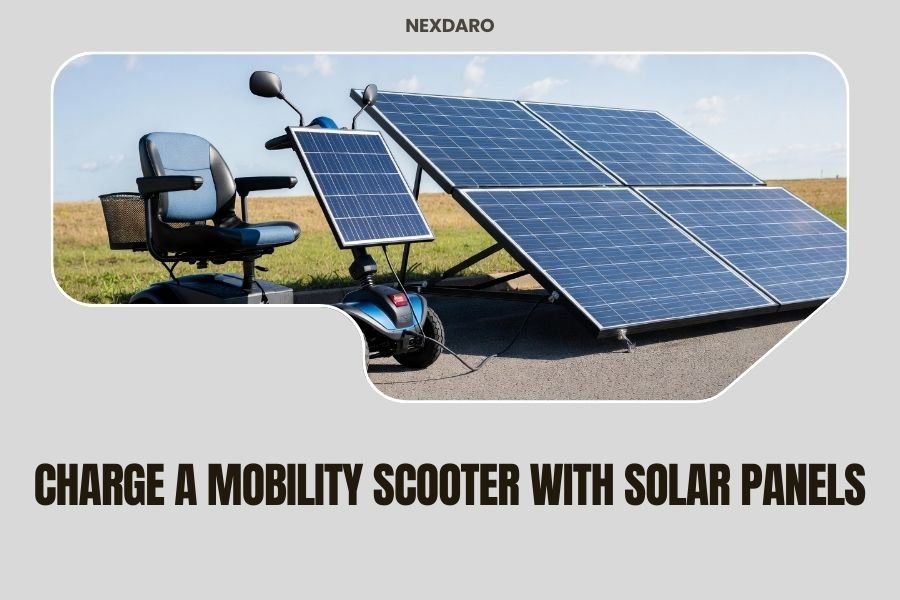
Yes, you can charge a mobility scooter with solar panels by using a portable power station as an intermediary device to convert and store the solar energy.
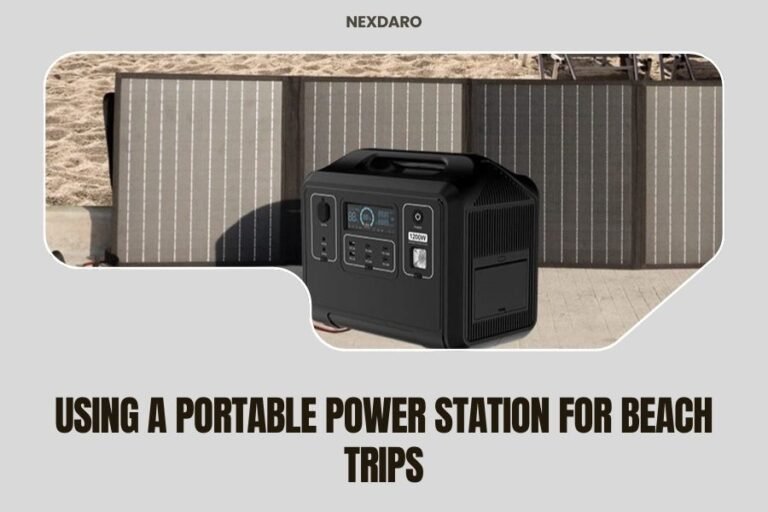
Solar panels generate DC power that gets stored in a power station battery, which then provides the correct voltage and charging profile your mobility scooter needs.
How Solar Charging Works for Mobility Scooters
Your mobility scooter can’t connect directly to solar panels. Think of it like trying to drink from a fire hose – the power flow isn’t compatible.
Solar panels produce variable DC power that changes with sunlight conditions. Your scooter needs steady, regulated power at the right voltage. A portable power station acts as the middleman, converting and storing solar energy in a usable form.
The Three-Step Process
Solar energy flows through a simple chain. First, panels collect sunlight and convert it to electricity. Next, this power charges your portable power station’s internal battery. Finally, you plug your scooter’s regular charger into the power station.
What Equipment You Need
Getting started requires three main components. You don’t need to become an electrical engineer, but choosing the right gear matters.
Solar Panels
Most mobility scooters need 100 to 400 watts of solar panels for reliable charging. Portable folding panels work great because you can position them for maximum sun exposure.
I found that rigid panels produce more power per square foot. But folding panels give you flexibility to chase the sun throughout the day.
Portable Power Station
Your power station needs enough capacity to fully charge your scooter. Most mobility scooter batteries hold 12Ah to 75Ah of energy.
Look for a power station with at least 500Wh capacity. Better yet, aim for 1000Wh or more if you want multiple charges or backup power.
Key Power Station Features
- Multiple AC outlets for your scooter charger
- Solar input capability (MPPT controller preferred)
- Display showing battery level and power usage
- Pure sine wave inverter (protects sensitive electronics)
Charging Cables
You’ll use your scooter’s original wall charger. Just plug it into the power station instead of the wall. This keeps everything simple and safe.
Calculating Your Solar Power Needs
Math helps you avoid buying too little or too much equipment. Don’t worry – the calculations are pretty straightforward.
Find Your Scooter’s Power Requirements
Check your scooter’s manual or battery label. Most use 12V, 24V, or 36V systems. Battery capacity appears as amp-hours (Ah).
A typical example: 24V system with 20Ah batteries needs 480 watt-hours (24V × 20Ah = 480Wh) for a full charge.
Account for Charging Losses
Every energy conversion loses some power as heat. Plan for about 20% losses through the system.
Using our example: 480Wh ÷ 0.8 = 600Wh needed from your power station.
Daily Solar Generation
Solar panels produce peak power only in perfect conditions. In reality, you get 4-6 hours of good solar production per day.
A 100W panel generates roughly 400-600Wh daily in good conditions. Scale up based on your needs.
Best Solar Panel Options
Different panel types work better in different situations. Your choice depends on portability needs and budget.
Portable Folding Panels
These panels fold into a briefcase-like package. Perfect for camping or temporary setups. Most range from 100W to 400W capacity.
The main advantage? You can easily reposition them as the sun moves. This boosts daily power collection by 20-30%.
Flexible Panels
Thin, bendable panels work great on curved surfaces. They’re lighter but typically less efficient than rigid panels.
I found these work well when weight matters more than maximum power output.
Rigid Panels
Traditional solar panels offer the best efficiency and durability. They’re heavier but produce more power per dollar spent.
Charging Time Expectations
Solar charging takes longer than plugging into the wall. Planning ahead makes the difference between success and frustration.
Full Sun Conditions
With adequate solar panels and good sunlight, expect 6-8 hours to fully charge most mobility scooter batteries.
Smaller scooters with 12V batteries charge faster. Larger units with high-capacity battery packs need more time.
Partial Sun and Cloudy Days
Clouds reduce solar output by 50-80%. Light overcast drops power by about half. Heavy clouds make charging very slow.
Plan for 2-3 days to complete charging in poor weather conditions.
Cost Analysis
Solar charging systems require upfront investment but can save money over time, especially for frequent users.
| Component | Price Range | Capacity |
|---|---|---|
| 200W Solar Panel | $200-400 | 800-1200Wh daily |
| 1000Wh Power Station | $800-1200 | 2-4 scooter charges |
| Cables & Accessories | $50-100 | N/A |
Break-Even Timeline
If you regularly pay for campground electricity or avoid places without power, solar pays for itself in 2-4 years of active use.
Safety Considerations
Solar power is generally safe, but following basic precautions prevents problems.
Electrical Safety
Always use your scooter’s original charger through the power station. Don’t try to wire direct connections – this can damage expensive batteries.
Keep connections dry and secure. Water and electricity don’t mix, even in low-voltage DC systems.
Battery Care
Don’t let your scooter batteries completely drain before solar charging. Deep discharge can permanently damage lead-acid batteries.
Charge when batteries reach 20-30% capacity remaining for longest battery life.
Weather and Environmental Factors
Real-world conditions affect solar charging more than you might expect.
Temperature Effects
Solar panels work better in cool, bright conditions. Hot summer days actually reduce panel efficiency by 10-15%.
Cold weather slows battery charging but doesn’t hurt solar production. Keep power stations from freezing.
Seasonal Changes
Winter sun is weaker and lower in the sky. You might need 50% more solar panels for reliable winter charging.
Summer provides abundant power. You might generate excess energy for other devices.
Practical Tips for Success
Small details make the difference between solar frustration and solar success.
Panel Positioning
Face panels directly toward the sun for maximum power. Even 30 degrees off reduces output by 15-20%.
Tilt panels to match your latitude angle. Steeper angles work better in winter, flatter in summer.
Monitoring Power Flow
Watch your power station’s display to learn how conditions affect charging. This helps you plan better.
Morning and evening provide much less power than midday hours. Focus charging during peak sun times.
Alternative Solutions
Solar isn’t the only way to charge mobility scooters away from home outlets.
Vehicle Charging
Your car or RV can charge mobility scooters through 12V outlets or inverters. This works regardless of weather.
Vehicle charging is faster but uses fuel. Solar is slower but free after initial equipment costs.
Backup Generator
Small generators provide reliable power but create noise and emissions. They work in any weather.
Conclusion
Charging your mobility scooter with solar panels is absolutely possible with the right equipment setup. You need solar panels, a portable power station, and your scooter’s original charger to make it work safely.
The system requires upfront investment but provides freedom to travel and explore without worrying about finding electrical outlets. Solar charging works best when you plan ahead, understand your power needs, and choose quality equipment sized for your specific scooter.
Start with a 200W solar panel and 1000Wh power station for most mobility scooters. This combination provides reliable charging in good weather and enough backup power for cloudy days.
Can I connect solar panels directly to my mobility scooter?
No, you should never connect solar panels directly to your mobility scooter. Solar panels produce variable voltage that can damage your scooter’s batteries and electrical system. Always use a portable power station or charge controller as an intermediary device to regulate the power flow safely.
How long do mobility scooter batteries last with solar charging?
Solar charging can actually extend battery life compared to frequent deep discharging. Proper solar charging maintains optimal battery voltage and prevents the deep discharge cycles that damage lead-acid batteries. Most mobility scooter batteries last 2-4 years with good maintenance regardless of charging method.
What happens if it’s cloudy for several days?
Your power station stores energy for cloudy periods, but several days without sun will drain the battery. Plan ahead by fully charging your power station and scooter before bad weather. Consider bringing a backup charging method like a small generator or vehicle inverter for extended cloudy periods.
Can I use my mobility scooter while the solar system is charging?
Yes, you can use your scooter while the solar panels charge your power station. Just don’t charge the scooter battery while riding – this requires the scooter to be stationary. The solar system continues collecting energy during the day whether you’re charging the scooter or not.
Will solar panels work in winter or cold climates?
Solar panels actually work more efficiently in cold temperatures, but winter has shorter days and weaker sun angles. You’ll need about 50% more solar panel capacity to generate the same power as summer conditions. Keep your power station from freezing, as most lithium batteries stop working below 32°F.