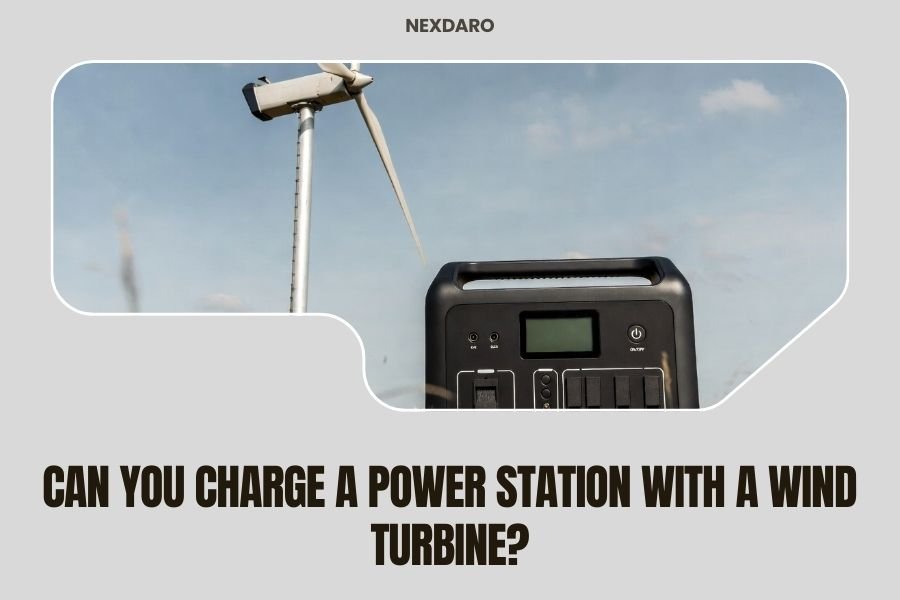
Yes, you can charge a power station with a wind turbine, but you’ll need the right equipment and conditions to make it work effectively.
Wind turbines can power your portable power station through a charge controller and proper voltage matching, though wind speed consistency affects charging reliability.
How Wind Turbine Charging Actually Works
Wind turbines generate electricity when moving air spins their blades. This rotation creates alternating current (AC) power that needs conversion to direct current (DC) for your power station.
Think of it like a bicycle dynamo. The faster you pedal, the brighter your light gets. Wind turbines work the same way – more wind means more power output.
The Basic Setup You Need
Your wind charging system requires several components working together. You can’t just plug a turbine directly into your power station.
- A small wind turbine (typically 400-1000 watts)
- A charge controller to regulate power flow
- Proper cables and connectors
- A stable mounting system
Voltage Requirements Matter
Most portable power stations accept 12V or 24V DC input. Your wind turbine output must match these requirements.
I found that mismatched voltages can damage your equipment or prevent charging entirely. Always check your power station’s input specifications first.
Types of Wind Turbines for Power Stations
Horizontal Axis Wind Turbines
These look like miniature versions of commercial wind farms. They’re the most common type for portable applications.
Horizontal turbines typically start generating power at wind speeds around 7-9 mph. They work best in steady, consistent wind conditions.
Pros of Horizontal Turbines
- Higher efficiency in steady winds
- More power output per dollar spent
- Widely available with good support
Cons of Horizontal Turbines
- Need consistent wind direction
- Can be noisy in high winds
- Require more setup time
Vertical Axis Wind Turbines
These turbines spin around a vertical shaft. They look different but can work well for camping and RV use.
Vertical turbines handle changing wind directions better than horizontal ones. They’re often quieter too.
Benefits of Vertical Design
- Work in turbulent wind conditions
- Quieter operation
- Easier to maintain and transport
Drawbacks to Consider
- Lower efficiency than horizontal types
- More expensive per watt generated
- Limited power output options
Power Output Expectations
Real-World Performance Numbers
Small wind turbines rarely produce their rated power output. A 400-watt turbine might only generate 100-200 watts in typical conditions.
Wind speed makes a huge difference. Power output increases dramatically with wind speed – doubling wind speed can quadruple power output.
| Wind Speed (mph) | Typical Power Output | Charging Capability |
|---|---|---|
| 5-10 | 20-50 watts | Minimal charging |
| 10-15 | 80-150 watts | Steady low charging |
| 15-25 | 200-400 watts | Good charging rate |
| 25+ | 400+ watts | Maximum output |
Charging Time Calculations
Let’s say you have a 1000Wh power station and a 400-watt wind turbine. In 15 mph winds, you might get 200 watts actual output.
At that rate, fully charging your empty power station would take about 5 hours. But wind rarely stays constant, so expect longer charging times.
Equipment You’ll Need
Charge Controllers Explained
A charge controller protects your power station from voltage spikes and regulates power flow. It’s like a traffic cop for electricity.
MPPT (Maximum Power Point Tracking) controllers work best with wind turbines. They extract more power than basic PWM controllers.
Controller Sizing Guidelines
Your charge controller should handle 125% of your turbine’s maximum output. This safety margin prevents damage during wind gusts.
For a 400-watt turbine, use at least a 500-watt charge controller. I found this prevents most overload issues.
Wiring and Safety Components
Use marine-grade wiring for outdoor wind setups. Regular household wire won’t handle weather exposure and vibration.
Install fuses or circuit breakers between components. They’re your safety net if something goes wrong.
Essential Safety Items
- Inline fuses rated for your system voltage
- Weatherproof connectors and junction boxes
- Grounding equipment for safety
- Emergency turbine brake or shutdown switch
Best Locations for Wind Charging
Wind Assessment Basics
Not every location has enough wind for effective charging. You need consistent winds above 10 mph for decent power generation.
Coastal areas, open plains, and mountain ridges typically have the best wind resources. Forested areas and cities usually don’t.
Measuring Your Wind Resource
Spend a few days measuring wind speed at your planned location. A simple handheld anemometer costs under $30 and gives useful data.
Wind speed varies significantly with height. Adding just 10 feet of tower height can increase power output by 20-30%.
Seasonal Wind Patterns
Wind patterns change throughout the year. Spring and fall often have the strongest and most consistent winds.
Summer can be disappointingly calm in many areas. Winter winds might be strong but come with ice and storm challenges.
Combining Wind with Other Charging Methods
Hybrid Solar and Wind Systems
Many people combine wind turbines with solar panels for more reliable charging. When the sun isn’t shining, wind might be blowing.
This hybrid approach reduces your dependence on any single power source. It’s like having backup for your backup.
System Integration Tips
Use a charge controller that handles both solar and wind inputs. These dual-input controllers simplify your setup.
Size your system so wind and solar together don’t exceed your power station’s maximum input rating.
Adding Generator Backup
For critical power needs, keep a small generator as backup. Wind and solar are great but not always reliable.
A 1000-watt inverter generator can quickly top off your power station when renewable sources fall short.
Common Challenges and Solutions
Intermittent Wind Issues
Wind comes and goes unpredictably. Your charging rate will vary constantly throughout the day.
Power stations handle this variation well, but don’t expect the steady charging you get from wall outlets or generators.
Managing Power Fluctuations
Quality charge controllers smooth out most power fluctuations. They store energy briefly and release it steadily to your power station.
Avoid cheap charge controllers that don’t handle fluctuating input well. They can damage your equipment over time.
Noise and Vibration Problems
Wind turbines can get noisy, especially in strong winds. This matters if you’re camping near other people.
Proper mounting and balancing reduce noise and vibration. Cheap turbines tend to be much noisier than quality units.
Noise Reduction Strategies
- Choose turbines with noise ratings under 45 dB
- Use vibration-dampening mounts
- Position turbines away from sleeping areas
- Consider vertical turbines for quieter operation
Cost Analysis and Payback
Initial Investment Breakdown
A basic wind charging setup costs $300-800 depending on turbine size and quality. This includes the turbine, controller, and mounting hardware.
Compare this to solar panels, which often provide more predictable power for similar money in most locations.
Ongoing Costs to Consider
Wind turbines need more maintenance than solar panels. Moving parts wear out and need replacement or repair.
Budget for bearing replacement, blade repair, and controller replacement over 5-10 years of use.
When Wind Makes Financial Sense
Wind charging works best financially in consistently windy areas where solar is limited. Think cloudy, windy coastal regions.
For most people, solar panels provide better value. But wind can be worth it if you have great wind resources.
Installation and Setup Guide
Site Preparation Steps
Choose your turbine location carefully. You want steady wind flow without nearby obstructions like trees or buildings.
Mark underground utilities before digging. Most areas require this by law, and it prevents dangerous accidents.
Foundation Requirements
Small turbines need solid foundations to handle wind loads safely. Concrete footings work best for permanent installations.
For portable setups, use heavy ground anchors or sandbag weights. Never underestimate the forces involved.
Electrical Connections
Connect your turbine to the charge controller first, then the controller to your power station. This order prevents damage from voltage spikes.
Use weatherproof connections for all outdoor wiring. Water and electricity don’t mix well.
Testing Your System
Test everything in light winds first. Check that your charge controller shows proper input voltage and current.
Watch your power station’s display to confirm it’s receiving charge. Most units show charging status and input power.
Maintenance and Troubleshooting
Regular Maintenance Tasks
Inspect your turbine monthly for loose bolts, damaged blades, or worn bearings. Catch problems early to prevent expensive repairs.
Clean your turbine periodically. Dirt and debris on blades reduce efficiency significantly.
Seasonal Maintenance Schedule
Before winter, check all bolts and guy wires. Cold weather and ice loads stress everything more.
After storms, inspect for damage before running your turbine again. A damaged blade can destroy the entire unit.
Common Problems and Fixes
Low power output usually means insufficient wind or a dirty turbine. Clean the blades and check wind speed first.
No power output often indicates controller problems or loose connections. Check all wiring and fuses.
When to Call for Help
If your turbine makes unusual noises or vibrates excessively, stop using it immediately. These symptoms often indicate bearing failure.
Electrical problems beyond basic troubleshooting should be handled by qualified technicians. Don’t risk electrocution or fire.
Conclusion
Charging your power station with a wind turbine is definitely possible, but it requires the right conditions and equipment. You’ll need consistent winds above 10 mph, a properly sized charge controller, and realistic expectations about power output.
Wind turbines work best as part of a hybrid system with solar panels or as backup charging in consistently windy locations. They’re not usually the most cost-effective primary charging method, but they can provide valuable power when other sources aren’t available.
Consider your local wind resources, budget, and power needs carefully before investing in wind charging equipment. In the right situation, it can be a great addition to your portable power setup.
Can small wind turbines damage my power station?
Properly installed wind turbines with appropriate charge controllers won’t damage your power station. The charge controller regulates voltage and current to safe levels. Without a charge controller, voltage spikes from wind gusts could damage your equipment.
How much wind do I need for effective charging?
You need sustained winds of at least 10-12 mph for meaningful charging rates. Most small turbines start generating power around 7 mph but produce very little until wind speeds reach 12-15 mph consistently.
Are wind turbines louder than generators?
Quality small wind turbines typically produce 35-45 dB of noise, which is much quieter than most generators. Cheap turbines can be significantly louder, especially in strong winds. Vertical axis turbines tend to be quieter than horizontal ones.
Can I use a car alternator as a wind turbine?
While possible, car alternators make poor wind turbines because they need high RPM to generate power and aren’t designed for continuous outdoor use. Purpose-built small wind turbines are much more effective and reliable for charging power stations.
Do I need permits for small wind turbines?
Permit requirements vary by location and turbine size. Many areas don’t require permits for small portable turbines under 10 feet tall, but permanent installations often need permits and may face zoning restrictions. Check with your local building department before installation.