Converting a gas generator to solar power isn’t technically possible since they operate on completely different energy systems – gas generators burn fuel while solar systems convert sunlight through photovoltaic panels.
You can replace your gas generator with a solar power station or create a hybrid system that combines both technologies for reliable backup power.
Why Direct Conversion Won’t Work
Think of trying to convert a car engine to run on electricity. The fundamental mechanics are just too different. Gas generators use internal combustion engines that burn fuel to create mechanical energy, which then produces electricity through an alternator.
Solar systems work through photovoltaic cells that directly convert sunlight into electrical energy. There’s no combustion, no moving engine parts, and no fuel burning involved.
Core System Differences
Your gas generator relies on several components that solar systems don’t use at all. The engine block, carburetor, spark plugs, and fuel tank become useless in a solar setup.
Solar power needs batteries, charge controllers, and inverters – none of which exist in your gas generator. It’s like trying to use fish parts to build a bird. Wrong components entirely.
What You Can Actually Do Instead
Don’t worry though. You have several smart options that might work even better than converting your existing generator.
Replace with a Solar Generator
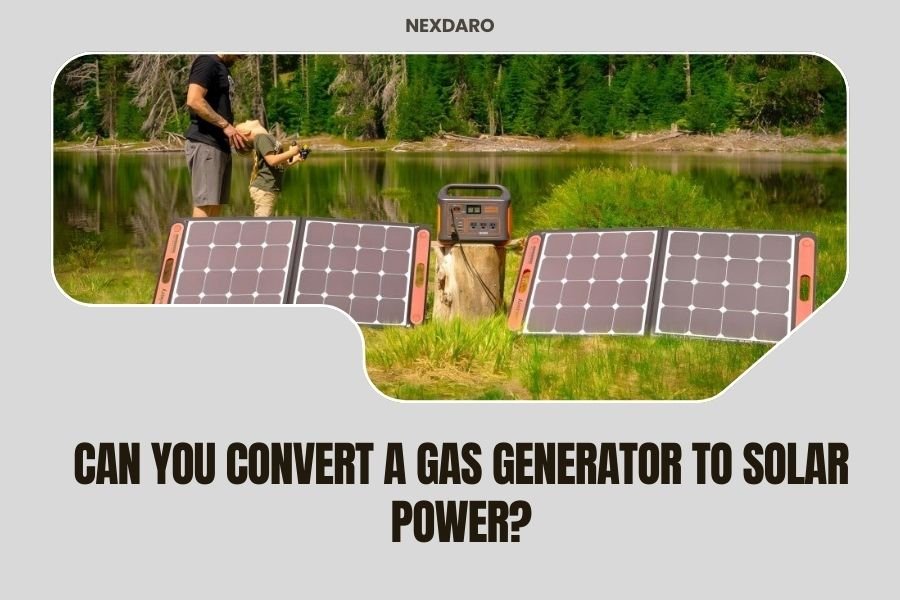
Solar generators (more accurately called portable power stations) give you clean, quiet power without any conversion hassles. They’re basically large batteries with built-in inverters and charging capabilities.
These units can power most of the same devices your gas generator handles. You just plug them into solar panels during the day and use stored power whenever needed.
Size Comparison Guide
Research shows that a 1000-watt solar generator can replace a small 2000-watt gas generator for most home backup needs (Department of Energy). The solar unit runs longer on stored power than gas generators run on a single tank.
| Gas Generator | Solar Equivalent | Runtime Comparison |
|---|---|---|
| 2000W Gas | 1000Wh Solar | 6-8 hours both |
| 3500W Gas | 2000Wh Solar | 8-10 hours both |
| 5000W Gas | 3000Wh Solar | 10-12 hours both |
Create a Hybrid Power System
Keep your gas generator and add solar components alongside it. This gives you the best of both worlds – clean solar power most of the time, with gas backup during emergencies.
Many RV owners and off-grid homeowners use this approach. Solar handles daily power needs while the gas generator kicks in during bad weather or high-demand situations.
Hybrid System Components
- Solar panels for daily charging
- Battery bank for power storage
- Charge controller to manage charging
- Transfer switch to alternate between sources
- Your existing gas generator as backup
Solar Power Station Benefits
I found that solar generators offer several advantages over gas generators that might surprise you.
Zero Operating Costs
Once you buy the solar setup, sunlight is free. No more trips to the gas station or storing fuel cans in your garage.
Gas generators typically cost $0.50 to $2.00 per hour to run, depending on fuel prices and load. That adds up fast during extended outages.
Silent Operation
Your neighbors will love this change. Solar generators run completely silent, unlike gas generators that sound like lawn mowers running in your backyard.
You can use them indoors, at campsites with noise restrictions, or anywhere quiet operation matters.
No Emissions or Fumes
Gas generators produce carbon monoxide, which kills dozens of people annually according to the Consumer Product Safety Commission. Solar generators produce zero emissions.
You can safely operate them in garages, basements, or RVs without ventilation concerns.
Limitations to Consider
Solar power isn’t perfect for every situation. Let me share what I discovered about the trade-offs.
Weather Dependence
Cloudy days reduce solar panel output by 50-90%. Winter months with short days also limit charging opportunities.
Your gas generator works the same regardless of weather conditions. Rain, snow, or darkness don’t affect its performance.
Higher Upfront Costs
A quality solar generator system costs 2-4 times more than a comparable gas generator initially. The fuel savings take several years to break even.
Budget around $1,000-$3,000 for a solar setup versus $300-$800 for gas generators with similar capacity.
Power Output Limits
Most portable solar generators max out around 3000 watts continuous power. Large gas generators can produce 7000+ watts for running multiple appliances simultaneously.
If you need to power your entire house during outages, gas generators currently offer more raw power options.
Step-by-Step Replacement Process
Ready to make the switch? Here’s how to replace your gas generator with solar power effectively.
Calculate Your Power Needs
List every device you want to power and their wattage requirements. Add up the total to determine your minimum solar generator capacity.
Don’t forget startup surge power for items like refrigerators and power tools. They need 2-3 times their running wattage for a few seconds when starting.
Common Device Power Requirements
- LED lights: 10-20 watts each
- Phone chargers: 5-10 watts
- Laptop computers: 50-100 watts
- Refrigerator: 100-400 watts
- Microwave: 800-1200 watts
- Space heater: 1200-1500 watts
Choose Your Solar Components
Buy from reputable brands with good warranties. Cheap solar equipment often fails within a year and leaves you without power when needed most.
I found online that brands like Goal Zero, Jackery, and EcoFlow consistently receive positive reviews from actual users in outdoor recreation forums.
Panel and Battery Matching
Your solar panels should produce enough power to fully recharge your battery bank in 6-8 hours of good sunlight. This ensures daily energy independence.
For example, a 1000Wh battery needs roughly 200-300 watts of solar panels for reliable daily charging in most climates.
Installation and Setup Tips
Setting up solar power is much easier than installing gas generators. No fuel lines, exhaust systems, or permanent mounting required.
Portable vs Permanent Installation
Portable solar generators let you take power anywhere – camping, tailgating, or emergency evacuation. Just pack everything in your vehicle and go.
Permanent installations work better for whole-house backup power. Mount panels on your roof and install batteries in your garage or basement.
Safety Considerations
Solar systems operate at much lower risk than gas generators. No explosive fuel storage, carbon monoxide dangers, or fire hazards from hot exhaust pipes.
The main safety concern is electrical – make sure all connections are tight and use proper fuses or circuit breakers to prevent shorts.
Cost Analysis Over Time
Let me break down the real costs so you can make an informed decision about switching to solar power.
Initial Investment Comparison
A 2000-watt gas generator costs around $500-800 new. An equivalent solar generator system runs $1,500-2,500 including panels and batteries.
That’s a significant upfront difference, but the operating costs tell a different story over time.
Five-Year Operating Costs
Gas generators need fuel, oil changes, air filter replacements, and occasional repairs. These costs add up to $200-500 annually for moderate use.
Solar generators need virtually no maintenance after initial setup. Maybe replace batteries after 5-10 years, but otherwise zero ongoing costs.
Break-Even Timeline
Most people reach break-even on solar investment within 4-7 years depending on usage patterns and local fuel prices.
If you use backup power frequently – like for camping or regular outages – the payback happens faster. Occasional users take longer to see savings.
Conclusion
You can’t convert your gas generator to solar power because they’re fundamentally different technologies. But you can replace it with a solar generator or create a hybrid system that gives you the benefits of both approaches. Solar offers quiet, clean, maintenance-free power that costs nothing to operate once installed. Gas provides high power output and weather independence at lower upfront costs. Consider your specific needs, budget, and usage patterns to choose the best solution. Many people find that solar generators handle 80% of their power needs perfectly, making them a smart upgrade from noisy, fuel-dependent gas generators.
Can I use my gas generator parts in a solar system?
No, gas generator components like engines, carburetors, and fuel systems don’t work in solar setups. The only potentially useful part might be the frame or wheels for mounting solar equipment, but even that requires significant modification.
How long do solar generators last compared to gas generators?
Solar generators typically last 10-15 years with minimal maintenance, mainly limited by battery lifespan. Gas generators last 5-10 years but need regular maintenance like oil changes, filter replacements, and engine repairs throughout their life.
What happens to solar power during winter or cloudy weather?
Solar panels produce 20-50% less power during cloudy conditions and shortest winter days. You can compensate by adding more panels, larger battery storage, or keeping your gas generator as backup for extended bad weather periods.
Can solar generators power air conditioners and other high-wattage appliances?
Smaller solar generators struggle with air conditioners, electric heaters, and other devices over 1000 watts. Larger solar generators (3000Wh+) can run these appliances but drain batteries quickly, requiring substantial solar panel arrays for daily recharging.
Is it worth keeping both gas and solar generators?
Yes, many people find hybrid systems ideal. Use solar for daily power needs and quiet nighttime operation, then switch to gas during emergencies, high-demand situations, or when solar charging isn’t available. This approach maximizes reliability while minimizing fuel costs and noise.