Choosing the right portable power station can feel overwhelming, especially with so many models offering different capacities, features, and price points. The best option depends on how you plan to use it, what devices you need to power, and how long you need electricity away from the grid.
This guide breaks down the most important factors to consider so you can confidently select a portable power station that fits your lifestyle.
Step One: Identify Your Power Needs
Start by listing the devices you plan to run. Common examples include:
- Smartphones and tablets
- Laptops and cameras
- Mini fridges or coolers
- Medical devices such as CPAP machines
- Small appliances or power tools
Check the wattage requirements of each device. This information is usually printed on the device label or power adapter. Knowing your total power demand helps narrow down suitable options.
Understanding Battery Capacity
Battery capacity is measured in watt hours. This number indicates how much energy the power station can store.
General capacity guidelines:
- 200 to 300 watt hours for phones, lights, and small electronics
- 500 to 1000 watt hours for laptops, cameras, and short appliance use
- 1500 watt hours and above for extended trips or emergency backup
Higher capacity means longer runtime but also more weight and higher cost.
Output Power Matters
Output power, measured in watts, determines which devices a power station can run at the same time.
If a device requires more watts than the power station can deliver, it will not operate. Always choose a power station with a higher output rating than your highest wattage device.
Choosing the Right Ports
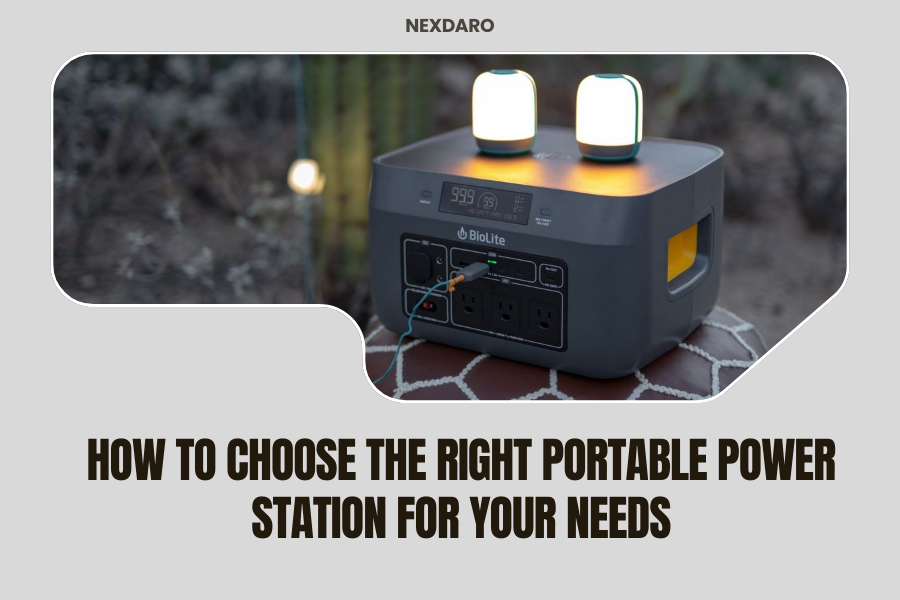
Port selection affects convenience and compatibility. A good portable power station should include:
- AC outlets for household devices
- USB A ports for common electronics
- USB C ports for fast charging newer devices
- DC ports for car accessories
More ports allow you to charge multiple devices simultaneously.
Charging Methods and Speed
Consider how you plan to recharge your power station.
Most models support:
- Wall outlet charging for fast recharging
- Car charging for travel use
- Solar panel charging for off grid situations
Solar charging is especially useful for camping and long outdoor trips where wall power is unavailable.
Battery Type and Lifespan
Lithium ion batteries are lightweight and common, while lithium iron phosphate batteries offer longer lifespan and improved safety.
If you plan to use your power station frequently or for many years, battery chemistry becomes an important factor.
Portability and Weight
Larger capacity power stations weigh more. Consider how far you will carry it and whether you need built in handles or wheels.
For car camping or home backup, weight may matter less. For backpacking or mobile work, portability becomes critical.
Safety Features to Look For
Reliable power stations include built in safety protections such as:
- Overload protection
- Short circuit protection
- Temperature control
- Battery management systems
These features help protect both the device and your connected electronics.
Budget Considerations
Portable power stations vary widely in price. Higher priced models often include larger batteries, faster charging, and longer lifespan.
Choose the best balance of performance and value based on how often you will use it and for what purpose.
Final Thoughts
The right portable power station is one that matches your power needs without unnecessary weight or expense. By understanding capacity, output, charging options, and safety features, you can make a smart decision that delivers reliable power wherever you go.
Portable power stations are an investment in convenience, safety, and independence, whether for outdoor adventures or emergency preparedness.