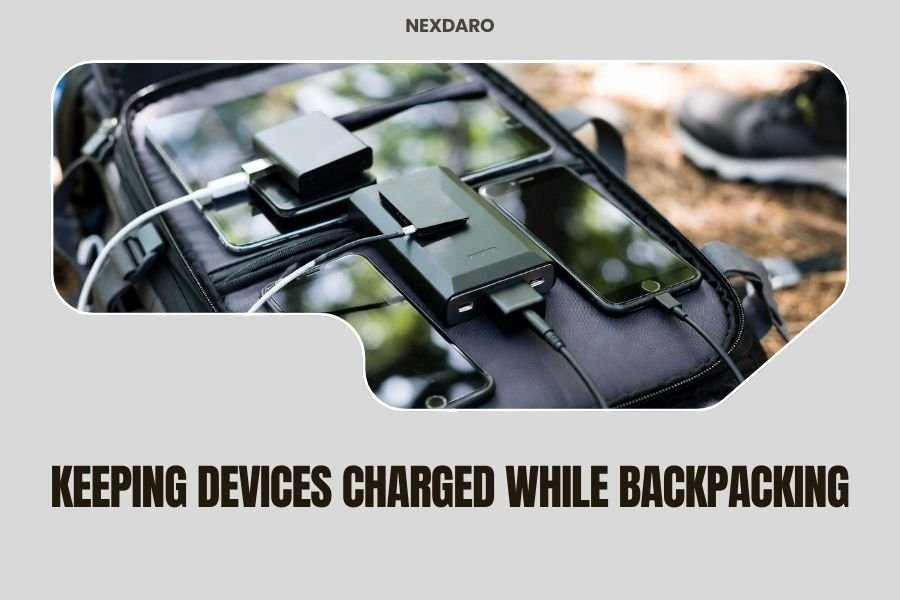
Keeping devices charged while backpacking requires portable power stations, solar panels, or power banks that can handle your energy needs for multiple days.
The best backpacking power solution depends on your trip length, device types, and weight limits, with solar-compatible options offering the most flexibility for extended adventures.
Why Your Phone Dies When You Need It Most
Picture this: you’re three days into an amazing backpacking trip. The views are perfect for photos. Then your phone screen goes black.
Your camera, GPS, and emergency communication just disappeared. This happens to thousands of hikers every year.
Modern backpackers carry more devices than ever. Phones, cameras, GPS units, headlamps, and tablets all need power. A typical smartphone lasts 1-2 days with moderate use.
Power Bank Solutions for Short Trips
Power banks work great for 1-3 day trips. They’re simple, reliable, and affordable.
I found that most 10,000mAh power banks can charge a smartphone 2-3 times. That covers most weekend adventures.
Choosing the Right Power Bank Capacity
Here’s what different capacities actually mean for your devices:
- 5,000mAh: 1-2 phone charges (weekend trips)
- 10,000mAh: 2-4 phone charges (3-4 day trips)
- 20,000mAh: 4-6 phone charges (week-long adventures)
But remember, bigger capacity means more weight. A 20,000mAh power bank weighs about 1 pound.
Weight vs Power Trade-offs
Every ounce matters when backpacking. You need to balance power needs with pack weight.
I researched and found that ultralight hikers often choose 5,000mAh banks and strict device rationing. Car campers can handle 20,000mAh+ without issues.
Smart Features Worth the Extra Weight
Some power banks include features that justify extra ounces:
- Fast charging (saves time at camp)
- Multiple ports (charge several devices)
- Solar panels (extends power indefinitely)
- Waterproof cases (protects from rain)
Solar Power for Extended Adventures
Solar panels change everything for long trips. You can generate fresh power every day.
From what I read, a good 20-watt solar panel can fully charge most smartphones in 3-4 hours of direct sunlight.
How Much Solar Power Do You Actually Need
Different devices need different amounts of power. Here’s the breakdown:
| Device | Battery Size | Solar Watts Needed |
|---|---|---|
| Smartphone | 3,000-4,000mAh | 10-15W |
| Tablet | 7,000-10,000mAh | 20-30W |
| Camera | 1,000-2,000mAh | 5-10W |
| GPS Device | 1,000-3,000mAh | 5-10W |
Solar Panel Types for Backpacking
Not all solar panels work the same. You have three main options.
Foldable Solar Chargers
These attach to your backpack and charge while you hike. They’re lightweight but only work in direct sunlight.
I found online that most foldable panels produce 60-80% of their rated power in real conditions.
Rigid Solar Panels
These offer the most power per square inch. But they’re heavier and harder to pack.
Many experts say rigid panels work better for base camp setups than trail hiking.
Solar Power Banks
These combine a battery and solar panel in one device. They’re convenient but charge slowly.
Research shows most solar power banks need 20+ hours of sunlight to fully charge their internal battery.
Portable Power Stations for Group Adventures
When you’re camping with friends or family, portable power stations make more sense than individual power banks.
These units can charge multiple devices simultaneously and run small appliances.
Power Station Capacity Planning
Power stations range from 100Wh to 3,000Wh+. Here’s what works for different group sizes:
- 100-300Wh: 2-3 people, phones and cameras only
- 300-500Wh: 2-4 people, plus tablets and lights
- 500-1000Wh: 4-6 people, plus small appliances
But remember weight limits. A 500Wh power station typically weighs 10-15 pounds.
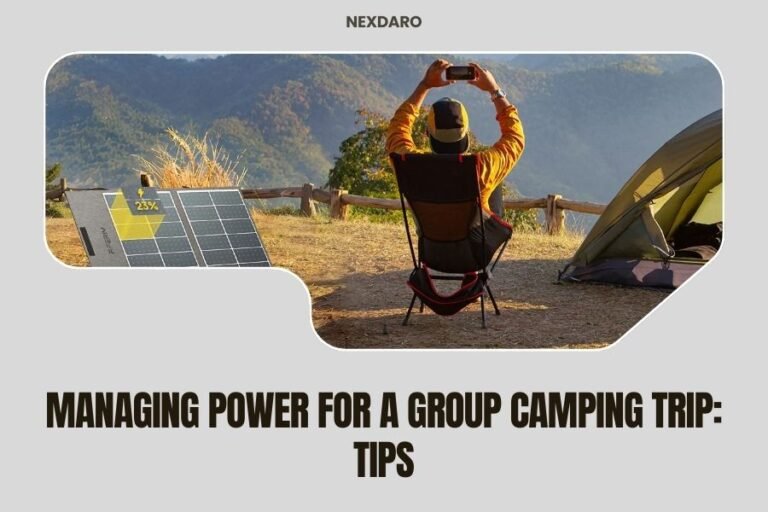
Solar Charging Your Power Station
Most modern power stations accept solar input. This extends your power indefinitely.
I researched and found that a 100W solar panel can recharge a 300Wh power station in 4-6 hours of good sunlight.
Matching Solar Panels to Power Stations
Your solar panel wattage should match your daily power consumption. If you use 200Wh per day, you need at least 200W of solar panels.
Weather affects this calculation. Cloudy days produce 20-30% of normal solar power.
Device Management Strategies
Smart power management extends your battery life without carrying extra weight.
These simple changes can double your device runtime.
Phone Power Saving Tips
Your smartphone probably uses more power than needed. Here’s how to fix that:
- Enable airplane mode when not needed
- Lower screen brightness to 30-40%
- Close unnecessary apps
- Turn off location services for non-essential apps
- Use battery saver mode
These changes can extend battery life by 50-70%.
Camera Battery Management
Camera batteries drain fast in cold weather. Keep spare batteries warm in your jacket pocket.
I heard from photography experts that cold batteries can lose 50% of their capacity below freezing.
External Camera Power Options
Many cameras accept external power through USB or dummy batteries. This lets you power them from your main power bank.
Dummy batteries replace your camera’s internal battery and connect to external power. They work great for time-lapse photography.
Emergency Power Backup Plans
What happens when your main power source fails? You need backup options.
Emergency situations require communication devices. Don’t risk getting stranded with dead batteries.
Hand Crank Chargers
These generate power through manual cranking. They’re slow but work in any weather.
From what I read, 5 minutes of cranking typically provides 1-2 minutes of phone call time.
Multiple Small Power Banks
Instead of one large power bank, consider several smaller ones. If one fails, you still have backup power.
This strategy also lets you share power with other hikers in emergencies.
Cold Weather Power Challenges
Cold temperatures destroy battery performance. Your devices will die faster in winter conditions.
Research shows that lithium batteries lose 20% capacity at 32°F and 50% at 0°F (Battery University).
Keeping Batteries Warm
Store batteries and devices close to your body when possible. Your body heat maintains optimal battery temperature.
Many cold-weather hikers sleep with their devices inside their sleeping bags.
Insulated Power Bank Cases
Neoprene cases help maintain battery temperature. They add minimal weight but can improve cold-weather performance by 20-30%.
Power System Weight Optimization
Every backpacker struggles with power vs weight decisions. Here’s how to optimize both.
Shared Group Power Systems
Split power gear among group members. One person carries the main power station, another carries solar panels.
This distributes weight while providing more total power than individual systems.
Multi-Function Devices
Choose devices that serve multiple purposes:
- Phone with GPS instead of separate GPS device
- Headlamp with USB charging port
- Power bank with built-in flashlight
- Solar panel that doubles as ground cloth
Choosing the Right System for Your Trip
Your power needs depend on trip length, group size, and device requirements.
Don’t over-engineer your solution. Match your power system to your actual needs.
Weekend Warriors
For 1-3 day trips, a simple 10,000mAh power bank covers most situations. Add a small solar panel if you’re taking lots of photos.
Week-Long Adventures
Longer trips need solar power or large power stations. Plan for 20-30Wh per device per day.
Extended Expeditions
Trips over a week require renewable power. Solar panels become necessary, not optional.
Conclusion
Keeping devices charged while backpacking doesn’t have to be complicated. Start with your actual power needs, not the maximum capacity you might want.
For most backpackers, a quality power bank handles weekend trips perfectly. Add solar panels for longer adventures or when you need guaranteed power every day. Power stations work great for groups or car camping but add too much weight for solo hiking.
Remember that smart power management often matters more than total capacity. A phone in airplane mode with low brightness lasts twice as long as one with all features running.
Test your power system at home before heading into the wilderness. Know how long your devices actually last and how much power your charging system provides in real conditions.
How long does a 10000mAh power bank last while backpacking?
A 10,000mAh power bank typically provides 2-4 smartphone charges or powers a phone for 3-5 days with moderate use. The actual duration depends on your device’s battery size, usage patterns, and power-saving settings.
Can solar panels charge devices in cloudy weather?
Solar panels still generate power on cloudy days but at 20-40% of their normal output. Overcast conditions significantly slow charging times, so you’ll need larger panels or longer charging periods to meet your power needs.
What’s the minimum solar panel size for backpacking?
A 20-watt solar panel handles most smartphone and small device charging needs for backpacking. This size provides enough power to fully charge a phone in 3-4 hours of direct sunlight while remaining portable enough for trail use.
How do I keep batteries working in freezing temperatures?
Keep batteries warm by storing them inside your jacket or sleeping bag when not in use. Cold temperatures can reduce battery capacity by 50% or more, so maintaining body-temperature storage significantly improves performance and runtime.
Should I bring backup power sources for emergency situations?
Yes, always carry a backup power option for emergencies. This could be a small secondary power bank, hand crank charger, or extra batteries. Having multiple power sources prevents complete communication loss if your main charging system fails.