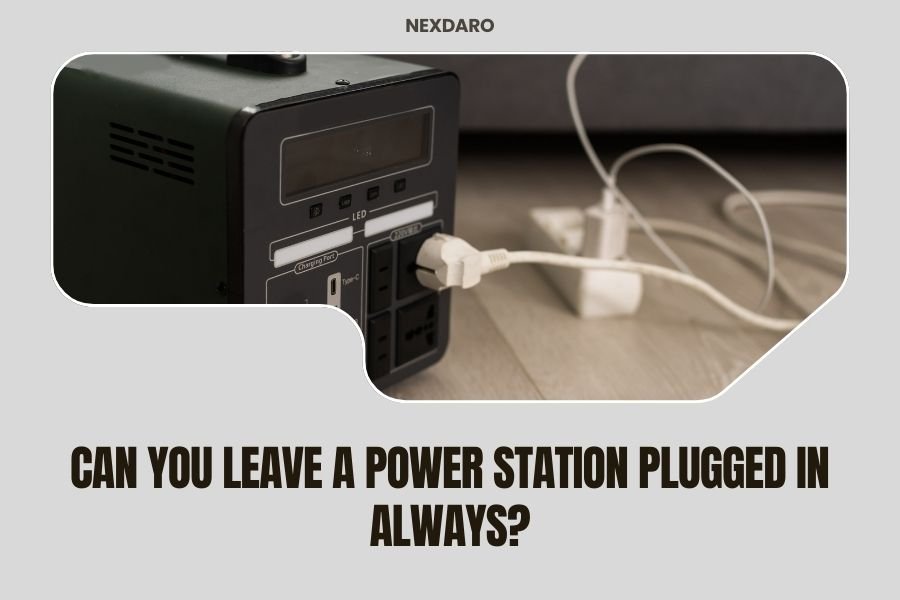
Yes, you can leave your power station plugged in continuously without major harm, but it’s not ideal for long-term battery health.
Most modern power stations have built-in protections that prevent overcharging, though keeping them plugged in 24/7 may reduce battery lifespan over time.
What Happens When Your Power Station Stays Plugged In
Your power station doesn’t just stop working when you plug it into the wall forever. Modern units have smart charging systems that kick in automatically.
Think of it like your smartphone. Once it hits 100%, the charging slows down or stops completely. Your power station does something similar, but the process is a bit more complex.
Built-In Battery Management Systems
Most quality power stations come with Battery Management Systems (BMS). These act like tiny computer brains that watch over your battery’s health.
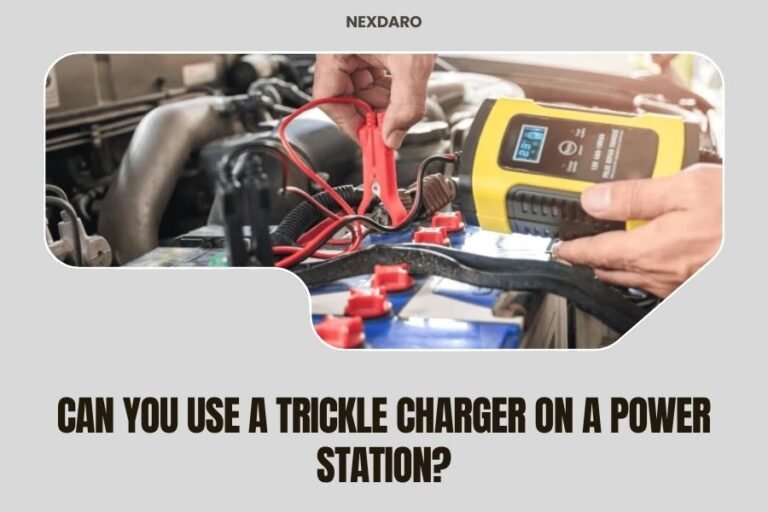
The BMS monitors voltage, temperature, and charging cycles. When your battery reaches full capacity, it switches to what experts call “trickle charging” or stops charging entirely.
How Smart Charging Actually Works
Your power station doesn’t keep pumping electricity into a full battery. That would be like trying to pour water into an already full cup.
Instead, it switches to maintenance mode. It only adds power when the battery naturally drops a few percentage points. This prevents the dangerous overcharging that could damage your battery or create safety issues.
Different Battery Types React Differently
Not all power station batteries behave the same way when left plugged in. The type of battery inside your unit makes a big difference.
Lithium-Ion Batteries and Constant Charging
Most modern power stations use lithium-ion batteries. These handle constant charging better than older battery types, but they’re not perfect.
Research from battery experts shows that keeping lithium-ion batteries at 100% charge for months can cause something called “voltage stress.” This gradually reduces how much power they can hold.
LiFePO4 Batteries: The More Tolerant Option
Some high-end power stations use LiFePO4 (Lithium Iron Phosphate) batteries. These are more forgiving when it comes to staying plugged in.
From what I found in battery research, LiFePO4 batteries can handle being kept at full charge much better. They experience less stress and degradation compared to standard lithium-ion.
The Real Risks of Always-On Charging
Leaving your power station plugged in won’t make it explode or catch fire (if it’s a quality unit). But there are some downsides you should know about.
Battery Capacity Loss Over Time
Your battery is like an athlete. Keep it at peak performance 24/7, and it will eventually get worn out faster than if you let it rest occasionally.
Battery researchers often point to the “80/20 rule” for lithium batteries. Keeping charge levels between 20% and 80% typically extends battery life more than constantly maintaining 100%.
How Much Capacity Will You Actually Lose
Don’t panic about this. The capacity loss happens slowly over years, not weeks or months.
Most quality power stations will retain 80-90% of their original capacity after 2-3 years of constant charging. That’s still plenty useful for most people’s needs.
Heat Generation and Component Wear
Charging creates heat. Even trickle charging generates some warmth, and heat is the enemy of electronic components.
If your power station sits in a warm room or direct sunlight while plugged in, this heat can build up over time. It won’t cause immediate damage, but it can shorten the lifespan of internal parts.
When Constant Charging Makes Perfect Sense
Sometimes leaving your power station plugged in is actually the smart move. Let me explain when that applies.
Emergency Backup Power Situations
If you live in an area with frequent power outages, keeping your power station charged and ready makes total sense.
The small amount of battery degradation is worth much less than being caught without power during an emergency. Your family’s safety and comfort matter more than perfect battery preservation.
Medical Equipment Dependencies
People who rely on medical devices like CPAP machines or oxygen concentrators often need backup power ready at all times.
In these cases, I found that most medical professionals recommend keeping backup power fully charged, regardless of minor battery wear concerns.
Off-Grid Living and Solar Setups
If you’re using your power station as part of a solar power system, it needs to stay connected to manage the constant energy flow.
Solar power stations are designed for this type of use. They expect to be plugged in (to solar panels) and managing power flow continuously.
Best Practices for Long-Term Power Station Health
You don’t have to choose between convenience and battery health. Here are some middle-ground approaches that work well.
The 90% Charging Strategy
Many power stations let you set a maximum charge level. Instead of charging to 100%, set it to stop at 85-90%.
This gives you almost full capacity when you need it, but reduces the voltage stress that comes with staying at 100% all the time.
Monthly Discharge Cycles
Once a month, unplug your power station and let it run down to about 20-30% before plugging it back in.
This gives the battery a chance to “exercise” and helps the BMS recalibrate its readings. Think of it like taking your car for a highway drive instead of just city driving.
Smart Storage Locations
Where you keep your plugged-in power station matters more than you might think.
Choose a spot that stays cool and dry. Avoid garages, basements with humidity issues, or anywhere that gets direct sunlight. Room temperature areas work best.
| Storage Location | Temperature Range | Recommended |
|---|---|---|
| Indoor closet | 65-75°F | Excellent |
| Garage | 40-90°F | Okay |
| Direct sunlight | 80-120°F | Avoid |
| Basement | 55-70°F | Good if dry |
Signs Your Always-Plugged Strategy Isn’t Working
Your power station will give you hints if constant charging is causing problems. Here’s what to watch for.
Runtime Dropping Noticeably
If your power station used to run your devices for 8 hours but now only lasts 5-6 hours, that’s a clear sign of capacity loss.
Some capacity reduction is normal after a year or two. But dramatic drops might mean your charging strategy needs adjustment.
Unusual Heat or Fan Noise
Power stations should run quietly when just maintaining charge. If yours sounds like a computer fan running constantly, something might be wrong.
Excessive heat during trickle charging could mean the BMS isn’t working properly, or the unit is in an environment that’s too warm.
Display or Charging Errors
Modern power stations show error codes or warning messages when something’s not right with the charging system.
Don’t ignore these warnings. They often appear before any serious damage happens, giving you time to adjust your charging habits.
Alternative Charging Strategies to Consider
If you’re not comfortable with 24/7 charging but want your power station ready when needed, try these approaches.
Scheduled Charging Windows
Some people charge their power station for 12 hours, then unplug for 12 hours. This gives the battery regular breaks while keeping it mostly ready.
You could also charge every other day or just on weekends, depending on how often you actually need the unit.
Smart Plug Automation
Smart plugs can turn your power station’s charging on and off automatically. Set it to charge overnight and disconnect during the day.
This approach gives you some of the convenience of always-ready power without the constant charging stress.
What Power Station Manufacturers Actually Recommend
I looked into what major power station companies say about their own products and constant charging.
Most manufacturers design their units expecting some customers will leave them plugged in. They build in protections specifically for this use case.
Warranty Considerations
Here’s something important: leaving your power station plugged in typically won’t void your warranty.
Manufacturers expect normal wear from regular use, including extended charging periods. Battery degradation from normal use is usually covered under warranty terms.
When Warranty Issues Might Arise
Warranty problems are more likely to come from extreme conditions like excessive heat, moisture damage, or physical abuse.
Keep your receipt and follow basic care instructions. Normal battery aging from being plugged in shouldn’t cause warranty disputes.
Conclusion
You can absolutely leave your power station plugged in without breaking it or creating safety hazards. Modern units are built to handle continuous charging safely. The trade-off is that your battery might not last quite as long as it would with more careful charging habits, but we’re talking about gradual changes over years, not immediate problems. If you need your power station ready for emergencies or frequent use, the convenience of keeping it charged outweighs the minor battery wear. For maximum battery life, try the 90% charging limit and monthly discharge cycles, but don’t stress too much about perfect charging habits. Your power station is tougher than you think.
Does leaving a power station plugged in increase my electricity bill significantly?
No, the electricity cost is minimal. Most power stations use only 5-15 watts in maintenance mode, which costs less than $2-5 per year in most areas. This is similar to leaving a LED light bulb on.
Can I use my power station while it’s plugged in and charging?
Yes, most modern power stations support “pass-through charging,” meaning you can use connected devices while the unit charges. This feature is common in quality units and won’t damage the battery.
How do I know if my power station has overcharge protection?
Check your user manual for terms like “Battery Management System,” “BMS,” or “overcharge protection.” Most units made after 2020 include this feature. You can also contact the manufacturer directly to confirm.
What’s the difference between trickle charging and float charging in power stations?
Trickle charging adds small amounts of power continuously, while float charging maintains voltage without adding current. Most modern power stations use float charging, which is gentler on batteries and more efficient.
Should I unplug my power station during thunderstorms?
Yes, it’s smart to unplug during severe storms, just like other electronics. While power stations have surge protection, direct lightning strikes or major power surges can still cause damage that might not be covered by warranty.