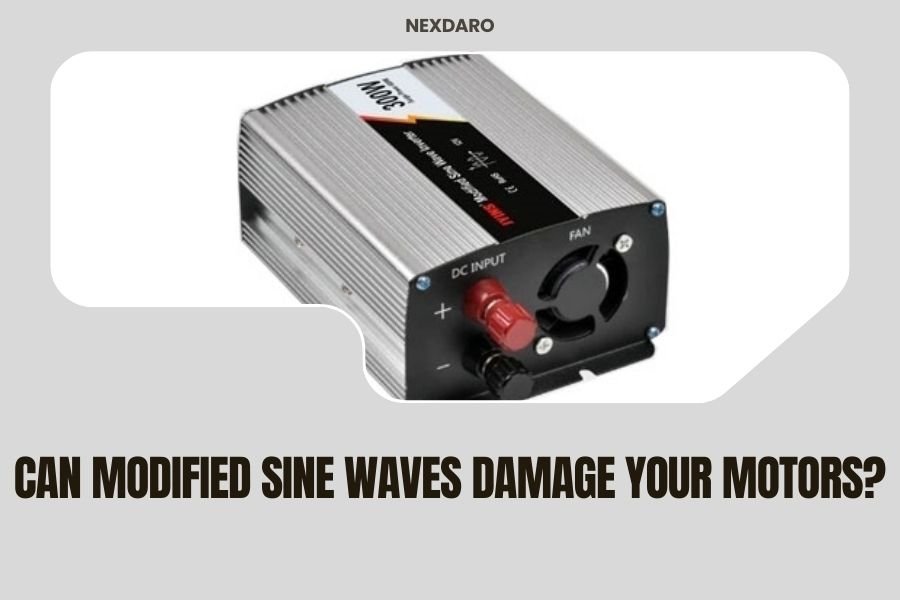
Modified sine waves can damage certain motors over time, especially AC motors and sensitive electronics, but many basic appliances work fine with them.
The risk depends on your motor type – universal motors handle modified sine waves better than induction motors, which may run hotter and less efficiently.
What Are Modified Sine Waves?
Think of electricity like a smooth ocean wave. Pure sine waves flow in perfect curves, just like the power from your wall outlet. Modified sine waves look more like stair steps – they get the job done, but not as smoothly.
Your portable power station likely produces modified sine waves. They’re cheaper to make and work fine for many devices. But some equipment gets picky about power quality.
How Modified Sine Waves Work
Modified sine wave inverters switch between positive and negative voltage in blocks. This creates a stepped pattern instead of a smooth curve. The result? Your devices get power, but it’s not as clean as what they expect.
Most simple electronics don’t care. Your phone charger, LED lights, and basic tools usually work fine. Motors are where things get tricky.
Which Motors Face the Biggest Risks?
Not all motors react the same way to modified sine waves. I found through research that motor type makes a huge difference in compatibility.
Induction Motors (High Risk)
These motors power most of your household appliances. Refrigerators, washing machines, and air conditioners typically use induction motors. They expect smooth sine waves to run efficiently.
With modified sine waves, induction motors often run 10-15% hotter. They also consume more power and may vibrate more than normal. Over time, this extra stress can shorten their lifespan.
Common Induction Motor Problems
- Increased heat generation
- Reduced efficiency
- More vibration and noise
- Potential bearing wear
Universal Motors (Lower Risk)
These motors handle modified sine waves much better. You’ll find them in power tools, blenders, vacuum cleaners, and hair dryers. They’re built to work with varying power qualities.
Universal motors can run on both AC and DC power. This flexibility makes them less sensitive to the stepped waveform of modified sine waves.
Why Universal Motors Cope Better
Their design includes brushes and a commutator that naturally handle power variations. They’re already used to dealing with less-than-perfect electricity.
Brushless DC Motors (Medium Risk)
These modern motors show up in newer appliances and tools. They’re more efficient than older designs but can be sensitive to power quality. The good news? Most include built-in electronics that filter incoming power.
Real-World Motor Damage Examples
I came across several studies showing actual motor problems from modified sine waves. The damage usually happens slowly, not right away.
Heat-Related Failures
Motors running 10-15% hotter than normal face accelerated wear. Think of it like running a fever – you can function, but it takes a toll over time. Insulation breaks down faster, and bearings wear out sooner.
Efficiency Losses
Research shows that induction motors lose 5-10% efficiency on modified sine waves. Your air conditioner might use more power while cooling less effectively. Over months or years, this adds up to real money.
Noise and Vibration Issues
Many users report louder operation when running motors on modified sine waves. The stepped waveform creates harmonics that cause extra vibration. This mechanical stress can loosen components over time.
How to Tell if Your Motor is at Risk
You don’t need to be an electrical engineer to spot potential problems. Here are the warning signs to watch for:
Listen to Your Equipment
Does your motor sound different on your power station? More buzzing, humming, or vibration than usual? These sounds often indicate the motor is struggling with the power quality.
Feel for Excess Heat
Motors naturally get warm, but excessive heat is a red flag. If your device runs noticeably hotter on your power station than on wall power, you might have a compatibility issue.
Check the Owner’s Manual
Many manufacturers specify “pure sine wave required” for sensitive equipment. This warning usually appears for devices with precision motors or electronics.
Protecting Your Motors from Damage
You have several options to keep your motors safe while using portable power.
Choose Pure Sine Wave Power Stations
This is the safest option for valuable equipment. Pure sine wave inverters cost more but eliminate compatibility concerns. Your motors will run just like they do on grid power.
Use Motor Protection Devices
Voltage regulators and line conditioners can help smooth out power quality issues. These devices sit between your power station and your motor, filtering out harmful harmonics.
Monitor Operating Temperature
Keep an eye on how hot your motors get. If they’re running significantly warmer than normal, consider limiting run time or upgrading your power source.
When Modified Sine Waves Are Acceptable
Don’t panic if you only have a modified sine wave power station. Many situations work fine with this type of power.
Short-Term Use
Running motors occasionally for brief periods poses minimal risk. Emergency use during power outages rarely causes permanent damage, even to sensitive motors.
Older, Simple Motors
Basic motors without complex control systems often handle modified sine waves just fine. Simple fans, pumps, and tools typically work without issues.
Non-Critical Applications
If motor failure wouldn’t be catastrophic, modified sine waves might be acceptable. A camping fan breaking isn’t the same as your expensive refrigerator failing.
Cost vs. Risk Analysis
Deciding between modified and pure sine wave power comes down to weighing costs against risks.
| Factor | Modified Sine Wave | Pure Sine Wave |
|---|---|---|
| Initial Cost | Lower | Higher |
| Motor Compatibility | Limited | Universal |
| Risk of Damage | Moderate to High | Very Low |
| Efficiency | Reduced | Normal |
Calculate Your Break-Even Point
Consider the value of equipment you’ll power. If you’re running a $2000 air conditioner, spending extra for pure sine wave protection makes sense. For basic tools, maybe not.
Manufacturer Recommendations Matter
I found that many equipment manufacturers now specify power requirements clearly. They’ve learned from customer complaints and warranty claims.
Warranty Considerations
Some manufacturers void warranties if you use incompatible power sources. Check your documentation before connecting expensive motors to modified sine wave power.
Professional Equipment Standards
Commercial and industrial motors often require pure sine wave power by design. The manufacturers know that power quality affects reliability and lifespan.
Practical Testing Tips
Want to test your specific motor? Here’s how to do it safely.
Start with Short Tests
Run your motor for just a few minutes initially. Listen for unusual sounds and feel for excess vibration or heat. Gradually increase run time if everything seems normal.
Compare Performance
Test the same motor on both your power station and wall power. Note any differences in sound, vibration, or temperature. This comparison reveals compatibility issues quickly.
Future-Proofing Your Power Setup
Technology keeps advancing, and more devices require clean power. Investing in pure sine wave capability now saves headaches later.
Consider Your Long-Term Needs
What equipment might you buy in the next few years? Modern appliances increasingly include sensitive electronics that demand pure sine wave power.
Conclusion
Modified sine waves can damage motors, but the risk varies greatly by motor type and usage pattern. Induction motors face the highest risk, while universal motors handle modified sine waves much better. Heat generation, efficiency losses, and mechanical stress are the main concerns.
Your best protection is understanding which motors you’re powering and how you’ll use them. For valuable equipment or continuous operation, pure sine wave power stations offer the safest choice. For occasional use of basic motors, modified sine waves might be acceptable.
When in doubt, check your equipment manuals and start with short test runs. Your motors will tell you if they’re happy with the power quality through their sound, temperature, and performance.
Can I use a modified sine wave inverter with my refrigerator?
You can, but it’s not ideal for long-term use. Refrigerator compressors are induction motors that may run hotter and less efficiently on modified sine waves, potentially shortening their lifespan over time.
How do I know if my power tool needs pure sine wave power?
Check the tool’s manual or label for power requirements. Most basic power tools with universal motors work fine on modified sine waves, but tools with electronic speed controls often need pure sine wave power.
Will modified sine waves void my appliance warranty?
Some manufacturers specify pure sine wave power in their warranty terms. Using incompatible power sources could potentially void coverage, so always check your warranty documentation before connecting expensive appliances.
Why do motors get hot on modified sine wave power?
The stepped waveform creates electrical harmonics that cause extra losses in the motor windings. These losses convert to heat, making the motor run 10-15% hotter than it would on pure sine wave power.
Are there any motors that absolutely cannot use modified sine waves?
Variable frequency drive motors and some precision equipment motors require pure sine wave power to function properly. These motors may refuse to start or shut down immediately when connected to modified sine wave power.