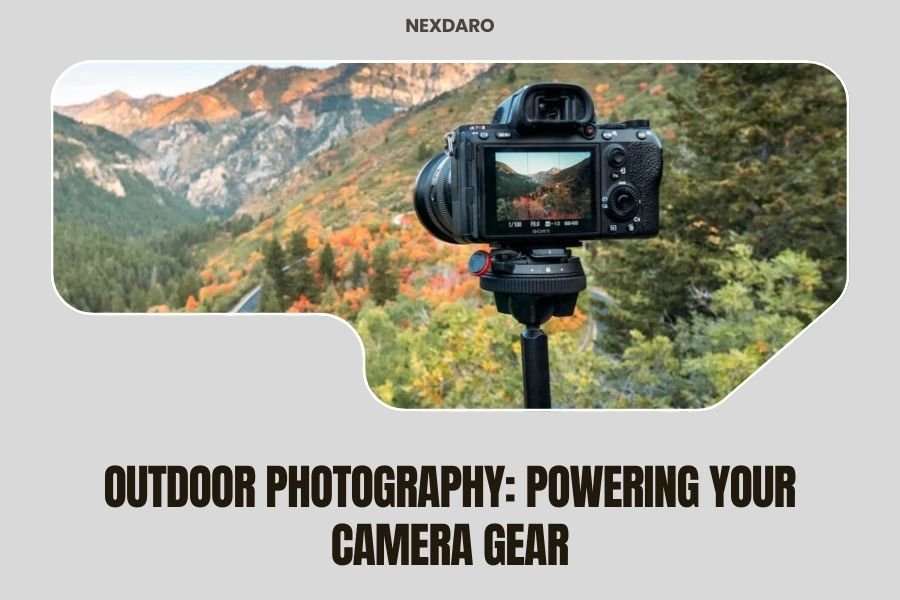
Outdoor photographers need portable power stations to keep cameras, drones, and accessories charged during extended shoots away from grid power.
A 300-500Wh power station typically powers a DSLR camera for 2-3 days, while larger 1000Wh+ units can run laptops, LED panels, and multiple devices simultaneously.
Why Your Camera Gear Needs Reliable Power
Picture this: you’re capturing the perfect sunrise at a remote mountain peak. Your camera battery dies just as golden hour begins. That sinking feeling? I’ve heard it from photographers countless times.
Your camera equipment drains power faster than you think. Modern DSLRs and mirrorless cameras use 7-15 watts during active shooting. Add video recording, and that jumps to 20-25 watts.
Cold weather makes things worse. Camera batteries lose 20-50% capacity when temperatures drop below freezing. Desert heat isn’t much better – extreme temperatures stress your gear.
Understanding Power Requirements for Photography Equipment
Camera Body Power Consumption
Different cameras have different appetites for power. From what I researched, here’s what you can expect:
- Entry-level DSLRs: 5-8 watts during shooting
- Professional DSLRs: 10-15 watts
- Mirrorless cameras: 8-12 watts
- Medium format cameras: 15-25 watts
Lens and Accessory Power Needs
Your camera body is just the start. Autofocus motors in lenses draw additional power. Image stabilization systems add another 2-5 watts.
Electronic viewfinders are power hungry. They can double your camera’s energy consumption compared to using an optical viewfinder.
Flash and Lighting Equipment
External flashes consume significant power during recycling. A powerful strobe might draw 50-100 watts while charging between shots.
LED video panels typically use 30-60 watts for continuous lighting. Some professional panels can reach 200+ watts.
Support Equipment Power Draw
Don’t forget about these power-hungry accessories:
- Laptops for tethered shooting: 45-85 watts
- Tablet displays: 10-15 watts
- GPS units: 2-5 watts
- Intervalometers: 1-3 watts
Choosing the Right Power Station Capacity
Day Trip Photography
For single-day shoots, a 200-300Wh power station works well. This capacity charges your camera batteries 8-12 times. You’ll have backup power for unexpected situations.
Weight matters when hiking to locations. These smaller units typically weigh 3-6 pounds. That’s manageable in a photography backpack.
Multi-Day Expedition Power
Extended trips need bigger batteries. A 500-1000Wh power station keeps multiple cameras running for 3-5 days. You can also power laptops for photo editing and backup.
Consider solar charging for trips longer than a week. Many power stations accept solar input between 60-200 watts.
Professional Shoot Requirements
Commercial photography often needs 1000Wh or larger stations. You’re running continuous lights, charging multiple camera bodies, and powering laptops simultaneously.
Studios on location might need 1500-3000Wh capacity. This handles high-power strobes and extended shooting sessions.
Key Features to Look For
Output Options and Compatibility
Your power station should match your gear’s charging needs. Most cameras charge via USB or proprietary DC adapters.
Look for these output types:
- USB-A ports for older devices
- USB-C with power delivery for newer cameras
- 12V DC outlets for car-style chargers
- AC outlets for laptop chargers and strobes
Pure Sine Wave Inverters
Sensitive camera equipment needs clean power. Pure sine wave inverters protect your gear from power fluctuations. Modified sine wave outputs can damage some chargers.
Professional strobes and high-end laptops often require pure sine wave power. Don’t risk your expensive gear with cheap inverters.
Fast Charging Capabilities
USB-C Power Delivery charges modern cameras quickly. Look for stations with 60W+ USB-C outputs. This matches the charging speed of your wall adapters.
Some cameras support USB charging while shooting. This extends your shooting time without swapping batteries.
Portable vs. High-Capacity Options
Lightweight Travel Solutions
Hiking photographers prioritize weight over capacity. Units under 5 pounds work for day trips and lightweight gear.
These smaller stations focus on USB outputs. They’re perfect for mirrorless cameras and small accessories. Don’t expect to run power-hungry laptops for long.
Studio-Style Portable Power
Wheeled power stations bring serious capacity to remote locations. Some units offer 2000-5000Wh capacity with wheels and telescoping handles.
You can power full lighting setups and multiple cameras simultaneously. Think of them as portable studio power supplies.
Modular Power Systems
Some manufacturers offer stackable battery systems. Start with a base unit and add capacity modules as needed.
This approach lets you customize capacity for each shoot. Day trips use the base unit. Multi-day projects add extra batteries.
Weather Protection and Durability
Temperature Performance
Lithium batteries struggle in extreme temperatures. Most power stations work between 32-104°F (0-40°C).
Cold weather reduces capacity and charging speed. Some units shut down completely below freezing. Keep batteries warm when possible.
Water and Dust Resistance
Photography happens in all conditions. Look for IP ratings on outdoor power stations. IP65 protection handles rain and dust storms.
Sealed units cost more but protect your investment. Water damage voids most warranties, so protection pays off.
Build Quality Considerations
Photography gear travels rough roads and tight spaces. Solid construction prevents damage during transport.
Rubber corner guards and reinforced cases help units survive drops and impacts. Your power station needs to be as tough as your cameras.
Solar Charging for Extended Shoots
Solar Panel Compatibility
Solar charging extends your shooting time indefinitely. Most power stations accept 12V or 18V solar input.
Panel wattage affects charging speed. A 100W panel fully charges a 300Wh battery in 4-5 hours of direct sunlight.
Portable Solar Solutions
Foldable solar panels balance portability with charging speed. 60-100W folding panels fit in camera bags.
Rigid panels charge faster but take more space. Consider your transport method when choosing panel styles.
Solar Charging Reality Check
Solar charging needs direct sunlight to work well. Cloudy days reduce output by 70-80%. Forest canopy blocks most solar energy.
Plan solar charging for open locations with consistent sun exposure. Desert and mountain photography work well with solar power.
Power Management Strategies
Battery Conservation Techniques
Smart power management extends your shooting time. Turn off camera features you don’t need immediately.
Image review screens drain batteries quickly. Limit preview time or turn off auto-review. Your batteries will thank you.
Charging Priority Systems
Not all gear needs power simultaneously. Charge camera batteries first – they’re your primary tools.
Phones and GPS units can wait until evening. Focus your power station’s output on shooting essentials during golden hour.
Power Station Monitoring
Many modern units include smartphone apps. These show remaining capacity, charging rates, and power consumption.
Monitoring helps you plan charging schedules. You’ll know when to start charging backup batteries before current ones die.
Safety Considerations
Proper Ventilation
Power stations generate heat during heavy use. Ensure adequate airflow around cooling vents.
Never cover vents or pack units in tight spaces while operating. Overheating damages batteries and reduces lifespan.
Transportation Guidelines
Large lithium batteries have shipping restrictions. Check airline policies before traveling with power stations.
Most airlines allow stations under 100Wh in carry-on bags. Larger units may require special handling or shipping separately.
| Power Station Size | Typical Weight | Camera Charges | Best Use Case |
|---|---|---|---|
| 200-300Wh | 3-6 lbs | 8-12 charges | Day hiking |
| 500-700Wh | 12-18 lbs | 20-30 charges | Weekend trips |
| 1000-1500Wh | 25-35 lbs | 40-60 charges | Professional shoots |
| 2000Wh+ | 45+ lbs | 80+ charges | Base camp power |
Conclusion
Outdoor photography demands reliable power solutions that match your shooting style and equipment needs. Whether you’re hiking to remote landscapes or setting up professional shoots in challenging locations, the right power station keeps your creative vision alive.
Start by calculating your actual power requirements, then choose capacity with room to grow. Remember that weather, temperature, and charging efficiency all affect real-world performance. A power station that works reliably becomes an invisible part of your photography workflow – and that’s exactly what you want.
What size power station do I need for a weekend photography trip?
A 500-700Wh power station typically provides enough capacity for weekend trips with one or two cameras. This size can charge camera batteries 20-30 times and power a laptop for several hours of photo editing each evening.
Can I charge my camera directly while shooting?
Many modern mirrorless cameras support USB-C charging while operating. This feature lets you extend shooting time indefinitely when connected to a power station, though it may limit mobility depending on cable length.
How does cold weather affect my power station’s performance?
Lithium batteries lose 20-50% capacity in freezing temperatures and may shut down completely below 14°F (-10°C). Keep your power station insulated and warm it up gradually before use in extreme cold conditions.
What’s the difference between pure sine wave and modified sine wave outputs?
Pure sine wave provides clean power identical to household electricity, protecting sensitive camera equipment and battery chargers. Modified sine wave can cause interference, overheating, or damage to electronic devices, especially professional camera gear.
How long does it take to recharge a power station with solar panels?
A 100W solar panel can fully charge a 300Wh power station in 4-5 hours of direct sunlight. Larger stations need proportionally more time or multiple panels. Cloudy conditions reduce charging speed by 70-80%, so plan accordingly for reliable solar charging.