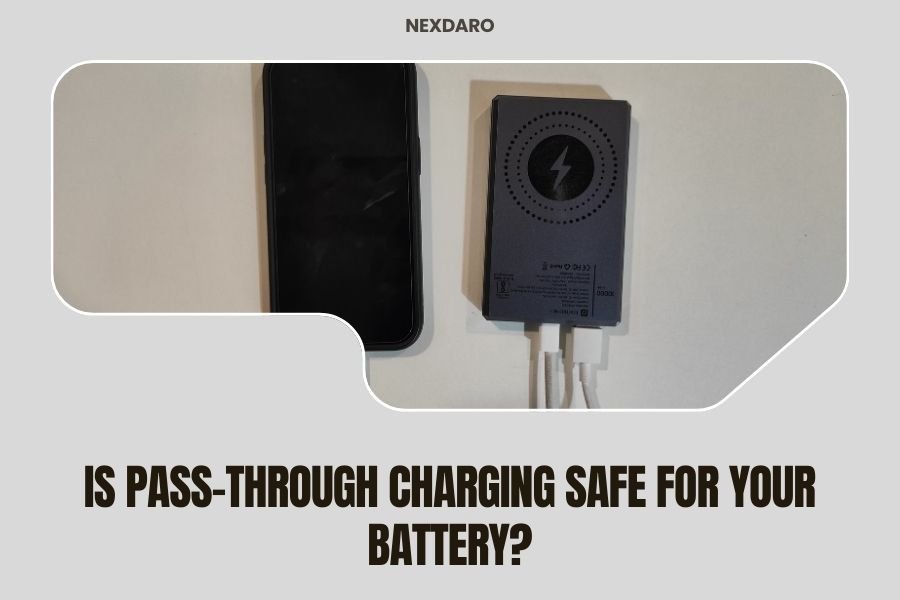
Pass-through charging is generally safe for modern portable power stations and devices when used properly with quality equipment and appropriate charging protocols.
The safety of pass-through charging depends on your battery type, device quality, and how you manage heat and charging cycles.
What Is Pass-Through Charging?
Pass-through charging lets you charge your portable power station while it powers your devices at the same time. Think of it like using your phone while it’s plugged into the wall.
Your power station receives energy from a wall outlet, solar panel, or car charger. At the same time, it sends power to your laptop, lights, or other gear. You don’t need to wait for a full charge before using your equipment.
How Pass-Through Charging Works
Most modern power stations have smart circuits that manage incoming and outgoing power. These circuits decide how much energy goes to the battery and how much goes directly to your devices.
When you plug in both input and output connections, the internal system balances the power flow. It’s like having a traffic controller managing electricity flow in two directions.
Is Pass-Through Charging Actually Safe?
Yes, pass-through charging is safe when done right. I found that most reputable manufacturers design their power stations with this feature in mind.
The key word here is “quality.” Cheap power stations might cut corners on safety features. Premium brands include protection circuits that prevent overheating, overcharging, and power surges.
Safety Features in Modern Power Stations
- Temperature monitoring that slows charging when things get hot
- Voltage regulation to prevent power spikes
- Current limiting to protect both battery and connected devices
- Short circuit protection
- Automatic shutoff when problems are detected
Battery Types and Pass-Through Safety
Different battery types handle pass-through charging differently. Your safety depends partly on what’s inside your power station.
Lithium Iron Phosphate (LiFePO4) Batteries
LiFePO4 batteries are the safest option for pass-through charging. They handle heat better and have longer lifespans. Many experts consider them the gold standard for portable power.
These batteries can handle thousands of charge cycles without major capacity loss. They’re also more stable when charging and discharging at the same time.
Lithium-Ion Batteries
Regular lithium-ion batteries work fine with pass-through charging but need more careful management. They generate more heat and can degrade faster if you’re not careful.
You’ll want to monitor temperature more closely with these batteries. Give them breaks between heavy use sessions when possible.
Lead-Acid Batteries
Old-school lead-acid power stations can handle pass-through charging, but they’re less efficient. You’ll lose more energy as heat, and they charge much slower.
These are becoming less common in portable power stations. Most people are switching to lithium options.
When Pass-Through Charging Becomes Risky
Pass-through charging isn’t always the best choice. Some situations increase your risk of battery damage or safety problems.
High Power Draw Scenarios
Running power-hungry devices while charging creates extra heat. Your microwave, hair dryer, or power tools might push your system too hard.
When possible, avoid using maximum power output during charging. Your battery will thank you with longer life and safer operation.
Extreme Temperature Conditions
Hot summer days or freezing winter nights make pass-through charging more risky. Batteries don’t like temperature extremes, especially when working hard.
Try to keep your power station in moderate temperatures. A hot car trunk or freezing garage isn’t ideal for charging operations.
Temperature Guidelines
- Optimal charging range: 32°F to 104°F (0°C to 40°C)
- Avoid charging below freezing when possible
- Don’t charge in direct sunlight on hot days
- Give extra ventilation space around your unit
How to Use Pass-Through Charging Safely
You can minimize risks by following some simple guidelines. These tips come from manufacturer recommendations and user experiences I found online.
Choose Quality Equipment
Buy from reputable brands that include proper safety certifications. Look for UL, FCC, or CE markings on your power station.
Cheap knockoffs might save money upfront but could cost you more in damaged devices or safety risks. Stick with established manufacturers when possible.
Monitor Your Power Station
Check your unit regularly during pass-through charging. Most power stations have displays showing battery level, input power, output power, and temperature.
If anything seems off – unusual heat, strange noises, error messages – stop using pass-through mode immediately.
Warning Signs to Watch For
- Excessive heat from the case or vents
- Unusual smells (burning, chemical, or metallic)
- Fans running constantly at high speed
- Error codes or flashing warning lights
- Significantly slower charging than normal
Impact on Battery Lifespan
Pass-through charging does affect your battery’s long-term health. The question is how much and whether it matters for your use case.
Charge Cycle Considerations
Every time you charge and discharge a battery, it uses up one “cycle.” Pass-through charging can increase your cycle count since the battery might charge and discharge simultaneously.
Research from battery manufacturers shows that most lithium batteries last 500-2000 cycles before dropping to 80% capacity. Quality LiFePO4 batteries often exceed 3000 cycles.
Heat Generation Effects
Heat is the enemy of battery longevity. Pass-through charging generates more heat than simple charging or discharging alone.
You can reduce heat buildup by avoiding maximum power draw during charging. Keep your power station well-ventilated and out of direct sunlight.
Best Practices for Long-Term Battery Health
Want to get the most life from your power station? These strategies help balance convenience with battery longevity.
The 80-20 Rule
Try to keep your battery between 20% and 80% charge when possible. Deep discharges and constant 100% charging can reduce battery life.
Many modern power stations have settings to limit maximum charge to 80% for daily use. Save the full 100% charge for when you really need maximum capacity.
Give Your Battery Breaks
If you’re using pass-through charging heavily, give your power station some downtime. Let it fully charge without any output load occasionally.
This gives the internal circuits a chance to balance cell voltages and perform maintenance functions.
Maintenance Charging Schedule
- Once a week: Full charge without any connected devices
- Once a month: Full discharge to 10-20%, then full recharge
- Every 3 months: Check for firmware updates from manufacturer
Comparing Pass-Through vs. Traditional Charging
| Factor | Pass-Through Charging | Traditional Charging |
|---|---|---|
| Convenience | High – use while charging | Low – wait for full charge |
| Battery Heat | Higher heat generation | Lower heat generation |
| Charging Speed | Slower if powering devices | Faster when not in use |
| Battery Lifespan | Potentially shorter | Potentially longer |
| Safety Risk | Slightly higher | Lower |
When You Should Avoid Pass-Through Charging
Some situations call for traditional charging instead. Here’s when you might want to skip the pass-through feature.
First-Time Setup
When you first get your power station, give it a full charge without connecting any devices. This helps calibrate the battery management system and ensures everything works properly.
Long-Term Storage
If you won’t use your power station for months, store it with a 50-60% charge. Don’t leave it plugged in constantly, as this can stress the battery.
Maximum Power Needs
When you need every watt of power, charge fully first, then disconnect the input. This gives you maximum available power without any losses from the charging circuit.
Manufacturer Recommendations
Most major power station brands support pass-through charging but with some guidelines. I found that companies like Goal Zero, Jackery, and EcoFlow all include this feature in their newer models.
Warranty Considerations
Using pass-through charging according to manufacturer instructions won’t void your warranty. Problems arise when you exceed recommended power limits or use the device in extreme conditions.
Keep your user manual handy and follow the specific guidelines for your model. Different power stations have different limitations.
Solar Panel Pass-Through Charging
Solar charging adds another layer to consider. Solar panels provide variable power that changes with weather and sun angle.
Variable Input Challenges
Your power station might switch between charging from solar and using battery power as clouds pass by. This creates more charging cycles than steady AC input.
Most modern solar controllers handle this smoothly, but it’s something to keep in mind for battery longevity.
Solar Pass-Through Tips
- Use appropriately sized solar panels for your power station
- Consider battery-only power for critical devices during variable sun
- Monitor performance on partly cloudy days
Conclusion
Pass-through charging is safe for your battery when you use quality equipment and follow basic guidelines. Modern power stations include protection features that make simultaneous charging and discharging relatively low-risk.
The convenience often outweighs the minor risks for most users. You can minimize any negative effects by choosing reputable brands, monitoring temperature, and giving your battery occasional breaks from heavy use.
Remember that some battery wear is normal and expected. The goal isn’t to eliminate all wear but to balance convenience with reasonable battery longevity. With proper care, your power station should provide years of reliable service whether you use pass-through charging or not.
Can I leave my power station plugged in all the time?
Most modern power stations can stay plugged in long-term, but it’s better to unplug them occasionally. Constant 100% charge can reduce battery lifespan over time. Many units have “storage mode” settings for long-term connection.
Does pass-through charging work with all types of devices?
Pass-through charging works with most devices, but some sensitive electronics like CPAP machines or medical equipment might prefer pure sine wave power without charging interference. Check your device manual for any restrictions.
How much slower is charging when using pass-through mode?
Charging speed depends on how much power your connected devices draw. Light loads like phone charging barely slow things down. Heavy loads like running a microwave can significantly extend charging time or even drain the battery while plugged in.
Will my power station get hot during pass-through charging?
Some heat is normal, but excessive heat indicates a problem. Good ventilation and avoiding maximum power draw help control temperature. Most units have built-in fans and thermal protection to manage heat automatically.
Can I use pass-through charging in my RV or van?
Yes, pass-through charging works great for RV and van life setups. You can charge from shore power, solar, or alternator while running your devices. Just make sure your power station is securely mounted and well-ventilated during travel.