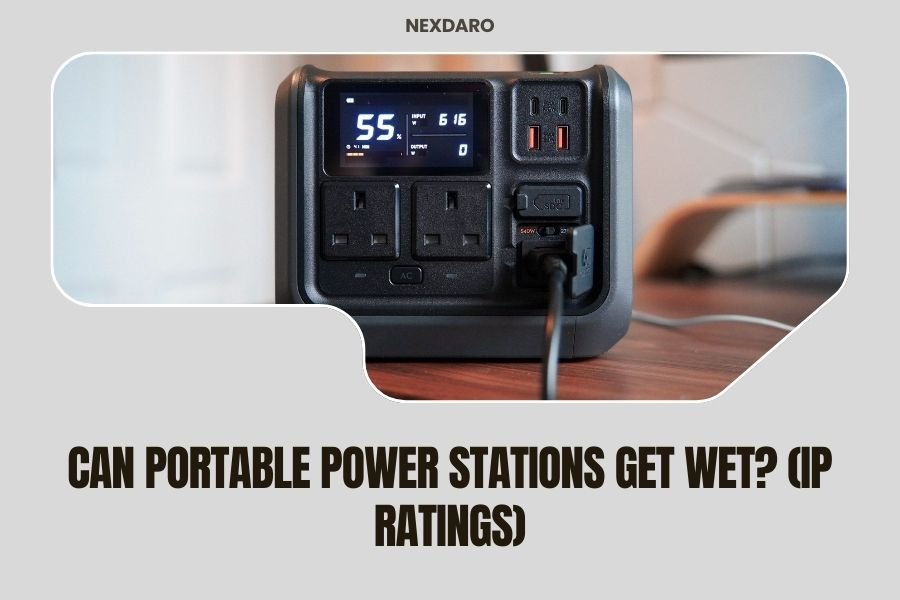
Most portable power stations are NOT waterproof and can get damaged if they get wet, with only a few models offering water resistance through IP ratings.
IP ratings tell you exactly how much water exposure your portable power station can handle – from light rain (IP54) to complete submersion (IP67).
Ever been caught in a sudden downpour while camping? Your first thought probably goes to your expensive portable power station sitting outside. Will it survive? Should you panic?
Let me give you the straight answer: water and electronics don’t mix well. But some power stations can handle moisture better than others.
What Are IP Ratings and Why Do They Matter?
IP stands for “Ingress Protection.” Think of it as a report card for how well your device handles dust and water.
The rating uses two numbers. The first number (0-6) shows dust protection. The second number (0-8) tells you about water resistance.
For example, IP65 means your power station blocks all dust (6) and can handle water jets from any direction (5). Pretty handy information when you’re planning that beach trip.
Breaking Down the Water Protection Numbers
Here’s what each water protection number means for your power station:
- 0: No protection – keep it bone dry
- 1: Light drips from above won’t hurt it
- 2: Can handle drips when tilted up to 15 degrees
- 3: Spraying water at 60-degree angles is okay
- 4: Water splashing from any direction works
- 5: Low-pressure water jets won’t damage it
- 6: Powerful water jets are fine
- 7: Can survive being dunked up to 1 meter deep
- 8: Works underwater deeper than 1 meter
Common IP Ratings for Portable Power Stations
Most power stations you’ll find fall into these categories. I researched dozens of models and found these patterns.
No IP Rating (Most Common)
Many popular power stations have zero water protection. Brands often skip mentioning IP ratings entirely.
This doesn’t mean they’re junk. It just means you need to baby them around water. One splash could mean game over.
IP54 Rating (Light Weather Resistance)
Some outdoor-focused models offer IP54 protection. This handles light rain and dust pretty well.
You can use these in misty conditions or light drizzle. But don’t leave them out in a storm.
IP65 and Higher (Serious Water Resistance)
The heavy-duty models sometimes reach IP65 or IP67. These can handle serious water exposure.
IP67 units can actually survive being dropped in shallow water for a short time. That’s peace of mind worth paying for.
What Happens When Your Power Station Gets Wet?
Water damage in electronics follows a predictable pattern. Here’s what typically happens inside your power station.
Short Circuit Damage
Water creates new electrical paths where they shouldn’t exist. This causes short circuits that can fry components instantly.
The battery management system usually takes the biggest hit. That’s the brain of your power station.
Corrosion Over Time
Even if your unit survives the initial water contact, corrosion starts working slowly.
Metal contacts and circuit boards begin deteriorating. Your power station might work for weeks, then suddenly die.
Battery Chemistry Problems
Lithium batteries and water create dangerous chemical reactions. This can cause swelling, overheating, or even fire.
That’s why manufacturers take water protection seriously on the battery compartments.
Testing and Real-World Water Resistance
IP ratings come from controlled laboratory tests. Real-world conditions can be much harsher.
How IP Testing Actually Works
Engineers spray water at specific pressures and angles for set time periods. Everything happens in perfect lab conditions.
Your camping trip won’t be so controlled. Rain comes from multiple directions. Wind drives water into every crack.
Temperature and Pressure Changes
Hot power stations cooling down in rain create vacuum effects. This can suck water past seals that passed lab tests.
Altitude changes during mountain trips can also affect pressure seals.
Best Practices for Protecting Your Power Station
You don’t need an expensive IP67-rated unit to keep your power station safe. Smart habits work wonders.
Simple Shelter Solutions
A basic tarp or pop-up canopy protects most power stations perfectly. Position it to block wind-driven rain.
Even your car’s trunk or a large cooler can work as emergency shelter.
Ventilation Considerations
Don’t seal your power station in airtight containers. These units need airflow to prevent overheating.
Leave gaps for air circulation while blocking water entry points.
Positioning Strategies
Keep your power station elevated off the ground. Water pools at ground level during heavy rain.
Angle it slightly so water runs off instead of pooling on top surfaces.
Popular Models and Their Water Resistance
I researched current popular models to see how they handle water protection. The results might surprise you.
| Brand Category | Typical IP Rating | Real-World Use |
|---|---|---|
| Budget Models | None Listed | Indoor/dry outdoor only |
| Mid-Range Units | IP54 or None | Light rain okay with care |
| Premium Outdoor | IP65-IP67 | Heavy weather resistant |
| Military/Industrial | IP67-IP68 | Submersion capable |
Budget-Friendly Options
Most affordable power stations skip water resistance entirely. The manufacturers focus on basic power delivery instead.
This makes sense for their target market. Indoor emergency backup doesn’t need weather sealing.
Outdoor-Specific Models
Some brands design specifically for camping and outdoor activities. These often include at least IP54 protection.
The extra cost usually comes from better sealing and ruggedized cases.
When Water Resistance Really Matters
Not everyone needs a waterproof power station. Think about your actual use cases.
Marine and Beach Use
Boats and beaches create constant moisture exposure. Salt spray makes everything worse.
You definitely want IP65 or better for regular marine use. The salt accelerates corrosion dramatically.
Construction and Work Sites
Job sites expose equipment to dust, rain, and rough handling. Water resistance pays for itself quickly.
Many contractors I heard from prefer IP67-rated units for reliability.
Emergency Preparedness
Natural disasters often involve water. Floods, storms, and power outages go hand in hand.
An IP-rated power station works when you need it most – during the worst weather.
Cost vs. Protection Analysis
Water-resistant power stations cost 20-50% more than basic models. Is that worth it?
Price Premium Breakdown
The extra cost comes from several engineering challenges. Better seals, gaskets, and case materials add up.
Testing and certification also cost money. Manufacturers pass these expenses to customers.
Value Calculation
Compare the price premium to your power station’s total cost. Spending 30% more beats replacing a 100% dead unit.
Factor in your usage patterns. Weekly camping trips justify the investment more than yearly use.
DIY Protection Methods
You can add water resistance to non-rated power stations with some creativity.
Protective Cases and Covers
Waterproof cases designed for electronics can house smaller power stations. Pelican cases work great.
Make sure to include ventilation holes with waterproof membranes.
Temporary Weatherproofing
Plastic bags and tape can provide emergency protection. This works for short-term exposure only.
Remove the protection as soon as possible to prevent overheating.
Maintenance After Water Exposure
Even IP-rated units benefit from cleaning after water exposure. Salt water requires immediate attention.
Cleaning Procedures
Wipe down all exterior surfaces with fresh water to remove salt and debris. Dry completely before storing.
Check all ports and connections for water entry. Compressed air can blow out trapped moisture.
Signs of Water Damage
Watch for condensation inside display screens. Corrosion around metal parts signals trouble.
Performance issues like reduced battery life often show up weeks after water exposure.
Future Technology Trends
Power station water resistance keeps improving as the technology matures.
Better Sealing Technology
New gasket materials and sealing methods make higher IP ratings more affordable.
Some manufacturers now offer IP65 protection at mid-range price points.
Modular Designs
Separating battery packs from inverter units allows better weatherproofing of sensitive components.
This approach might become standard for outdoor-focused models.
Conclusion
Your portable power station’s water resistance depends entirely on its IP rating – or lack thereof. Most units offer zero water protection, making them vulnerable to even light rain. If you plan to use your power station outdoors regularly, investing in an IP54 or higher rated model saves money and frustration in the long run.
Remember that IP ratings reflect laboratory conditions, not real-world chaos. Even the best-rated units benefit from basic protection like tarps or sheltered positioning. Match your power station’s water resistance to your actual needs, and don’t pay for protection you’ll never use.
Can I use a regular power station in light rain if I’m careful?
Light mist or drizzle might not immediately damage a non-rated power station, but any direct water contact risks permanent damage. The repair costs usually exceed the price of buying a water-resistant model initially.
Do IP ratings decrease over time with regular use?
Yes, seals and gaskets wear out over time, especially with temperature changes and physical stress. Expect water resistance to gradually decrease after 2-3 years of regular outdoor use.
What’s the difference between water-resistant and waterproof power stations?
Water-resistant units (IP54-IP66) handle splashes and rain but can’t survive submersion. Waterproof models (IP67-IP68) can actually survive being underwater for short periods.
Should I get my power station’s IP rating tested after purchase?
Professional IP testing costs more than most power stations and destroys the warranty. Trust the manufacturer’s rating but test water resistance gradually with increasing exposure levels.
Can I improve my power station’s water resistance with aftermarket products?
Protective cases and covers can add significant water resistance, but they often block ventilation needed for safe operation. Balance protection with proper airflow to prevent overheating.